 Domain NamesFind and register your ideal domain name instantly.
 Web HostingEasy-to-use hosting powered by cPanel — ideal for managing websites in Nigeria.
 Windows HostingRun .NET apps with Windows-optimized hosting
 Affiliate ProgramMake money promoting our services
 Reseller HostingMake money by reselling our hosting products under your own brand
 .COM Domains
 All DomainsExplore all supported tld domains in Nigeria
 WhoisFind out who owns any domain, as well as verify your registration details
 VPS Hosting
 Dedicated ServersReimagine your site speed with your own complete server
 AI Website BuilderDesign your site with drag-and-drop tools
 Online Store BuilderStart your online shop without code
 Support PortalFind answers or get expert help
 Contact UsReach our team via chat or email
 BlogRead our extensive guides on web hosting and more
Getting your website online can feel a little scary at first.
There are so many decisions to make. And one of the first ones is choosing the right hosting.
But don’t worry. Once you understand the types of hosting, it all becomes much simpler.
Hosting is like the home for your website. Without it, your site doesn’t exist online.
The type of hosting you pick affects how fast your site is, how reliable it feels, and even how secure it is.
So, let us go step by step and look at the main types of hosting you can use.
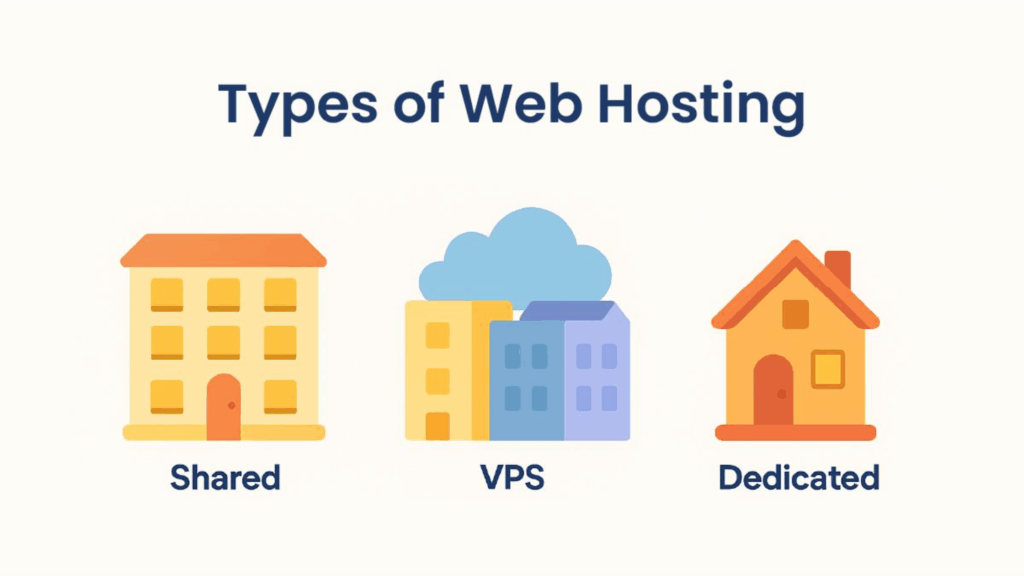
1) Shared Hosting
Shared hosting is the most common type of hosting.
In shared hosting, multiple websites use the same server and resources. This includes storage, processing power, and bandwidth.
Shared hosting is best for beginners, small blogs, personal websites, and small business websites.
It is especially perfect if your website has low traffic and you are looking for an affordable, easy-to-manage solution.
Advantages
- Shared hosting is cheap. You don’t need a big budget to start.
- Easy to manage. Most shared hosting comes with control panels and one-click installs.
- No technical stress on your part. The host handles updates and server maintenance.
Disadvantages
- Resources are limited. If someone else on your server has high traffic, your site can slow down.
- Less flexibility. You can’t customize the server as much.
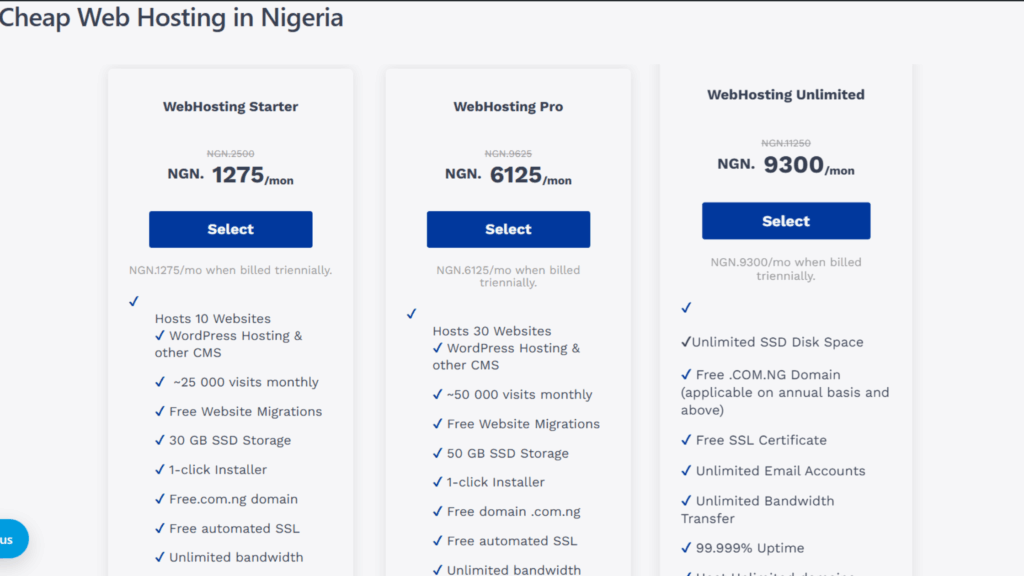
For many people in Nigeria, shared hosting is the perfect first step.
You get a space online without spending too much money. And if your website grows, you can move to a bigger plan later.
2) VPS Hosting
VPS stands for Virtual Private Server.
This type of hosting divides a server into separate virtual spaces. Each website gets its own dedicated resources.
VPS hosting is perfect for medium-sized websites, growing businesses, and e-commerce websites.
It works well when your website needs more stability and control than shared hosting can provide, and when your traffic is steadily increasing.
Advantages
- Dedicated resources mean your website won’t slow down because of others.
- You have more control. You can customize the server settings and install special software.
- Scalable. If your website grows, you can easily add more resources.
Disadvantages
- Requires some technical knowledge.
- Costs more than shared hosting.
VPS hosting is perfect if your site is getting bigger. You get more power without the cost and complexity of a dedicated server.
3) Cloud Hosting
Cloud hosting uses multiple servers to host a website. Resources are spread across many servers, which makes it highly reliable.
Cloud hosting is ideal for high-traffic websites, online stores, and websites that cannot afford downtime.
It is a good option if your website needs flexibility and the ability to handle sudden increases in traffic without slowing down.
Advantages
- High reliability. Your site stays online even if a server goes down.
- Easy to scale. Add more resources instantly when traffic spikes.
- Pay for what you use. No waste of money.
Disadvantages
- Very expensive.
- Requires technical expertise to manage.
Dedicated hosting is for when your website is booming. It is powerful, fast, and completely yours.
4) Dedicated Hosting
Dedicated hosting gives you an entire server for your website. You have full control over hardware, software, and configurations.
Dedicated hosting is designed for large websites, high-traffic websites, and websites with strict security requirements.
It is best for businesses or online stores that need maximum performance and full control over their server environment.
Advantages
- Full control over the server
- Maximum performance and speed
- Enhanced security
Disadvantages
- High cost
- Requires technical expertise
Dedicated hosting is ideal for websites that need strong performance and complete control. It is often used by large businesses and online stores.
5) WordPress Hosting
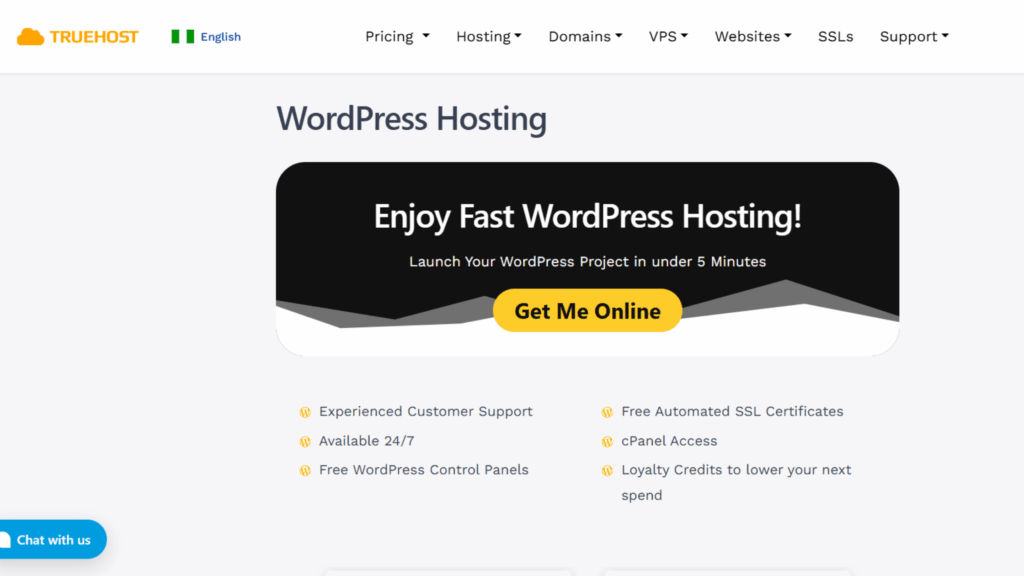
WordPress hosting is optimized specifically for websites built on WordPress. It includes features that improve speed, security, and updates.
WordPress hosting is suitable for bloggers, small business websites, and content-heavy websites.
It works well for those who want a WordPress site that is fast, secure, and easy to maintain without dealing with technical issues.
Advantages
- Optimized for WordPress performance
- Automatic updates and backups
- Easy to manage
Disadvantages
- Limited to WordPress websites
- Slightly more expensive than basic shared hosting
WordPress hosting makes running a WordPress site simpler. It ensures your website runs smoothly without technical problems.
6) Reseller Hosting
Reseller hosting allows you to sell hosting services to others. You buy a hosting plan and divide it among multiple clients.
Reseller hosting is intended for web designers, developers, and entrepreneurs who want to start a hosting business.
It works for anyone looking to manage multiple websites for clients while earning from hosting services.
Advantages
- Ability to sell hosting services
- Manage multiple websites from one account
- Branding opportunities
Disadvantages
- You are responsible for supporting clients
- Requires some management skills
Reseller hosting is for people who want to provide hosting to others.
It allows you to earn money while managing multiple websites.
7) Colocation Hosting
Colocation hosting is when you own the server hardware and place it in a professional data center.
The data center provides power, internet, and security.
Colocation hosting is suitable for businesses with IT teams or websites that require maximum control and security.
It works well for companies with specialized hosting needs who can manage their own servers.
Advantages
- Full control over hardware and software
- High security
- Long-term cost benefits for large operations
Disadvantages
- Expensive
- Requires technical expertise
Colocation hosting is mainly for companies with specialized needs. It provides complete control over the server environment.
How to Choose the Right Type of Hosting
Choosing the right types of hosting depends on several factors:
- Website size: Small sites can use shared or WordPress hosting. Large sites may need VPS or dedicated hosting.
- Traffic: High-traffic websites benefit from VPS, cloud, or dedicated hosting.
- Technical skills: If you prefer something managed, shared or WordPress hosting is best. Technical users can use VPS, dedicated, or colocation hosting.
- Budget: Shared hosting is cheapest. Dedicated and colocation are the most expensive.
- Scalability: Cloud and VPS hosting are easier to scale as your website grows.
Understanding these factors helps you pick the right hosting type.
Final Thoughts
There are several types of hosting, and each has its strengths and weaknesses. Shared hosting is simple and affordable.
VPS hosting offers more control and power. Cloud hosting is reliable and scalable. Dedicated hosting gives full performance and security.
WordPress hosting simplifies management for WordPress users. Reseller hosting allows you to sell hosting to others.
Colocation hosting provides maximum control for specialized needs.
Knowing these types of hosting helps you choose the one that suits your website. The right hosting makes your website faster, safer, and always available.
And once you choose which one you want, make sure to pair that with a good provider like Truehost.