 Domain NamesFind and register your ideal domain name instantly.
 Web HostingEasy-to-use hosting powered by cPanel — ideal for managing websites in Nigeria.
 Windows HostingRun .NET apps with Windows-optimized hosting
 Affiliate ProgramMake money promoting our services
 Reseller HostingMake money by reselling our hosting products under your own brand
 .COM Domains
 All DomainsExplore all supported tld domains in Nigeria
 WhoisFind out who owns any domain, as well as verify your registration details
 VPS Hosting in Nigeria
 Dedicated ServersReimagine your site speed with your own complete server
 AI Website BuilderDesign your site with drag-and-drop tools
 Online Store BuilderStart your online shop without code
 SSLs
SSLs Support PortalFind answers or get expert help
 Contact UsReach our team via chat or email
 BlogRead our extensive guides on web hosting and more
Website reliability means your website works when people need it.
It loads fast. It stays online. It stays safe. When something breaks, it comes back quickly.
That’s it.
In 2026, website reliability decides if people trust your business or leave. When your site fails to load, visitors don’t wait. They close the page and go to a competitor.
This is a bigger problem in Nigeria and similar markets. Power cuts happen.
Internet drops. Most users browse on mobile phones. One short downtime can block sales and damage your name.
Studies show small websites lose hundreds of dollars per hour when they go offline. The real loss is trust. Once people see a broken site, many never return.
This guide shows you how to keep your website reliable in 2026.
You’ll learn what to fix and how to protect your business with simple steps.
Why Website Reliability Is Important
Your website is no longer just information.
It is your shop, your office, and your salesperson working all day and night.
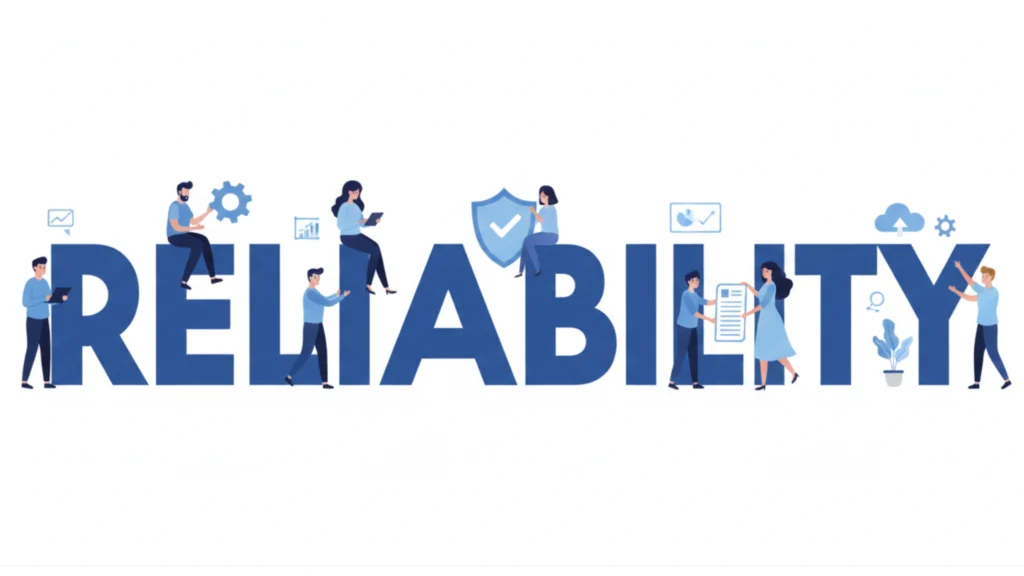
When your site is unreliable, three things happen fast.
- People leave
More than half of visitors leave a website if it takes more than a few seconds to load. Slow pages feel broken. Broken sites feel unsafe. - You lose money
Every minute your site is down, sales stop. Messages don’t go through. Ads keep running but send people to dead pages. Even small businesses lose hundreds of dollars per hour during downtime. - Trust is damaged
In Nigeria, many people already worry about online scams. When your site is offline or shows errors, visitors doubt your business. Once trust is lost, it is hard to win back.
This problem is worse locally.
Power outages are common. Internet providers face cuts and slowdowns. Most users rely on mobile data, not strong home Wi-Fi. A site that works well in perfect conditions can fail badly here.
The reward for fixing this is big.
A reliable website:
- Ranks better on Google
- Loads faster on mobile phones
- Handles traffic during sales and festive seasons
- Builds trust with first-time visitors
Website reliability is not about perfection. It is about consistency. When people click your link, your site should be ready.
Read also: Website Restore Process: A Step-by-Step Guide
Core Pillars of Website Reliability
Website reliability stands on a few clear pillars.
When these are strong, your site stays online, fast, and trusted.
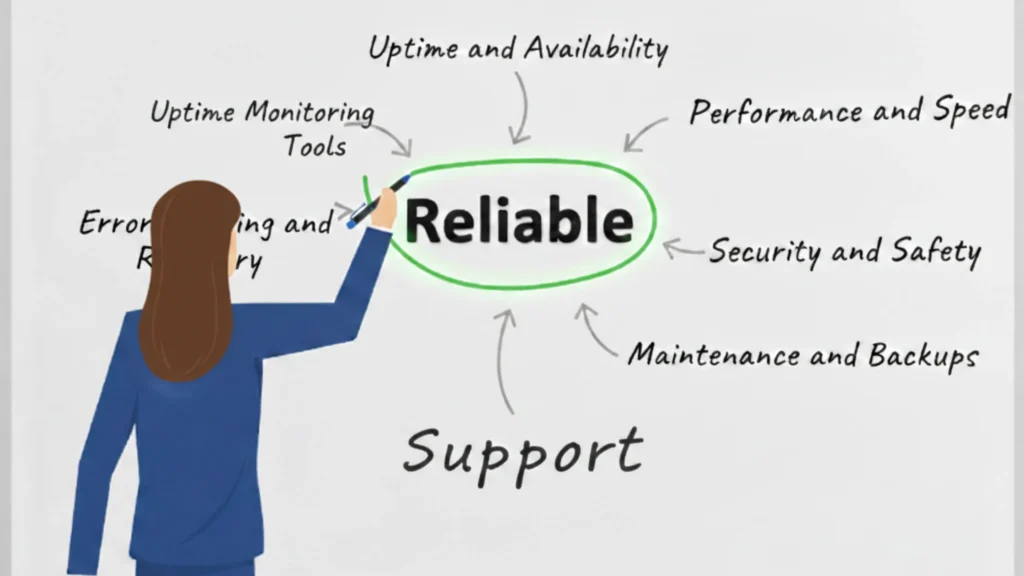
1) Uptime and Availability
Uptime means how often your website is online and reachable.
A good target is 99.9% uptime.
That still allows a few hours of downtime in a year. Anything less causes problems.
When your site goes offline:
- Visitors cannot buy
- Contact forms fail
- Google may reduce rankings
In Nigeria, cheap hosting often crashes during traffic spikes or power issues. Downtime is not rare. That is why uptime tracking matters.
2) Performance and Speed
A slow site feels unreliable.
Most visitors leave if a page takes more than a few seconds to load. This is worse on mobile data.
Google also tracks speed using Core Web Vitals:
- How fast main content appears
- How quickly the site reacts to taps
- Whether the page layout jumps
Simple fixes help a lot:
- Compress images
- Use caching
- Choose hosting close to your users
Even a one-second delay can reduce sales.
3) Security and Safety
An unsafe website is an unreliable website.
If your site gets hacked, it may go offline or show warnings. Visitors will leave instantly.
Basic security is not optional:
- HTTPS (SSL)
- Strong passwords
- Updated plugins and themes
- Firewall protection
Cyber attacks on local websites are rising. Protecting your site protects your users and your brand.
4) Maintenance and Backups
Old software breaks websites.
Plugins, themes, and systems need updates. Skipping them causes errors and crashes.
Backups are your safety net.
If something goes wrong, you restore your site in minutes instead of rebuilding from scratch.
5) Error Handling and Recovery
Problems will happen. What matters is how fast you fix them.
Good reliability includes:
- Error alerts
- Clear error pages
- Fast response when something breaks
Each issue should teach you what to improve next.
These pillars work together. Ignore one, and the others suffer.
Essential Tools to Monitor Website Reliability in 2026
You can’t fix a problem you don’t see.
Monitoring tools tell you when your website fails, slows down, or becomes unsafe.
You don’t need many tools. You just need the right ones.
Uptime Monitoring Tools
These tools check if your site is online every few minutes. When it goes down, you get an alert.
| Tool | What it Does | Best For |
| UptimeRobot | Checks uptime every 5 minutes | Beginners |
| Pingdom | Tracks uptime and speed | Growing sites |
| Better Stack | Advanced alerts and logs | Large sites |
UptimeRobot is enough for most small businesses. It is easy to set up and has a strong free plan.
Speed and Performance Tools
Speed affects sales and rankings. These tools show what is slowing your site down.
Use:
- Google PageSpeed Insights
- GTmetrix
They show clear scores and simple fixes like large images or unused scripts.
Security and Health Checks
Security tools scan your site for malware and threats.
Good options:
- Sucuri SiteCheck
- Wordfence (for WordPress sites)
These tools warn you before Google or browsers block your site.
What to Monitor Regularly
Set alerts for:
- Website downtime
- Slow loading pages
- SSL certificate expiry
- Security threats
Check reports weekly. Act fast when alerts come in.
Monitoring does not prevent problems.
It helps you react before damage spreads.
Read also: Resource Usage Hosting: Fix Common Issues in 2026
Hosting’s Role in Website Reliability
Your website’s reliability starts with hosting.
Bad hosting means downtime.
Good hosting keeps your site fast and online, even during traffic spikes or power cuts.
Here’s what to look for:
| Feature | Why It Matters |
| Local data centers | Faster loading for Nigerian users |
| Backup power | Keeps sites online during outages |
| Redundancy | Multiple connections prevent downtime |
| 24/7 support | Quick help when something breaks |
Ultra-cheap hosting often oversells servers. That leads to slow loading and frequent crashes. Avoid it.
Why Truehost Works for Nigerian Businesses
Truehost stands out for small and medium businesses in Nigeria. Users report:
- Around 99.99% uptime
- Fast servers in Lagos, Nairobi, and Europe
- Daily backups
- Quick, helpful support
They also handle local challenges well: mobile payments, African network speed, and affordable plans.
Switching to a reliable host like Truehost can solve half your website problems overnight.
Advanced 2026 Best Practices for Website Reliability
You don’t need to be a tech giant to run a reliable site. Some ideas from big tech (called Site Reliability Engineering or SRE) work perfectly for small businesses when simplified.
Set Clear Goals
Decide your uptime target, for example 99.9%. That allows tiny downtime but keeps you focused on fixing problems fast.
Automate Where Possible
- Auto-scaling: Your site handles traffic spikes without crashing.
- CI/CD (Continuous Integration/Deployment): Updates happen safely without breaking the site.
Predict Issues Before They Happen
Use AI tools or monitoring alerts to spot problems early. Fix small errors before they cause downtime.
Prepare for High Traffic
Festive seasons, sales events, or product launches bring sudden traffic. Test your site in advance to avoid crashes.
Mobile-First Design
Most Nigerian users browse on phones with variable networks. Make sure your site loads fast and looks right even on slow connections.
Following these best practices makes your website not just functional, but strong, fast, and trusted by visitors.
Read also: Essential Hosting Upgrade Checklist
Step-by-Step Checklist to Audit and Improve Website Reliability
Use this monthly to keep your site strong, fast, and safe.
- Check uptime – Use UptimeRobot or Pingdom to see if your site is online.
- Test speed – Google PageSpeed Insights or GTmetrix; aim for scores above 90.
- Verify SSL/HTTPS – Make sure certificates are active and not expiring soon.
- Scan for malware – Use free tools like Sucuri.
- Confirm backups – Check daily backups and test one restore.
- Update software – Plugins, themes, and CMS must be current.
- Monitor errors – Look for patterns in error logs and fix root causes.
- Simulate traffic – Tools like Loader.io test if your site handles crowds.
- Review hosting plan – Upgrade if needed for speed and reliability.
- Set alerts and response plan – Be ready for downtime, slow pages, or security issues.
Following this checklist prevents surprises, protects revenue, and keeps users happy.
Common Mistakes Nigerian Website Owners Make (and How to Avoid Them)
Many small businesses lose sales or trust because of simple, avoidable errors. Here are the most common:
- Choosing the cheapest hosting → Often unreliable. Use a trusted host like Truehost.
- Ignoring mobile optimization → Test your site on real phones with mobile data.
- Skipping updates and backups → Automate them to prevent crashes.
- No monitoring in place → Start with free tools like UptimeRobot.
- Weak security → Enable HTTPS, firewalls, and two-factor authentication.
Avoiding these mistakes keeps your website fast, safe, and reliable. It also builds trust with visitors and helps you stay ahead of competitors.
Conclusion
Website reliability in 2026 means your site works fast, stays online, and keeps users safe.
In Nigeria, power cuts, slow internet, and cyber risks make reliability a must. Every minute of downtime can cost sales and trust.
At Truehost, we keep your website online, fast, and backed up with 24/7 support.
Start today: audit your site, fix weak spots, and host with Truehost for reliable performance you can count on.