 Domain NamesFind and register your ideal domain name instantly.
 Web HostingEasy-to-use hosting powered by cPanel — ideal for managing websites in Nigeria.
 Windows HostingRun .NET apps with Windows-optimized hosting
 Affiliate ProgramMake money promoting our services
 Reseller HostingMake money by reselling our hosting products under your own brand
 .COM Domains
 All DomainsExplore all supported tld domains in Nigeria
 WhoisFind out who owns any domain, as well as verify your registration details
 VPS Hosting
 Dedicated ServersReimagine your site speed with your own complete server
 AI Website BuilderDesign your site with drag-and-drop tools
 Online Store BuilderStart your online shop without code
 Support PortalFind answers or get expert help
 Contact UsReach our team via chat or email
 BlogRead our extensive guides on web hosting and more
Nigeria’s e-commerce market is not just growing, it is maturing in a way that genuinely favours small and independent sellers.
Jumia, which remains the country’s largest online marketplace, has spent years building the logistics infrastructure, the customer trust, and the seller tools needed to make this whole thing work.
And in 2026, they have stripped away the last real friction point: the upfront cost.
No registration fees, no monthly charges, no mysterious hidden deductions before you even make your first sale.
The only cost you bear is a commission on products you actually sell.
That said, opening a Jumia seller account and actually building a business on Jumia are two very different things.
A lot of people sign up, list a few products haphazardly, get no orders, and conclude that it does not work.
What they usually missed was a clean, step-by-step process, which is exactly what this guide gives you.
Let me walk you through everything you need to know on how to sell on Jumia!
Step 1: Make Sure You Actually Qualify
Before you get excited and start gathering documents, let us make sure the basics are in place.
Jumia’s Nigerian operation is built around Lagos, their warehouses, pickup hubs, and core logistics network all run through the state, which means that being a Lagos resident is currently a requirement for direct seller registration.
Now, before that discourages you if you are based in Abuja, Port Harcourt, or anywhere else, many sellers outside Lagos have gotten around this by partnering with a logistics agent in Lagos who handles pickups and drop-offs on their behalf.
It adds a small operational cost, but it is a legitimate and workable solution that many successful sellers use today.
Beyond location, Jumia strongly recommends that you operate as a registered business rather than as a plain individual.
Registration through the Corporate Affairs Commission (CAC) gives you credibility, makes your KYC verification significantly smoother, and opens you up to business banking.
You will also need a business bank account, since Jumia pays your earnings directly into one.
For Sellers of Regulated Products: If you plan to sell food, cosmetics, pharmaceuticals, or any product under regulatory oversight, you will need the appropriate NAFDAC or SON certification before you can list those items.
Jumia’s compliance team checks for it, and non-compliant listings get pulled without warning.
Step 2: Gather Your KYC Documents
Jumia takes seller verification seriously, and honestly, that is a good thing.
It keeps the platform trustworthy for buyers, which ultimately benefits every seller on it.
The documents you need depend on whether you are registering as a business or as an individual.
For registered businesses, you will need your CAC certification, Forms 2 and 7, a Status Report, or your Mermart and CAC 1.1.
You will also need a valid Tax Identification Number (TIN) certificate, a business bank account in the company name, a stamped reference letter or one-day bank statement showing your NUBAN number, and a valid government-issued ID for the business owner.
For individual sellers, the list is shorter: a valid government-issued ID, a personal bank account, and a stamped reference letter or one-day bank statement showing your NUBAN number.
| Document Tip: Scan everything clearly before uploading. A blurry photo of your CAC certificate or a partially visible TIN card will trigger delays in your verification, sometimes pushing your approval back by an additional week or two. Take the extra five minutes to get clean, legible scans of every document. |
Step 3: Register on the Jumia Seller Center
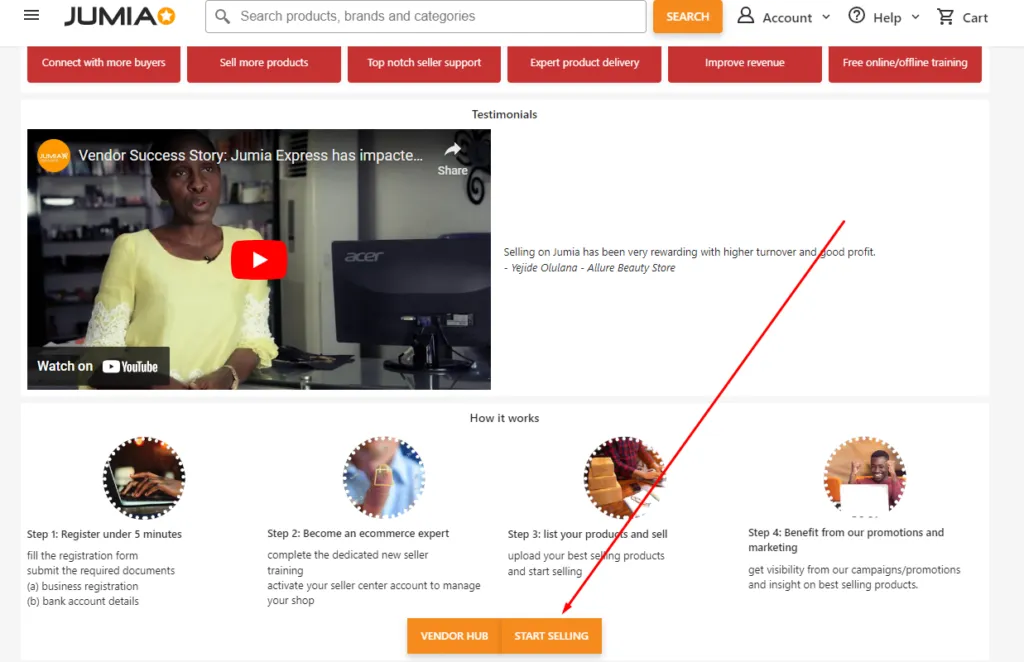
Once your documents are sorted, head over to the Jumia Seller Center registration portal and begin your application.
Fill in your personal and business details, select the product categories you intend to sell in, upload your KYC documents, and submit.
After submission, Jumia’s verification team takes between 3 and 10 business days to review your application.
During this time, keep a close eye on your inbox. If there are any issues with your documents, they will reach out to ask for corrections rather than outright rejecting your application.
Being responsive at this stage can save you a lot of time.
Once approved, you get access to the Jumia Seller Center dashboard, which becomes your operational home for everything like product listings, order management, performance tracking, and payments.
Step 4: Configure Your Payment Details
Your Seller Center account is live, great.
Now go directly to the Settings section of your dashboard and link your bank account.
This is where Jumia will deposit your earnings, so getting this right from the start is critical.
Double-check every digit of your account number before you save it.
Jumia processes payouts in Naira, which removes the headache of currency conversion entirely.
The payment schedule typically runs on a bi-weekly or monthly cycle depending on your seller tier.
While you are setting up your business systems, it is also worth getting a professional business email address.
Communicating from a branded email like [email protected] instantly signals that you are running a real operation.
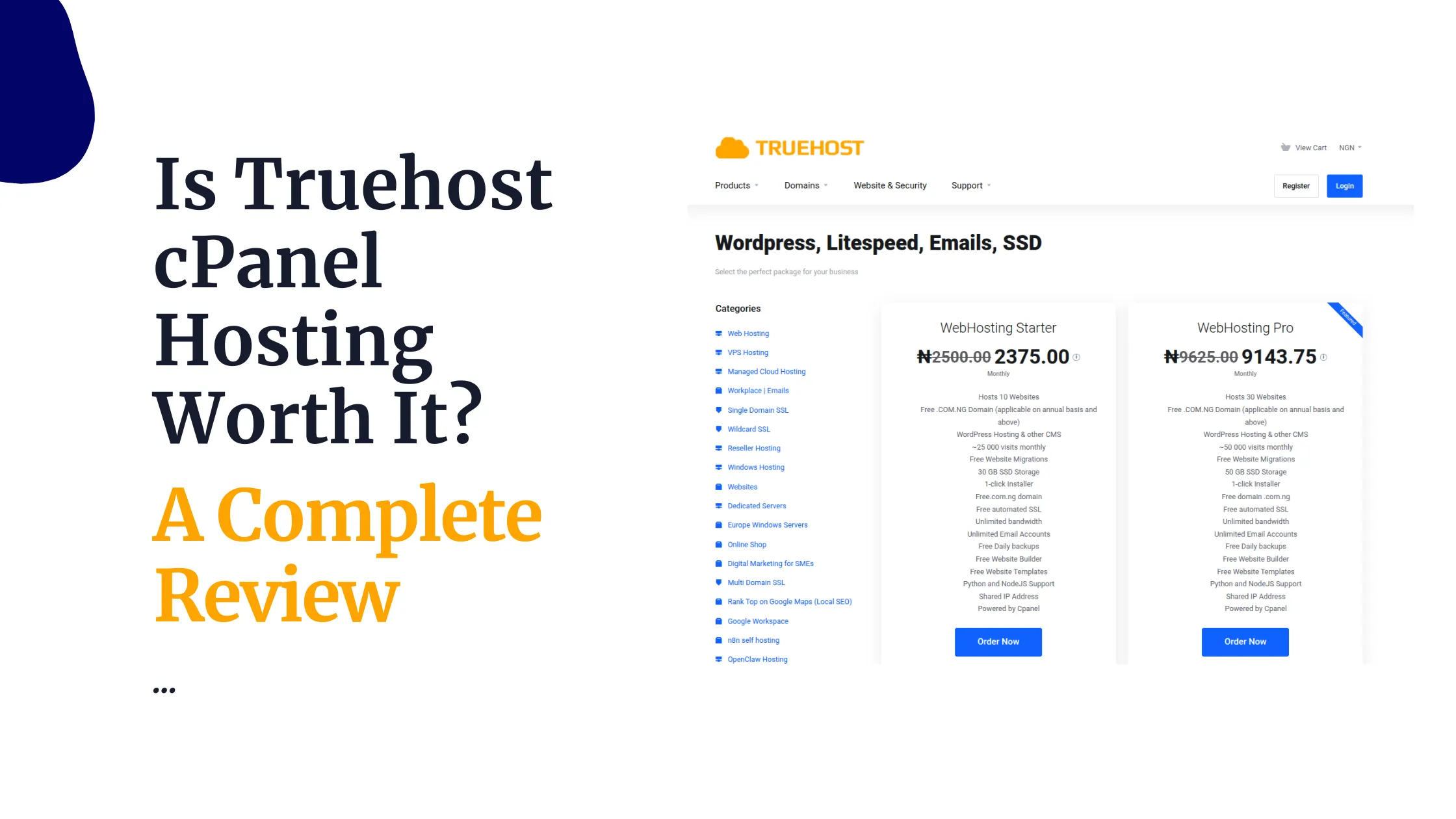
Truehost’s Hosting plans that come with free business emails make this affordable and quick to set up.
Step 5: Choose How You Will Fulfill Orders
This is a decision that will shape your daily operations, your costs, and your seller rating, so give it some real thought.
Jumia offers two fulfillment models, and both have genuine advantages depending on where you are in your business journey.
Option A: Jumia Express (Fulfilled by Jumia)
You send inventory in bulk to Jumia’s warehouse. They handle storage, packaging, delivery, and customer service.
Your listings get the trusted Jumia Express badge, which noticeably boosts conversion rates.
Best for high-volume sellers. New sellers in 2026 may qualify for 90 days of free storage.
Option B: Jumia Direct (Seller Fulfilled)
You store inventory yourself. When orders come in, you package and drop off at a Jumia pickup hub or request a courier.
More control, lower upfront cost, but longer delivery times. The smartest starting point for new sellers who want to test before committing to bulk inventory.
| If you are just getting started, Jumia Direct is almost always the smarter first move. It keeps your risk low, lets you learn the process, and gives you time to identify which products actually sell before you invest in larger inventory positions. Once you are consistently moving volume, transitioning to Jumia Express becomes a natural upgrade. |
Step 6: List Your Products Like You Mean It
Your product listing is your shop window, your sales pitch, and your customer service representative all rolled into one.
A weak listing with blurry photos, a vague title, a one-line description, will get scrolled past regardless of how good the product actually is.
Start with your title. It needs to be descriptive and keyword-rich without being a jumbled mess.
Think about what a real buyer would type into the search bar. Instead of writing Sneakers, write: Men’s Casual Sneakers, Breathable Mesh, Lightweight, Sizes 40 to 45.
That kind of title tells the buyer exactly what they are getting and helps Jumia’s search algorithm surface your listing for the right queries.
For images, Jumia recommends 680 x 850 pixels at a minimum resolution of 500 x 500 pixels.
Use clean natural lighting and photograph the product from multiple angles.
Lifestyle images showing the product in use, consistently convert higher than plain white-background photos alone.
Your description should be thorough but easy to scan. Cover dimensions, materials, weight, key features, and any care or usage instructions.
The more information you give a buyer upfront, the less likely they are to return the product or leave a negative review.
Honesty in your listing is genuinely one of the best business decisions you can make on this platform.
Step 7: Know the Fees Before You Price Anything
One of the most common and painful mistakes new Jumia sellers make is pricing products without accounting for the platform’s fees.
Here is a clear breakdown of what you are actually paying.
| Fee Type | Amount |
| Registration / Monthly Fee | ₦0 No hidden charges |
| Sales Commission | 5%- 20% by category (electronics ~5-8%, fashion ~15-20%) |
| VAT on Commission | 7.5% of the commission amount |
| Payment Processing Fee | ~1-2% on withdrawals |
| Shipping Contribution | Varies by product weight and delivery zone |
One detail that catches sellers off guard: Jumia charges a minimum commission equivalent to approximately $1 per sale, roughly ₦1,600 at current rates.
Even if 5% of your product price works out to less than that, Jumia will still deduct ₦1,600.
This means very low-priced items are essentially loss leaders on Jumia unless you are using them deliberately to drive traffic to higher-margin products.
The right way to price: add up your product cost, shipping cost to Jumia, all applicable fees, and your desired profit margin.
Check the resulting number against what the market is actually paying.
If it is too high to be competitive, reduce your sourcing or operational costs rather than squeeze your margin to zero.
Sellers who build a standalone website alongside their Jumia store grow faster.
Your website collects customer emails, showcases your full catalogue, and gives you a direct sales channel with zero commission.
Step 8: Fulfill Orders Fast, Every Time
When that first order notification hits, it is genuinely exciting.
But how quickly you act on it matters more than most new sellers realise.
Jumia tracks your order confirmation time and your dispatch speed as key performance metrics.
Slow fulfillment drags your seller rating down, and a lower seller rating means lower search visibility, fewer sales, and potentially suspended selling privileges.
Confirm the order within 24 hours of receiving the notification, ideally much sooner.
Package the product carefully using bubble wrap, a sturdy box, or padded envelopes appropriate for the item.
Label the package clearly with the customer’s address and order number.
Then get it to a Jumia pickup hub, or schedule a courier pickup, on the same day if possible or the next business day at the latest.
Cancelling an order because you ran out of stock is one of the most damaging things you can do to your seller account.
Keep your inventory counts updated in real time and mark products as out of stock the moment they sell through.
Step 9: Protect and Build Your Seller Rating
On Jumia, your seller rating is the single number that determines how much of the platform’s traffic sees your products.
A high rating means better placement in search results, eligibility for promotional features, and a genuine competitive advantage.
A low rating means you effectively become invisible, no matter how good your pricing or product quality is.
- Reply to buyer messages quickly. Even a brief acknowledgement within a few hours keeps buyers engaged and prevents cancellations.
- Follow up after delivery. A short, friendly message asking if everything arrived well builds loyalty and reduces negative reviews.
- Handle returns without fuss. Process return requests quickly and professionally.
- Buyers who have a smooth return experience are far more likely to come back and order again.
- Keep your stock levels honest. Mark items as out of stock immediately when they sell through. Never let an order sit unconfirmed because you are hoping to restock in time.
- Monitor your Performance tab weekly. Your Seller Center dashboard shows exactly where your rating stands and flags areas that need attention.
Step 10: Grow Deliberately, Then Scale
Once you have a few successful sales behind you and your rating is solid, it is time to stop thinking like a new seller and start thinking like a business owner.
Growth on Jumia does not happen by accident, it requires deliberate, consistent investment in the right areas.
Jumia’s sponsored ads are a powerful starting point.
You can begin with as little as ₦2,000 per day in ad spend, and the platform’s targeting tools let you put your products in front of buyers who are already searching for exactly what you sell.
Track your return on ad spend closely for the first few weeks, identify which products respond best to paid promotion, and scale your budget on those.
Jumia’s platform-wide sales events, Anniversary Sales, Black Friday, Tech Week, are some of the highest traffic moments of the year.
If you can offer meaningful discounts and keep your inventory stocked through these periods, a single event can match or surpass an entire month of regular sales.
Once you have identified your top-performing products, expand your catalogue strategically.
If phone cases are selling well, add screen protectors and charging cables.
This approach increases your average order value and turns one-time buyers into repeat customers without you spending more on acquisition.
And this is also the point where having your own website starts to matter enormously. A customer who buys from your website costs you zero commission.
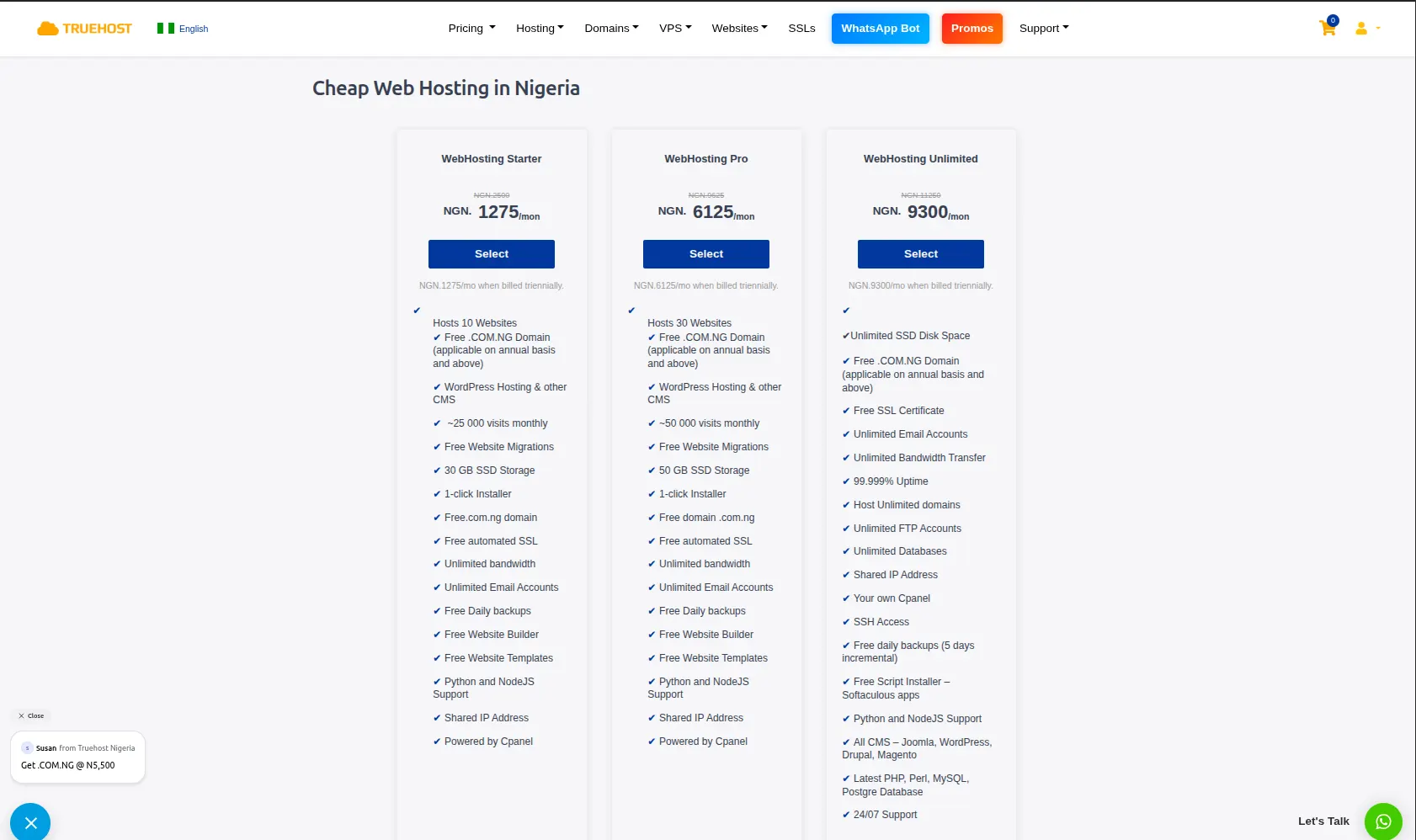
For getting a fast, professional website live quickly, Truehost Web Hosting is built exactly for this kind of seller-owned storefront. You even get a one-click CMS install!
The Only Thing Left Is to Start
Getting your first Jumia order is a feeling you will remember.
But what comes after that, the second order, the first five-star review, the first month you hit your income target.
That is the result of the groundwork you lay right now, in how you set up your account, how you build your listings, and how seriously you take the operational side of the business.
Take this guide, work through it step by step, and do not let perfect be the enemy of started.
Gather your documents this week. Register your account. List your first product. The rest follows from there.
And when you are ready to build a proper online presence alongside your Jumia store, a professional website with a custom domain and a branded business email that makes you look like the established business you are becoming.
Truehost has everything you need at prices that make sense for growing sellers. We are here to help you build something real.