 Domain NamesFind and register your ideal domain name instantly.
 Web HostingEasy-to-use hosting powered by cPanel — ideal for managing websites in Nigeria.
 Windows HostingRun .NET apps with Windows-optimized hosting
 Affiliate ProgramMake money promoting our services
 Reseller HostingMake money by reselling our hosting products under your own brand
 .COM Domains
 All DomainsExplore all supported tld domains in Nigeria
 WhoisFind out who owns any domain, as well as verify your registration details
 VPS Hosting in Nigeria
 Dedicated ServersReimagine your site speed with your own complete server
 AI Website BuilderDesign your site with drag-and-drop tools
 Online Store BuilderStart your online shop without code
 SSLs
SSLs Support PortalFind answers or get expert help
 Contact UsReach our team via chat or email
 BlogRead our extensive guides on web hosting and more
Owning multiple domains means holding more than one web address under your name or business.
It could be different extensions of the same name, or separate domains for separate purposes. Some people buy two. Others hold twenty or more.
Businesses, creators, and everyday individuals all have reasons to buy more than one domain. A business might want to protect its name across several extensions.
A creator might want a domain for each project they run. An individual might just want their own name locked down before someone else takes it.
There are a few myths floating around too. Some people believe owning extra domains is only for big corporations with deep pockets.
Others assume one domain covers every need forever. Neither is true. In 2026, domains often cost less than a single meal out.
Buying a few upfront often costs less than fixing a problem later.
This guide covers why people own more than one domain, what it gets them, and where the downsides sit.
It also covers how to manage several domains at once, and how to register a batch of them quickly.
Why Do People Own Multiple Domains?
1) Protecting Your Brand
Competitors do watch what works. If your business gains traction, someone else may try to buy a similar domain name.
That similar name could confuse your customers or damage your reputation.
Buying up close variations of your name closes that gap early. It also protects against typos and impersonation.
A customer who mistypes your domain should land somewhere safe, not on a scam page.
2) Targeting Different Markets
Different regions often expect different domain extensions. A Nigerian audience might trust a .com.ng or .ng domain more than a generic one.
A UK audience might expect .co.uk instead.
Owning both a local extension and a .com version helps you speak to more than one market. This becomes important once a business starts growing beyond its home country.
Moving into a new country often starts with securing the right domain first.
3) Marketing Campaigns
Dedicated landing pages need their own clean web addresses sometimes.
A short, memorable domain works better for print ads or social campaigns than a long subfolder link. It is also easier to say out loud on radio or in a video ad.
Seasonal promotions benefit from this too. A holiday sale or a limited product drop can live on its own domain for a few weeks.
Once the campaign ends, the domain can retire or redirect back home.
4) Owning Keyword Domains
Some domains describe exactly what a business does. These exact-match or descriptive domains can help people find you through direct search.
A name like bestlagosbakery.com tells visitors what to expect before they even click.
There are SEO considerations here too, though search engines weigh many factors now. A keyword domain will not carry a site alone, but it can still support a wider strategy.
5) Buying Domains for Future Projects
Sometimes a good name shows up before the project behind it does.
Buying it early costs little and saves a scramble later. Reserving a name now protects an idea you may not launch for months.
Benefits of Owning Multiple Domains
1) Better Brand Protection
Holding several related domains keeps your name out of the wrong hands. It also reduces the chance of a rival business confusing your customers on purpose or by accident.
This quiet protection becomes one less thing to worry about as your brand grows.
2) Improved Customer Trust
A visitor who lands on a mistyped domain and finds your real business anyway will trust you more.
That small moment of reassurance builds confidence quietly, without any extra marketing spend.
3) Easier International Expansion
Local domain extensions signal that a business fits its new market.
Customers in a new country often feel more comfortable buying from a site that looks locally rooted. A local domain can also open the door to local search results and directories.
4) More Marketing Opportunities
Separate domains give marketing teams more room to experiment.
They can test messaging, run campaigns, and measure results without touching the main website at all. If a test flops, the main brand stays untouched.
5) Increased Traffic Through Domain Redirects
Old domains, misspelled variations, or retired product names can all be redirected back to your main site.
Each one becomes a small, steady source of extra visitors. None of them need daily attention once the redirect is set.
6) Greater Business Flexibility
Owning multiple domains gives a business room to grow sideways. A new product line or sub-brand can launch under its own name without disrupting the main site.
Are There Any Downsides?
Nothing here comes free, and owning several domains brings its own set of small headaches.
1) Renewal Costs
Every domain renews yearly, and those small fees add up across ten or twenty names.
A business needs to budget for this the same way it budgets for hosting or software. Skipping this line item is an easy way to get an unwelcome surprise.
2) Managing DNS Records
Each domain needs its own DNS setup, and mistakes here can take a site offline. More domains simply mean more records to check and more room for a small error.
A single wrong entry can quietly break email delivery for days.
3) Security Risks
An old, forgotten domain can become a target if it slips out of your control. Attackers sometimes buy expired domains to impersonate businesses that once used them.
4) Keeping WHOIS Information Updated
Outdated WHOIS details can cause ownership disputes down the line, especially during a domain transfer.
Keeping contact information current avoids a slow, painful recovery process later.
5) Avoiding Forgotten Expired Domains
This is the mistake that catches almost everyone eventually. A domain quietly expires, nobody notices, and a stranger buys it days later.
That stranger can then use the old domain to impersonate the original business.
How to Manage Multiple Domains Efficiently

1) Keep Everything with One Registrar
Spreading domains across several registrars makes management messy quickly.
Keeping them in one place means one login, one renewal calendar, and one clear view of everything you own.
2) Use Domain Folders or Labels
Most registrar dashboards let you group domains by project or brand. This small habit saves real time once your domain count climbs past five or six.
3) Enable Auto-Renewal
Manual renewal invites mistakes, especially across a dozen domains or more. Auto-renewal removes that risk entirely, as long as your payment details stay current.
4) Turn On Two-Factor Authentication
A domain account is a valuable target, since whoever controls it can redirect real traffic anywhere.
Two-factor authentication adds a simple, strong layer of protection against that risk.
5) Maintain a Domain Inventory Spreadsheet
A simple spreadsheet listing every domain, its purpose, and its expiry date solves most of the chaos above.
It takes an hour to build and saves many hours of stress later. Share it with anyone else on the team who touches domains or hosting.
6) Regularly Audit Unused Domains
Every few months, look through your list and ask what each domain is still doing for you. Some deserve to stay. Others are just costing money for no reason anymore.
How to Register Multiple Domains
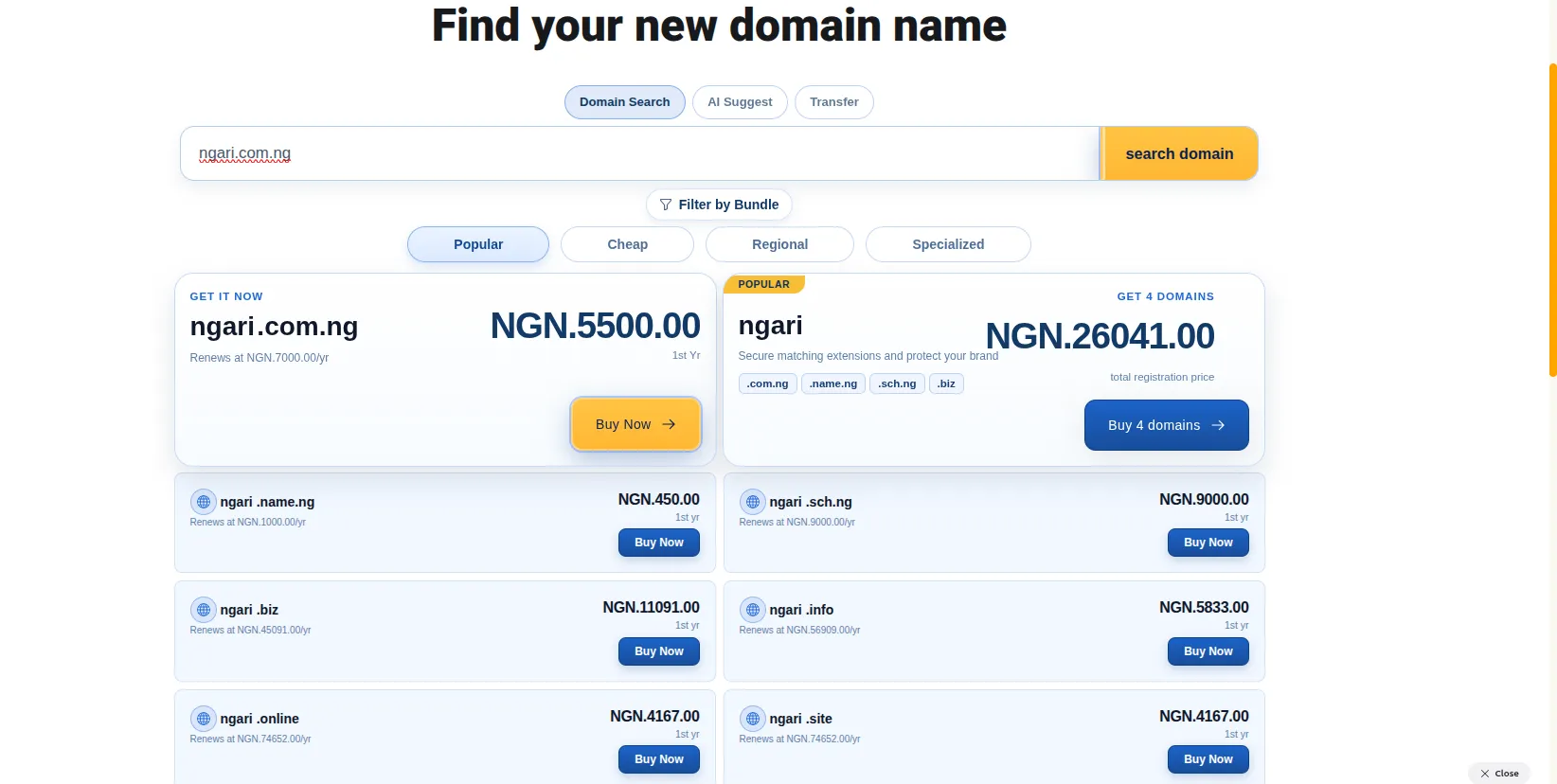
Buying several domains one at a time gets tedious quickly, especially once you pass three or four names. A bulk domain search solves that problem directly.
You type in your base name, and the tool checks it across dozens of extensions at once.
Truehost offers exactly this kind of bulk domain search for Nigerian businesses and individuals.
You can check availability across .com, .com.ng, .ng, and many other extensions in one search.
Once you find the names you want, you can add them all to one cart and register them together.
This approach saves time, and it also helps you catch good names before someone else does.
Running a bulk search before every new project keeps your options open and your name protected.
If you are ready to secure your domains before someone else grabs them, start here. Register your domains with Truehost.
Owning multiple domains is not about hoarding names for no reason. It is about protecting what you have built, reaching new markets, and leaving room for what comes next.
A little planning today can save a real headache down the road.