 Domain NamesFind and register your ideal domain name instantly.
 Web HostingEasy-to-use hosting powered by cPanel — ideal for managing websites in Nigeria.
 Windows HostingRun .NET apps with Windows-optimized hosting
 Affiliate ProgramMake money promoting our services
 Reseller HostingMake money by reselling our hosting products under your own brand
 .COM Domains
 All DomainsExplore all supported tld domains in Nigeria
 WhoisFind out who owns any domain, as well as verify your registration details
 VPS Hosting
 Dedicated ServersReimagine your site speed with your own complete server
 AI Website BuilderDesign your site with drag-and-drop tools
 Online Store BuilderStart your online shop without code
 Support PortalFind answers or get expert help
 Contact UsReach our team via chat or email
 BlogRead our extensive guides on web hosting and more
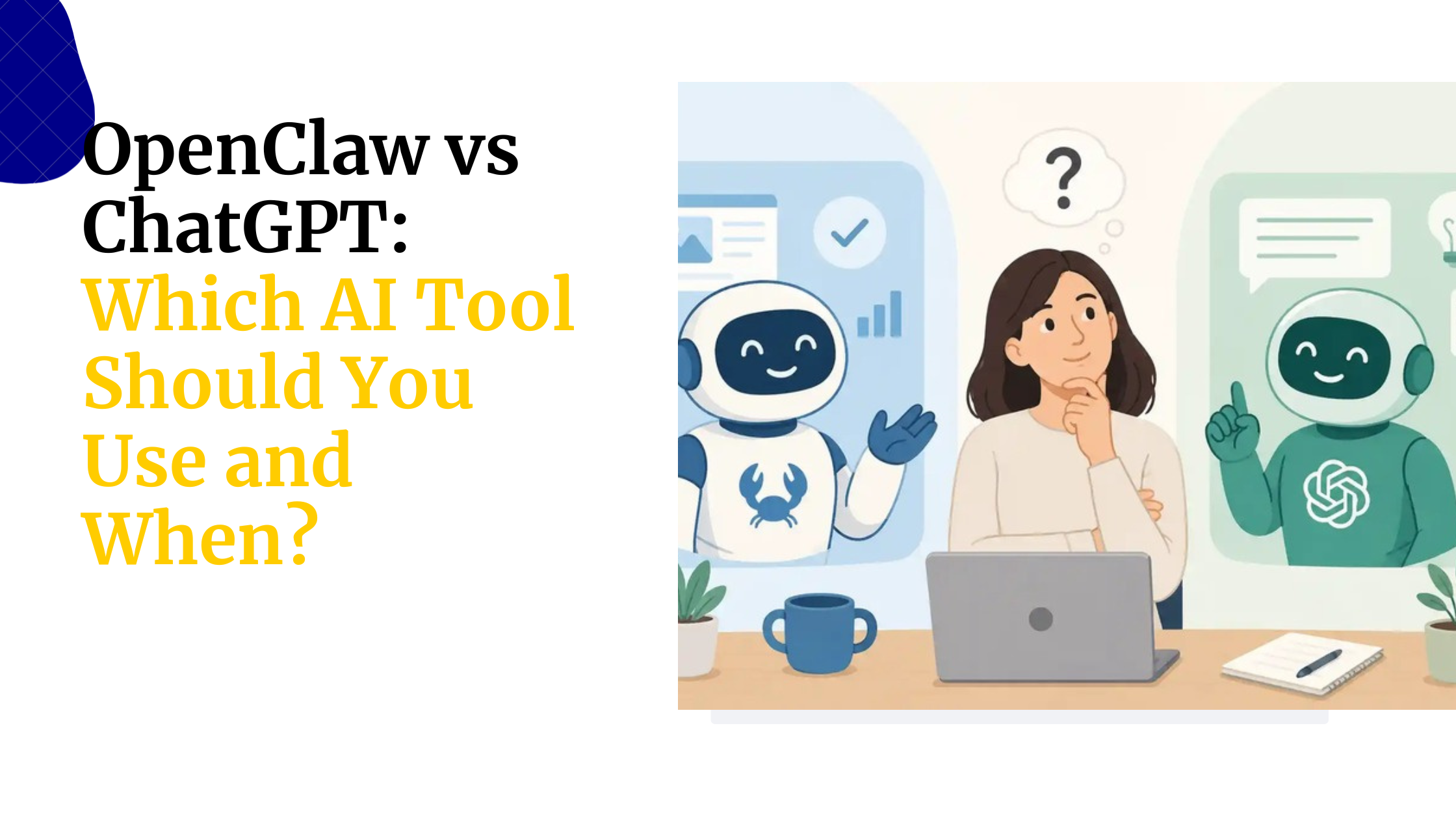
Choosing between OpenClaw and Hermes Agent comes down to one question. Do you want an assistant that reaches you everywhere? Or one that gets sharper the longer you use it?
OpenClaw is a self-hosted gateway built for breadth. One Gateway process ties together roughly 24 messaging channels, a large skills marketplace on ClawHub, and native apps across desktop and mobile.
Hermes Agent, from Nous Research, takes the opposite bet. It’s a lean, Python-based agent that writes its own skills as it works, and keeps a low resource footprint.
Both are open source. Both are model-agnostic. Both are free to self-host.
So the real decision in the openclaw vs hermes agent debate isn’t about cost. It’s about which philosophy fits how you work.
This guide breaks down the features and differences. We’ll cover skills, architecture, channels, models, security, memory, and what each one costs to run in Nigeria.
1) Skills and Extensibility
OpenClaw
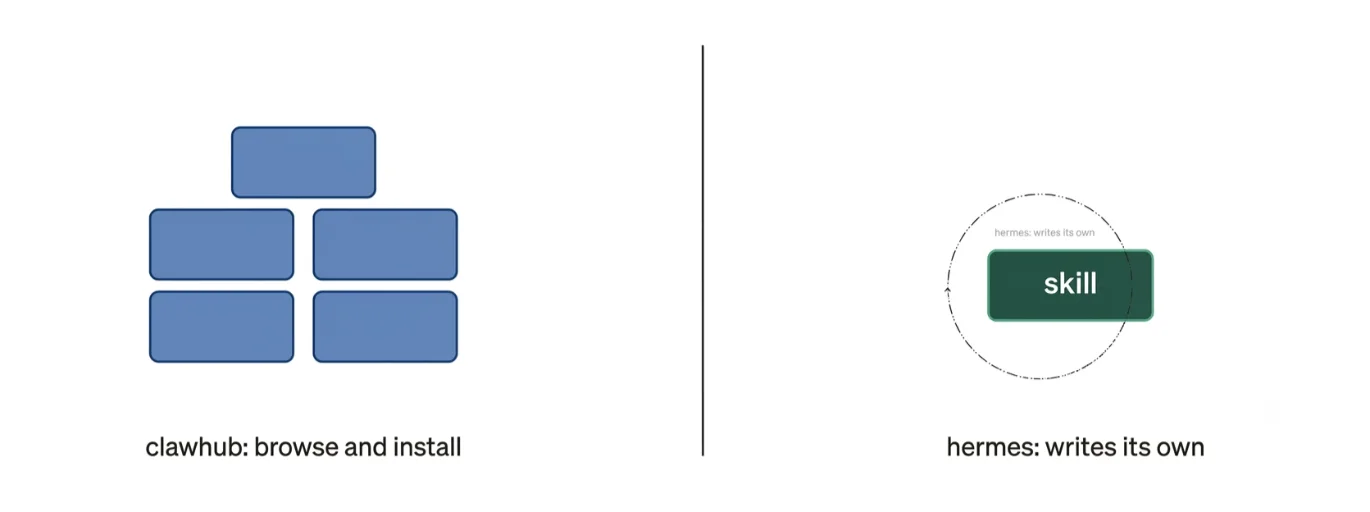
OpenClaw’s skills live on ClawHub (clawhub.ai). They ship as versioned SKILL.md bundles.
- Install a skill with
openclaw skills install @openclaw/ - Write your own as local Markdown files
- Check clawhub.ai directly for the live skill count no official total is published on the docs overview page
Example: A support team can pull a bundled skill for ticket triage, then layer a custom local skill on top for their own escalation rules.
Hermes Agent
Hermes ships with 40+ built-in skills. Think MLOps, GitHub, diagramming, and note-taking.
- Auto-created skills are unlimited. Hermes writes a reusable skill doc whenever it solves a hard problem.
- It’s compatible with the open agentskills.io standard.
- You install community skills through Community Hubs.
Example: Ask Hermes to debug a tricky deployment script once. Next time a similar problem shows up, it already has a documented skill for it.
Here’s the honest tradeoff. OpenClaw gives you a bigger marketplace today. Hermes builds its own library as you use it.
2) Architecture and Performance
OpenClaw
OpenClaw runs on Node.js. A single long-lived Gateway daemon owns all channels, sessions, and routing over WebSocket.
- Multi-agent routing with isolated sessions per workspace or sender
- Cron and heartbeat scheduling built in
- DMs collapse into a shared main session; groups get isolated sessions
- Companion apps: Windows Hub, a browser Control UI, a macOS menu bar app, and iOS/Android nodes with camera, screen recording, location, and voice access
Hermes has no equivalent to this companion app layer.
Hermes Agent
Hermes is Python-based. It runs as an invoked runtime, not a resident daemon.
- Four execution backends: Local Terminal, Docker (hardened), SSH Remote, and Modal/Singularity
- Parallel sub-agents through delegation, each with its own isolated conversation and terminal
- ‘Zero-context-cost turns’ via RPC between sub-agents
- Runs on Linux, macOS, and WSL2 only no native Windows support
That’s a real contrast point against OpenClaw’s Windows Hub.
Hermes is also light. Community measurements (not an official benchmark) put the CLI alone at roughly 200–350MB RAM. With the messaging gateway active, that climbs to 400–950MB.
3) Channels
OpenClaw
OpenClaw ships with three channels in its core: iMessage, Telegram, and WebChat.
Beyond that, it adds:
- 21 official plugin channels: Discord, Signal, Slack, WhatsApp, Matrix, Teams, Feishu, LINE, QQ Bot, Twitch, Voice Call, Zalo, and more
- 3 externally maintained channels: WeChat, Yuanbao, and Zalo ClawBot
That’s roughly 24 channels total. Use this figure instead of the inconsistent ’20+,’ ’23,’ or ’50+’ numbers floating around third-party comparison sites.
Hermes Agent
Hermes covers Telegram, Discord, Slack, WhatsApp, Signal, and CLI. That’s 5 platforms plus the command line.
- Voice memo transcription is built in
- You can start a conversation on Telegram and pick it up in the terminal
Here’s the framing worth remembering. OpenClaw wins decisively on channel breadth. Hermes isn’t trying to compete on reach, it’s optimizing for depth instead.
4) Model Support
OpenClaw
OpenClaw connects to 35+ model providers. Anthropic, OpenAI, and Google are among them.
- Subscription OAuth support, including for OpenAI Codex
- Self-hosted and custom options: vLLM, SGLang, Ollama, llama.cpp, LM Studio, or any OpenAI/Anthropic-compatible endpoint
Hermes Agent
Hermes connects through four routes: Nous Portal (native OAuth), OpenRouter (200+ models), Custom API (OpenAI-compatible), and Local vLLM.
One clarification worth making here. Models like z.ai/GLM, Kimi/Moonshot, and MiniMax aren’t separate native integrations. You reach them through OpenRouter’s catalog, per the official Hermes site.
Example: If you already pay for OpenRouter credits, Hermes gives you access to its full 200+ model catalog without a separate integration step.
5) Tools and Automation
OpenClaw
OpenClaw treats browser automation, exec, and sandboxing as first-class tool categories.
- Web search is provider-pluggable: Brave, DuckDuckGo, Exa, Firecrawl, Gemini, Grok, Kimi, MiniMax Search, Ollama Web Search, Perplexity, SearXNG, Tavily
- Media in and out: images, audio, video, documents
- Shared image and video generation, voice transcription, and TTS across multiple providers
Hermes Agent
Hermes gives you full browser control: Check, click, type, screenshot, and extract page content.
- Vision analysis, image generation, and TTS
- Sandboxed code execution across all four backends
Both agents can browse, generate media, and run code safely. The difference is choice. OpenClaw hands you more provider options; Hermes keeps the toolset tighter and backend-isolated by default.
6) Security
OpenClaw
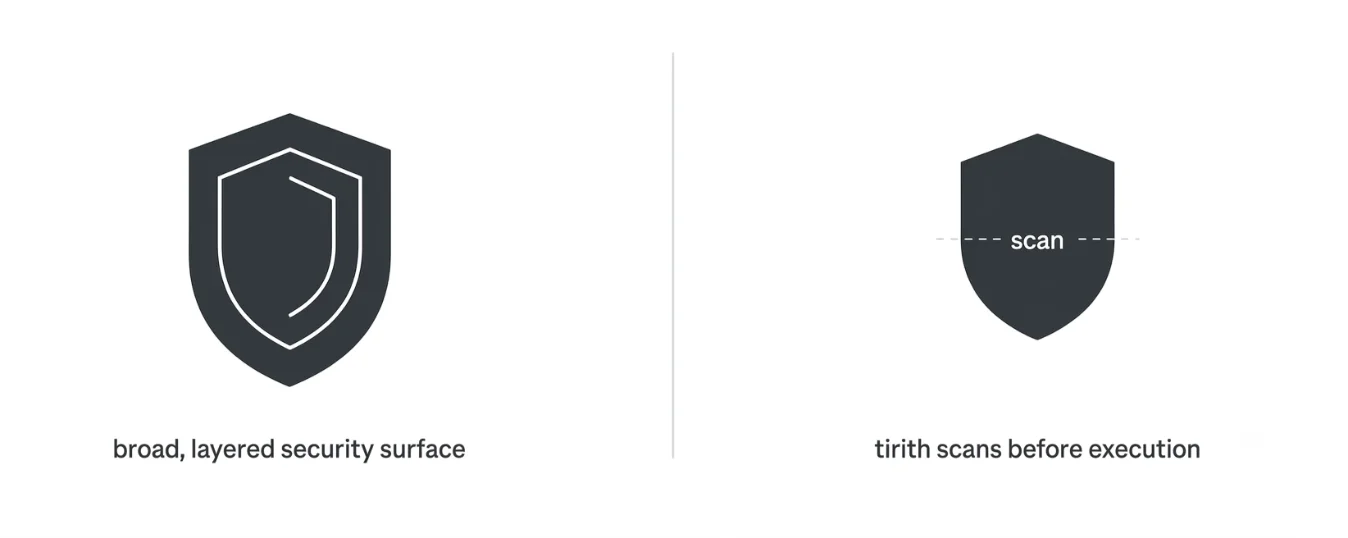
OpenClaw ships openclaw security audit with a --fix flag. It backs this with Docker-based per-agent sandboxing, exec approval gating, and browser SSRF blocking.
- Hardened secrets-on-disk handling
- A published MITRE ATLAS threat model
- A dedicated disclosure process at [email protected]
- Extensively documented security architecture
Third-party sources report more CVEs for OpenClaw historically. That tracks with a larger plugin and channel surface; it’s an ecosystem-size effect, not a documentation gap.
Hermes Agent
Hermes integrates Tirith, a dedicated command-scanning tool that runs before execution. It catches threats pattern-matching alone misses homograph URL spoofing, or pipe-to-interpreter patterns like curl | bash.
- Suspicious or blocked commands trigger an approval prompt with full findings. The default is deny.
- Context files (AGENTS.md, .cursorrules, SOUL.md) are scanned for prompt injection before they enter the system prompt.
- Docker backend containers are hardened by default, capabilities dropped, no privilege escalation, PID limits.
- Zero telemetry. All data stays local to
~/.hermes/.
One honest flag here. Tirith defaults to tirith_fail_open: true, per Nous Research’s own security documentation. That means commands proceed if the scanner is unavailable or times out. It’s a community-flagged finding, not a hidden flaw, and security-conscious deployments should set it to false.
The bottom line: both agents ship real, documented security architecture. OpenClaw’s is broader in scope, with more surface area and more knobs to turn. Hermes’s is narrower, with strong secure-by-default behavior, apart from that fail-open scanner default worth flagging.
OpenClaw vs Hermes Agent: Biggest Difference
OpenClaw
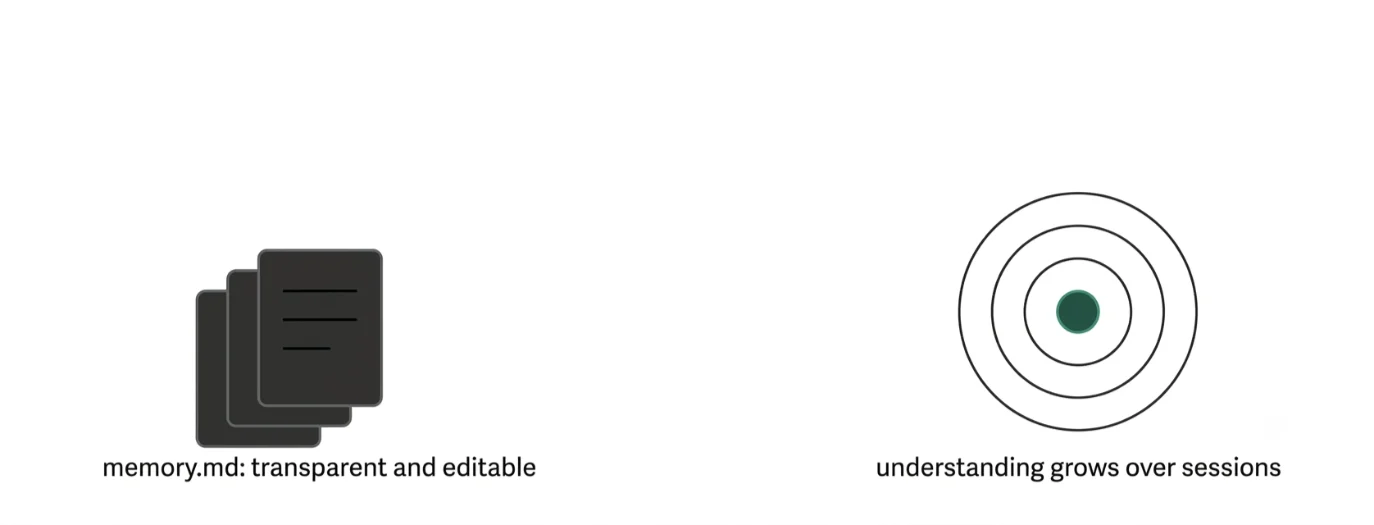
OpenClaw’s memory is file-based. You get MEMORY.md for curated, durable notes, plus daily memory/YYYY-MM-DD.md logs.
- Fully transparent, human-readable and editable
- SQLite-backed hybrid search (
memory_search,memory_get) - Optional “Dreaming” (background consolidation) and ‘Active Memory’ features
- An optional Honcho memory plugin if you want Hermes-style AI-native modeling
Best for: compliance and audit-trail needs, and teams who want full control over what the agent remembers.
Hermes Agent
Hermes keeps persistent memory local to ~/.hermes/. It builds knowledge of your projects and preferences over sessions.
Automated skill creation is the real memory-adjacent differentiator here. Hermes doesn’t just remember what happened, it writes new capability from it.
Best for: hands-off personalization, and long-term working relationships with a single assistant.
This is the core of the openclaw vs hermes agent decision. One gives you a transparent, editable paper trail. The other gets quietly better at your specific work over time.
MLOps & AI Training
Hermes carries its origin as a Nous Research project, a model-training lab, right into its feature set.
- Batch trajectory generation for reinforcement learning, with automatic checkpointing and configurable workers and batch sizes
- Atropos integration for RL, with 11 tool-call parsers for training different model architectures
- Trajectory export in ShareGPT format for fine-tuning, with compression to fit token budgets
This is a niche fit. If you’re training or fine-tuning models, Hermes has tooling OpenClaw simply doesn’t compete on. If you’re not, this section won’t move your decision much.
Pricing and Hosting Costs
OpenClaw (Truehost Pricing)
| Plan | Price | Specs |
|---|---|---|
| OpenClaw Starter | ₦14,000/mo | 1 vCPU, 2GB RAM, 50GB NVMe, 4TB bandwidth |
| OpenClaw Pro | ₦28,000/mo | 2 vCPU, 4GB RAM, 100GB NVMe, 6TB bandwidth |
| OpenClaw Business | ₦63,000/mo | 4 vCPU, 8GB RAM, 200GB NVMe, 8TB bandwidth |
All three plans ship pre-configured. You get a ready-to-use AI workspace, one-click updates, automated installation, dedicated support, and no setup fee.
Check current OpenClaw hosting plans on Truehost for live promo pricing, discounted rates are often available on longer terms.
Hermes Agent
Hermes is free and open source under MIT. There’s no pre-configured package, you install it yourself, using the official script, on a general-purpose VPS.
- Light footprint: 200–350MB RAM CLI-only, 400–950MB with the gateway active
- Additional cost comes from AI model usage, whichever provider you connect, OpenRouter, Nous Portal, or a custom endpoint
Example: A general-purpose VPS or a Truehost VPS plan can run Hermes comfortably, but you’re doing the Docker and SSH setup yourself.
Setup/Onboarding Comparison
- OpenClaw: a Truehost pre-configured path needs no manual setup. Manual self-hosting means running the installer script, the onboarding wizard, then connecting your model and channel.
- Hermes Agent: install via the official script on your own VPS. Choose an execution backend: Local, Docker, SSH Remote, or Modal/Singularity. Connect a model provider.
Here’s the framing point. OpenClaw has the lower-friction path for non-technical users, through Truehost’s hosted option. Hermes assumes more comfort with backend and execution-mode choices upfront.
Community/Support Ecosystem
- OpenClaw: ClawHub as the central skills marketplace and community hub, a docs site, and dedicated Truehost support for hosted customers.
- Hermes Agent: backed by Nous Research, with Community Hubs for agentskills.io-standard skills and GitHub-based support typical for an MIT open-source project.
OpenClaw’s support story splits between community (ClawHub) and paid, hosted support through Truehost. Hermes leans fully community and open-source-driven, with no official hosted-support tier.
Deploy Openclaw Hosting
Both agents are solid choices. The ‘right’ one depends on if you value reach or self-improvement more.
But for most people getting started, OpenClaw has the clearer path in Nigeria today.
We at Truehost offer pre-configured OpenClaw hosting from ₦14,000/month. That means you skip the Docker setup, the SSH configuration, and the manual installation that Hermes still requires.
You get a ready-to-use AI workspace, one-click updates, and dedicated support out of the box. Not a weekend project.
If you want an always-on personal assistant that connects to WhatsApp, Telegram, Slack, and more, without touching a terminal, get started with OpenClaw hosting on Truehost and have your agent running the same day.
Running heavier automation alongside it? Our dedicated servers and N8n hosting give you room to scale workflows once your agent is live.
OpenClaw vs Hermes Agent FAQ
What’s the main difference between OpenClaw and Hermes Agent?
OpenClaw is a messaging-first gateway built for reach about 24 channels, 35+ model providers, and companion apps across desktop and mobile. Hermes Agent is a lean, terminal-first agent that writes its own skills and personalizes itself as you use it.
Is OpenClaw or Hermes Agent free?
Both are open source and free to self-host. You only pay for the server you run them on, plus whatever AI model usage you connect.
Which one is easier to set up?
OpenClaw, if you use a pre-configured host like Truehost. Hermes requires manual installation and a backend choice (Local, Docker, SSH Remote, or Modal/Singularity) regardless of where you host it.
Can I run OpenClaw and Hermes Agent on the same server?
Yes, technically, if the server has enough resources. They don’t conflict directly, though most people pick one as their primary assistant rather than running both side by side.
Does Hermes Agent really get ‘smarter’ over time?
It builds a persistent memory of your projects and preferences, and it writes new skills when it solves hard problems. That’s a real, documented mechanism not marketing language.
Which is more secure, OpenClaw or Hermes Agent?
Both ship real, documented security layers. OpenClaw’s is broader, covering a larger surface area. Hermes leans on Tirith, its command scanner, though it’s worth knowing Tirith fails open by default unless you change that setting.
Do I need to know coding to use either agent?
Not for day-to-day use. Setup is where the gap shows. OpenClaw’s Truehost hosting needs zero manual setup. A self-hosted install of either agent goes faster if you’re comfortable with the command line.