 Domain NamesFind and register your ideal domain name instantly.
 Web HostingEasy-to-use hosting powered by cPanel — ideal for managing websites in Nigeria.
 Windows HostingRun .NET apps with Windows-optimized hosting
 Affiliate ProgramMake money promoting our services
 Reseller HostingMake money by reselling our hosting products under your own brand
 .COM Domains
 All DomainsExplore all supported tld domains in Nigeria
 WhoisFind out who owns any domain, as well as verify your registration details
 VPS Hosting
 Dedicated ServersReimagine your site speed with your own complete server
 AI Website BuilderDesign your site with drag-and-drop tools
 Online Store BuilderStart your online shop without code
 Support PortalFind answers or get expert help
 Contact UsReach our team via chat or email
 BlogRead our extensive guides on web hosting and more
You want to start a blog in Nigeria. You have seen others do it.
You understand it takes work. But there is one question that sits at the back of everything else: when the money comes, how does it actually land in your hand?
That question stops more Nigerian bloggers than any other. Not a lack of skill. Not a lack of ideas. The payment problem.
AdSense asks for a bank account. Affiliate networks are wired in dollars. Sponsored posts pay via transfer.
Digital product platforms have their own systems. If you have never navigated this before, it feels like a wall.
This guide will show you how to start a blog and receive payment in Nigeria.
It walks you through starting a blog in Nigeria from the very first step, then covers every payment method you will encounter as your blog earns.
This includes exactly how to receive dollars, move them to your Nigerian bank account, and keep more of what you earn.
By the end, the full journey from blank page to paid blogger will be clear.
Step 1: Choose a Niche With Earning Intent
Before domain names, before hosting, before any technical setup, you need a niche. Not a passion project.
A niche with earning intent.
The question to ask is not what do I enjoy writing about, but what problems are Nigerians actively searching for answers to online, and are they willing to spend money on solutions.
Niches that consistently earn in Nigeria include:
- Personal finance and money management
- Jobs and career development
- Tech tutorials and software reviews
- Education and scholarship guidance
- Agriculture and agribusiness, and small business advice.
These attract readers who are motivated, who trust specific recommendations, and who convert on affiliate links and digital products.
Gossip and entertainment blogs attract large traffic but earn very low advertising rates in Nigeria, sometimes as little as $0.50 per 1,000 views.
Unless you have a strategy to reach millions of monthly visitors, a high-intent niche will earn you more from a smaller audience.
Choose accordingly.
Step 2: Get Your Domain and Hosting
A domain name is your blog’s address on the internet. A hosting account is the server that stores your blog and makes it accessible.
These two things together are the foundation of every serious blog in Nigeria.
Choosing Your Domain Name
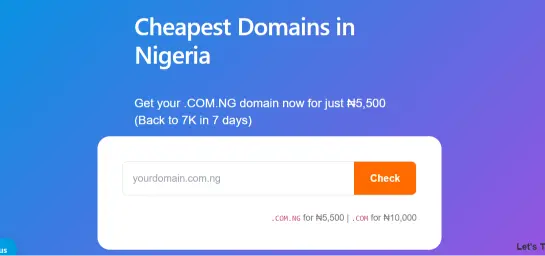
Use a .com domain if you plan to write for a Nigerian and global audience.
Use a .ng or .com.ng domain if your content is specifically local, targeting searches like the best hospitals in Lagos or JAMB preparation tips.
Keep your domain name short, free of hyphens and numbers, and easy for someone to spell after hearing it once.
If you have plans to grow the blog into a media platform or sell it later, use a brand name rather than your personal name.
A beginner blog setup in Nigeria starts from as low as ₦12,000 per year for shared hosting and domain registration combined.
That entry cost is lower than almost any other online business you can start.
Choosing Your Hosting
Your hosting choice directly affects how fast your blog loads. Google uses page speed as a ranking signal. Visitors who wait more than three seconds leave.
A slow blog loses traffic before it earns anything.
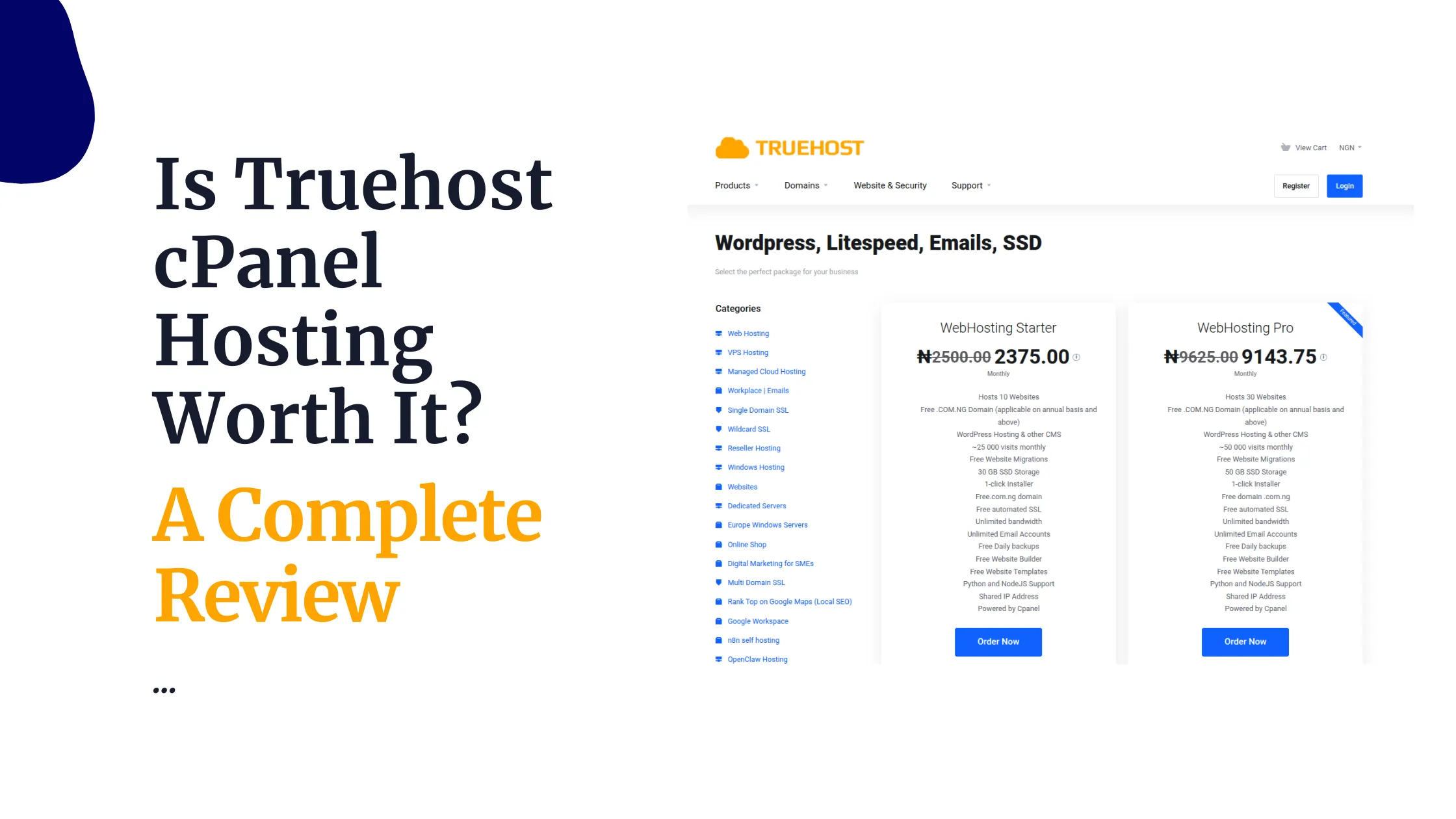
Truehost Nigeria offers hosting plans with strong uptime, Nigerian-friendly payment options, and customer support you can actually reach.
Unlike foreign hosting companies that charge in dollars and require international payment methods most Nigerians struggle with, Truehost Nigeria accepts local payment.
You can pay in naira, set up your blog, and start publishing without needing a virtual dollar card or workaround.
That matters especially when you are just starting, and every step should be as simple as possible.
Once hosting is live, install WordPress. It is free, powers over 40% of all websites globally, and gives you full control over your blog’s design, functionality, and SEO.
Most Nigerian hosting providers, including Truehost Nigeria, include a one-click WordPress installation in their cPanel.
Step 3: Set Up and Launch Your Blog
After WordPress is installed, choose a clean and fast theme. Speed matters more than visual complexity.
A simple, readable theme that loads quickly on mobile is worth more than an elaborate design that slows everything down.
Most Nigerian readers access blogs via smartphone. Your blog must work well on small screens.
The pages you need before your first post goes live are a homepage, an about page that establishes who you are and who the blog serves, a contact page, and a privacy policy page.
The privacy policy is not optional if you plan to run Google AdSense. Google requires it before approval.
Install these essential plugins: Yoast SEO or Rank Math for search engine optimization, a caching plugin to improve load speed, and a security plugin to protect against spam and attacks.
These are free and handle the technical foundations you need without requiring any coding knowledge.
Then publish. Do not wait for perfection. Your first ten posts will not be your best work.
They are the foundation Google needs to understand what your blog is about.
Publish consistently, at a minimum of two to four detailed posts per month, and refine as you grow.
Step 4: How to Receive Payment as a Nigerian Blogger
This is the section most blogging guides skip or handle poorly.
The payment landscape for Nigerian bloggers involves multiple platforms, currencies, and methods, depending on where your income comes from.
Here is how each one works.
Receiving Google AdSense Payments in Nigeria
Google AdSense pays bloggers monthly, on the 21st of each month, for earnings that have crossed the $100 threshold.
Payments are made by wire transfer directly to a Nigerian bank account. You add your bank details inside your AdSense dashboard under payment settings.
For receiving AdSense payments, Nigerian bloggers who have used multiple banks consistently recommend Access Bank for speed.
It is typically credited within 24 hours of Google releasing the payment.
GTBank is also widely used and reliable, though it can take two to three working days longer than Access Bank to reflect the transfer.
You need either a naira account or a domiciliary account. AdSense converts to naira automatically if you use a naira account, or deposits in USD if you use a domiciliary account.
One important note: AdSense requires a PIN verification sent by post to your Nigerian address before your first payment is released.
Request the PIN as soon as your account is approved and your earnings approach $10. It can take two to four weeks to arrive.
Receiving Affiliate Marketing Payments
Affiliate networks pay through different methods depending on the platform. Here is how the main ones work for Nigerian bloggers.
- Payoneer: Accepted by Amazon Associates, CJ Affiliate, ShareASale, and many other global networks. You create a free Payoneer account, receive your affiliate earnings there, and then withdraw to your Nigerian bank account. Payoneer charges a withdrawal fee of approximately $3 to $5 per transfer.
- Geegpay (now Raenest): A Nigerian fintech platform that gives you a virtual USD, GBP, and EUR account in your name. You can receive affiliate payments from international networks directly into your Geegpay account as though you have a foreign bank account. Withdraw to your Nigerian bank account directly from the app.
- Grey Finance: Works similarly to Geegpay. You receive a virtual US, UK, or EU bank account. Receive international payments there, then withdraw to your Nigerian naira account. Grey charges approximately 0.8% on incoming foreign payments capped at $10, and 1% for currency conversion.
- Jumia and Konga Affiliate Programs: These Nigerian platforms pay directly to your Nigerian bank account in naira. No dollar conversion required. Simpler for bloggers whose audience is primarily Nigerian.
Receiving Payments for Digital Products Sold to Nigerian Buyers
If you sell eBooks, courses, templates, or paid guides to a Nigerian audience, the two most reliable platforms are Selar and Paystack Storefront.
Both accept Nigerian debit cards and bank transfers.
Both pay out directly to your Nigerian bank account. Setup is straightforward and does not require any international payment infrastructure.
For selling to international buyers, Gumroad accepts international cards and pays via PayPal or direct deposit.
Nigerian bloggers who use Gumroad connect it to a Geegpay or Grey virtual account to receive payments, then withdraw locally.
Receiving Sponsored Post Payments
Brands sponsoring your blog content typically pay via bank transfer for Nigerian brands or via Payoneer, Geegpay, or wire transfer for international brands.
Once you have a Geegpay or Grey account set up, receiving sponsorship payments from outside Nigeria becomes straightforward.
Share your virtual account details with the sponsor the same way you would share a regular bank account.
Receiving Payments from Premium Ad Networks (Ezoic, Mediavine)
As your traffic grows, premium ad networks pay significantly more than standard AdSense. Ezoic pays via PayPal, Payoneer, direct bank transfer, and cheque.
For Nigerian bloggers, Payoneer is the most practical option. Mediavine pays via direct deposit or Payoneer.
Both networks have minimum traffic requirements before acceptance, but the income difference is meaningful once you qualify.
The Smart Payment Setup for a Nigerian Blogger
Rather than figuring out payment as each income stream arrives, set this infrastructure up before your first payment is due. It takes less than a day and removes every bottleneck.
- Open a Geegpay or Grey account for receiving international payments in USD, GBP, or EUR
- Open a Payoneer account for affiliate networks that require it
- Link a Nigerian bank account (Access Bank recommended for speed) to each platform for withdrawals
- Open a domiciliary account at your preferred bank if you want to hold dollars before converting
- Register on Selar or use Paystack Storefront if you plan to sell digital products to Nigerian buyers
With this setup in place, every payment channel a Nigerian blog generates income from is covered.
You are not scrambling to receive your first payment. The infrastructure is ready before the money arrives.
What Nigerian Bloggers Often Get Wrong With Payments
The name on your payment accounts must match exactly.
If your Payoneer profile says Chukwuemeka Obi and your bank account says Emeka Obi, transfers can be rejected on anti-money laundering grounds.
Use your full legal name, matching your NIN or international passport, on every payment platform from the start.
Correcting this after the fact is frustrating and delays your access to earnings.
Do not hold large amounts in fintech virtual accounts for extended periods. Platforms like Geegpay and Grey are excellent transit tools, but are not traditional insured banks.
Move funds to your Naira bank account or domiciliary account as soon as they arrive.
PayPal in Nigeria is unreliable for receiving blogging income.
As of 2026, you cannot transfer PayPal funds directly to Nigerian bank accounts through the standard flow. Personal accounts cannot receive business payments.
Use PayPal only as a last resort and route it through a Grey or Geegpay virtual account as an intermediate step.
How Much Does It Cost to Start a Blog in Nigeria?
A basic professional blog setup in Nigeria costs between ₦12,000 and ₦25,000 per year for domain registration and shared hosting combined.
It is the minimum investment for a blog that earns. Free platforms like Blogger or WordPress.com are not suitable if your goal is income.
They limit monetization options, look less professional to both readers and advertisers, and give you no control over your own platform.
A mid-level setup with better hosting, a premium theme, and essential tools costs between ₦80,000 and ₦120,000 per year.
At the level where your blog is earning consistently, that annual cost is recovered within one or two months of income.
The Payment Problem Is Solved Before You Start
The question that stops most Nigerian bloggers before they start is the one this guide opened with: when the money comes, how does it actually land in your hand? You now have the complete answer.
AdSense pays via wire to your Nigerian bank account. Affiliate networks pay through Payoneer or Geegpay.
Digital product sales to Nigerians go through Selar or Paystack. International payments route through Grey or Geegpay to your local account.
The payment infrastructure exists. It works. Nigerian bloggers are earning and withdrawing every month.
The only remaining question is whether you will build the blog that generates something worth receiving.
Start with the right domain, reliable hosting, and a niche your readers actually need. Set up your payment accounts before your first naira arrives.
Then focus entirely on creating content that helps people solve real problems. The money follows the usefulness.