 Domain NamesFind and register your ideal domain name instantly.
 Web HostingEasy-to-use hosting powered by cPanel — ideal for managing websites in Nigeria.
 Windows HostingRun .NET apps with Windows-optimized hosting
 Affiliate ProgramMake money promoting our services
 Reseller HostingMake money by reselling our hosting products under your own brand
 .COM Domains
 All DomainsExplore all supported tld domains in Nigeria
 WhoisFind out who owns any domain, as well as verify your registration details
 VPS Hosting
 Dedicated ServersReimagine your site speed with your own complete server
 AI Website BuilderDesign your site with drag-and-drop tools
 Online Store BuilderStart your online shop without code
 Support PortalFind answers or get expert help
 Contact UsReach our team via chat or email
 BlogRead our extensive guides on web hosting and more
If you spend any time on LinkedIn, X, or Reddit lately, you have probably noticed something interesting: regular people are quietly building real income streams with artificial intelligence.
Folks who figured out that AI tools can solve problems businesses are willing to pay for.
The landscape has changed fast.
In 2026, AI is no longer just a chatbot that answers questions.
It is agentic systems, automation platforms, and coding assistants that can handle research, outreach, content creation, and even product development.
You don’t need a big team or a ton of capital to start. What you do need is a clear view of where the real value is and the willingness to take action.
I mean even the numbers back it up.
The generative AI in content creation market is projected to hit $28.75 billion in 2026, growing at an extraordinary 33.5% annually.
Meanwhile, 55% of American adults now use generative AI weekly.
An adoption that took the internet 16 years to achieve, by the way.
This is a fundamental shift in how work gets done.
Be it that you are in Lagos, London, or Los Angeles, the chance to make money with AI has never been more accessible.
Below I have curated a list of seven ways people are using right now.
I’ll give you the real story behind each one, what works, what it pays, and how to get started.
1) Start a Career in AI

Here is a truth that might surprise you: companies in 2026 aren’t just hunting for AI researchers with PhDs.
They are desperate for AI deployment engineers, prompt engineers, and people who can connect AI capabilities to actual business problems.
Take OpenAI for instance. Right now, they are hiring AI Deployment Engineers for their Codex team at salaries between $156,000 and $224,000 a year, plus equity.
The job description? You are already a power user of AI coding tools and you help enterprise customers integrate AI into their workflows.
Notice what is missing: a requirement for a computer science degree from a top university. What matters is what you can do.
Beyond full-time roles, freelancing is exploding.
On Upwork and specialized AI job boards, clients pay premium rates for people who can fine-tune open-source models, build RAG (Retrieval-Augmented Generation) systems, or create custom AI agents.
Freelancers with strong portfolios on GitHub and LinkedIn regularly land gigs in the $40-$80/hour range, regardless of where they are based.
That is especially true for people in regions like Nigeria, where a combination of strong English skills, technical talent, and time‑zone alignment with the US and Europe creates a natural advantage.
Local fintech giants like Flutterwave and Paystack are also building out AI teams for fraud detection, customer service automation, and credit scoring, so opportunities exist both locally and remotely.
And if you are working with US or European clients, the time‑zone overlap means they often wake up to completed work, a subtle but real competitive edge.
So how do you actually break in? Well, it is simple!
Start building a portfolio that shows practical skills.
Contribute to open-source African language models (Yoruba, Igbo, Hausa NLP is a hot niche).
Create GitHub repos that demonstrate LangChain workflows. Document everything on LinkedIn.
And if you want to fast-track credibility, grab a certification from DeepLearning.ai or Fast.ai. They are respected, affordable, and show you are serious.
2) Make Money Investing in AI Companies
You don’t need to be a venture capitalist to ride the AI wave.
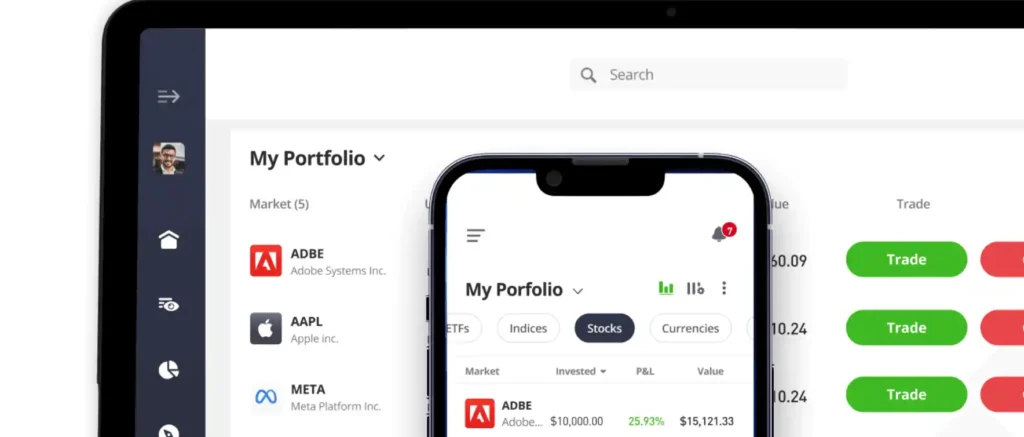
In 2026, there are several ways to invest, from public stocks to alternative assets.
The hyperscalers, Amazon, Microsoft, Google, Meta, are expected to spend a staggering $533 billion on AI infrastructure this year alone.
And they are already monetizing it.
Cloud revenues are growing over 25% year-over-year.
If you are in Nigeria, apps like Bamboo, Rise, and Trove make it easy to buy fractional shares in these companies.
That is a direct way to own a piece of the AI backbone.
But don’t overlook the semiconductor players.
NVIDIA and AMD continue to benefit from the compute‑intensive nature of AI.
And a new generation of AI‑native startups is scaling faster than anything we have seen before.
“Investors should look across the ecosystem for the companies providing the power, physical and digital infrastructure, and applications of the technology to keep pace with its evolution. Do so with a mind towards diversification, think globally and across sectors.”
J.P. Morgan Wealth Management, 2026 Outlook.
If you are willing to take more risk, watch for platforms like AngelList, where accredited investors can back early‑stage AI startups.
OpenAI itself is reportedly experimenting with revenue‑sharing models where they would take a percentage of profits generated by clients using their tech.
That signals a broader shift: the economic value created by AI will increasingly flow to those who own stakes in the underlying infrastructure and platforms.
First step? Open an account with one of those investment apps and set up a small monthly purchase of an AI-focused ETF.
You can even automate it while you learn the landscape.
3) Create and Sell AI-Generated Content

Let us talk numbers: the generative AI in content creation market is now valued at $28.75 billion, and it is expected to hit $77.22 billion by 2030.
Why? Because businesses need more content than ever, and AI lets creators produce it at scale without hiring massive teams.
You don’t have to be a professional artist or writer.
The people making money are using tools like Midjourney, Adobe Firefly, and Claude to generate assets that businesses will pay for. The trick is packaging.
What kinds of content are selling? Here is a quick look at what is moving right now:
- Template packs: Social media carousels, presentation decks, or Canva templates that businesses can rebrand in minutes.
- Brand kits: Logos, color palettes, font combinations, and mockups all generated with AI and sold as a bundle.
- Thumbnail collections: Hundreds of YouTube thumbnail templates ready for creators to drop their own face onto.
- AI voice‑over libraries: Short audio clips in different accents, tones, or even local languages.
- Content systems: Not just assets, but a full workflow like prompts, templates, and a schedule. Businesses pay for the system, not just the files.
On Etsy and Creative Market, sellers earn thousands monthly from these types of products.
Etsy’s policy allows it, as long as you are creating from your own original prompts and inputs.
The smartest creators are shifting to recurring revenue, they sell monthly subscriptions where clients get a steady flow of fresh assets, turning a side hustle into predictable income.
There is also a unique angle for creators in places like Nigeria.
AI avatars that speak Yoruba, Igbo, or Pidgin English are in high demand for local ads.
Small businesses that previously couldn’t afford video production now generate professional commercials for a fraction of the cost.
Your jump‑in point, just pick one niche.
Be it social media thumbnails, brand kits, AI‑generated voiceovers, and master two or three tools deeply.
Build a small portfolio, then offer your services on freelance platforms or through your own Instagram.
You will be surprised how fast word spreads.
4) AI-Assisted YouTube Channel

YouTube has evolved.
So much so that in 2026 the platform rolled out a wave of monetization tools beyond ads.
They are pushing creators to make money with AI through YouTube Shopping, channel memberships, Super Chat, and a new Brand Partnership Hub that connects you directly with sponsors.
The numbers are wild too! YouTube paid creators $100 billion over the last four years.
But ad revenue alone is no longer enough, especially if you are in a lower‑CPM niche.
The platform is also embracing AI, they are rolling out AI tools for generating Shorts, synthetic voices, AI‑assisted games, and even avatars.
The catch, you have to disclose synthetic content and respect the new controls around creator likenesses.
This is great news for aspiring creators.
You can build a faceless channel, think AI‑narrated history, explainers, or finance breakdowns, with tools like ElevenLabs for voice, Midjourney for visuals, and Descript for editing.
The secret is treating your channel like a TV series: consistent episodes, optimized playlists, and binge‑worthy structure.
You can get started by just choosing a niche you are genuinely curious about.
Use AI to accelerate production, but always add your own twist.
And when you qualify for the YouTube Partner Program, enable all monetization features, don’t rely on ads alone.
5) Teach AI Skills

The skills gap is real, and it is wide. Really!
Even though AI tools have gone mainstream, most people are still beginners when it comes to using them effectively.
Companies are scrambling to upskill their teams, and individuals are looking for practical guidance they can apply immediately.
You don’t need a PhD to teach AI.
What businesses and people actually want are applied, helpful skills:
- how to use ChatGPT or Claude, or Google’s Gemini to automate workflows,
- how to build prompts that actually work,
- how to generate professional visuals with Midjourney,
- how to set up no‑code automations with n8n or Zapier.
If you have figured out how to do any of that reliably, you already have something valuable to share.
What skills are people actually paying to learn? Here are a few that consistently have demand:
- Prompt engineering for business: Crafting prompts that deliver usable reports, emails, or code, not just generic outputs.
- AI workflow automation: Connecting tools like Make.com, Zapier, and AI to eliminate repetitive manual tasks.
- AI for content creation: Using Midjourney, Runway, and Claude to produce visuals, scripts, and social assets in minutes.
- AI‑assisted data analysis: Uploading spreadsheets to ChatGPT or Claude and extracting insights without writing complex formulas.
- Custom GPTs and AI agents: Building purpose‑built assistants for customer support, lead generation, or internal knowledge bases.
Even the big players are betting on training.
In May 2024, Accenture acquired Udacity specifically to strengthen its AI and cloud training offerings for enterprise clients.
Microsoft, Oracle, and Adobe are all expanding their educational initiatives.
The demand for skilled AI practitioners far exceeds supply.
For you, the monetization options are diverse: sell courses on Selar or Teachable, run live workshops (in‑person or virtual), offer corporate training packages to businesses, or build a paid newsletter or community around AI skills.
Your first step is to pick one AI skill you have actually used to get results.
Create a free resource, be it a short guide, a video, a mini‑course, and share it.
Gather testimonials. Then start offering paid coaching or workshops. Scale to a full course once you have a waiting list.
If you want to build a serious presence, a dedicated website makes all the difference. It signals credibility and gives you a home for your courses, testimonials, and contact info.
With Truehost, you get reliable, affordable hosting and an AI-powered website builder that helps you get online in minutes, not weeks.
That way you can focus on creating valuable content and serving your students, not wrestling with tech.
6) Build a MicroSaaS
If you have ever dreamed of being a solo founder, 2026 is your year.
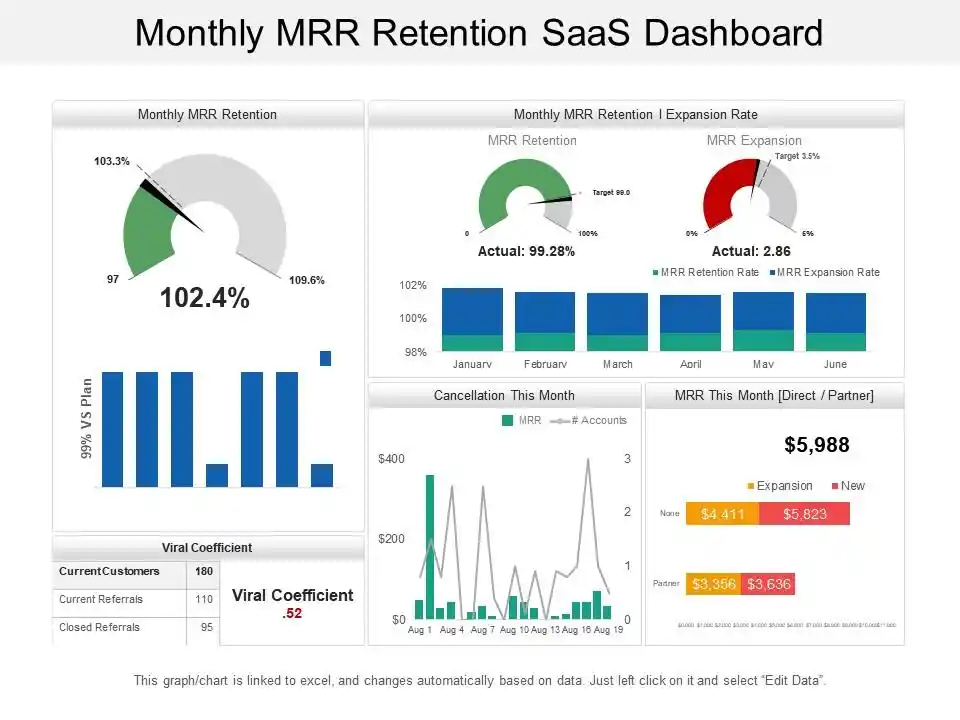
The micro‑SaaS market is projected to hit $59.6 billion by 2030, growing at roughly 30% annually.
Solo entrepreneurs are pulling $10,000 to $100,000 a month from focused AI tools built from a home office.
How? Vibe coding.
With AI coding assistants, you can ship functional software in days instead of months.
You don’t need to build the next Salesforce, just solve one specific problem exceptionally well.
Look at real examples:
- Chatbase, built by solo founder Danny Postma, hit about $50,000 monthly recurring revenue in months.
- Fireflies.ai reportedly crossed $10 million annual recurring revenue.
- Opus Clip, which repurposes long videos into shorts, reached $5 million ARR before raising $20 million.
The pattern is simple: find a painful, recurring problem, build a focused AI tool, charge from day one, iterate with customer feedback.
Popular niches in 2026 include:
- AI content repurposing,
- meeting summaries,
- chatbot builders,
- subscription recovery,
- code documentation,
- and lead generation.
Where to start? Don’t write code until you talk to potential customers.
Validate the problem with real conversations. Then prototype with no‑code or low‑code.
Set up payments early e.g Stripe or Paystack and launch a minimal version.
7) AI-Driven Business Models (Consulting-First)

Here is the approach that veteran AI consultants swear by: sell the outcome, then build the solution.
Instead of building a random tool and hoping customers find it, you start with a specific business problem and pitch a solution.
Why does this work? Businesses don’t buy AI; they buy clarity, speed, and results.
They don’t want an “AI workflow”; they want their support workload cut in half, their lead qualification automated, or their reporting sped up.
If you can diagnose their pain and design an AI system that solves it, they will pay.
So, how does the money stack up based on what successful practitioners are doing?
- Paid discovery ($500-$2,000): A short diagnostic where you map the client’s manual process and identify automation points.
- Implementation ($3,000-$10,000+): Building the workflow, connecting tools, testing.
- Ongoing retainer ($500-$3,000/month): Monitoring, updates, and improvements.
This model works across industries.
Marketing teams need AI agents for research and content operations.
Sales teams need lead enrichment and outreach automation.
Operations teams need reporting and data processing.
The opportunities are endless.
If you are in Nigeria, you actually have a natural edge: you can offer world‑class AI services at rates that are competitive globally while maintaining excellent margins.
Your English proficiency, tech skills, and understanding of both local and international contexts create a powerful value proposition.
Just eye an industry you already understand.
Offer to audit one manual process for free. Use that to show potential efficiency gains.
Once you have a case study, use it to attract paying clients. Focus obsessively on measurable results.
In the End
The chance to make money with AI in 2026 is real, accessible, and growing.
Unlike past tech shifts that demanded specialized degrees or big startup capital, this one is democratized.
Tools that were science fiction a few years ago are now available to anyone with an internet connection and a willingness to learn.
The time to begin is now. Pick one path that matches your skills or curiosity. Take one concrete step today.
And as you build, remember that your online presence is important too.
A professional website is your digital storefront, be it that you are showcasing a portfolio, selling a course, or landing consulting clients.
Truehost makes that easy with website tools that help you build, launch, and grow without tech headaches.
Your website becomes the hub where opportunities find you.
The AI gold rush is here. The only question is: will you be a spectator, or will you stake your claim?
Ready to start your AI income journey? Click below to explore resources, tools, and hosting solutions to build your online presence today.