 Domain NamesFind and register your ideal domain name instantly.
 Web HostingEasy-to-use hosting powered by cPanel — ideal for managing websites in Nigeria.
 Windows HostingRun .NET apps with Windows-optimized hosting
 Affiliate ProgramMake money promoting our services
 Reseller HostingMake money by reselling our hosting products under your own brand
 .COM Domains
 All DomainsExplore all supported tld domains in Nigeria
 WhoisFind out who owns any domain, as well as verify your registration details
 VPS Hosting
 Dedicated ServersReimagine your site speed with your own complete server
 AI Website BuilderDesign your site with drag-and-drop tools
 Online Store BuilderStart your online shop without code
 Support PortalFind answers or get expert help
 Contact UsReach our team via chat or email
 BlogRead our extensive guides on web hosting and more
What is the difference between asking an AI to do something and having it really done?
You can ask ChatGPT to draft a proposal, write an email, or summarize a report all day long. It will give you an excellent response, but once it’s finished, the work is still in your hands.
You have to copy the text, send the email, update your CRM, schedule the follow-up, and move on to the next task yourself.
An OpenClaw AI agent with GPT-4o behind it doesn’t stop at the draft. It sends the email, records the conversation in your CRM, creates a follow-up reminder, updates your project board, and continues to the next step automatically.
Instead of helping with part of the job, it completes the entire workflow, and that makes the whole difference.
Well, OpenClaw supports multiple AI providers, and you can use any model. So, why OpenAI? What does GPT-4o (and GPT-5.4) do better, and what does that mean in a real workflow?
The answer comes down to two capabilities that agent pipelines live or die on every day: structured output and reliable function calling.
When an agent needs to call an API, write to a database, or hand data to the next step in a chain, the model has to format its output correctly every single time.
GPT-4o has earned a strong reputation for producing consistent structured outputs and dependable function calls, and GPT-5.4 builds on those strengths with better reasoning and larger-context capabilities for more demanding workflows.
Now, let’s look at real OpenClaw OpenAI examples to see what it looks like when you put them to work.
OpenClaw OpenAI Examples: 14 Real-World Applications
1) Smart Customer Support
In Nigeria, customer support doesn’t happen on ticketing portals but on WhatsApp.
An OpenClaw agent connected to WhatsApp monitors incoming messages, reads intent (complaint, order query, or refund request), drafts a context-aware reply, and escalates to a human only when the issue is genuinely unresolved.
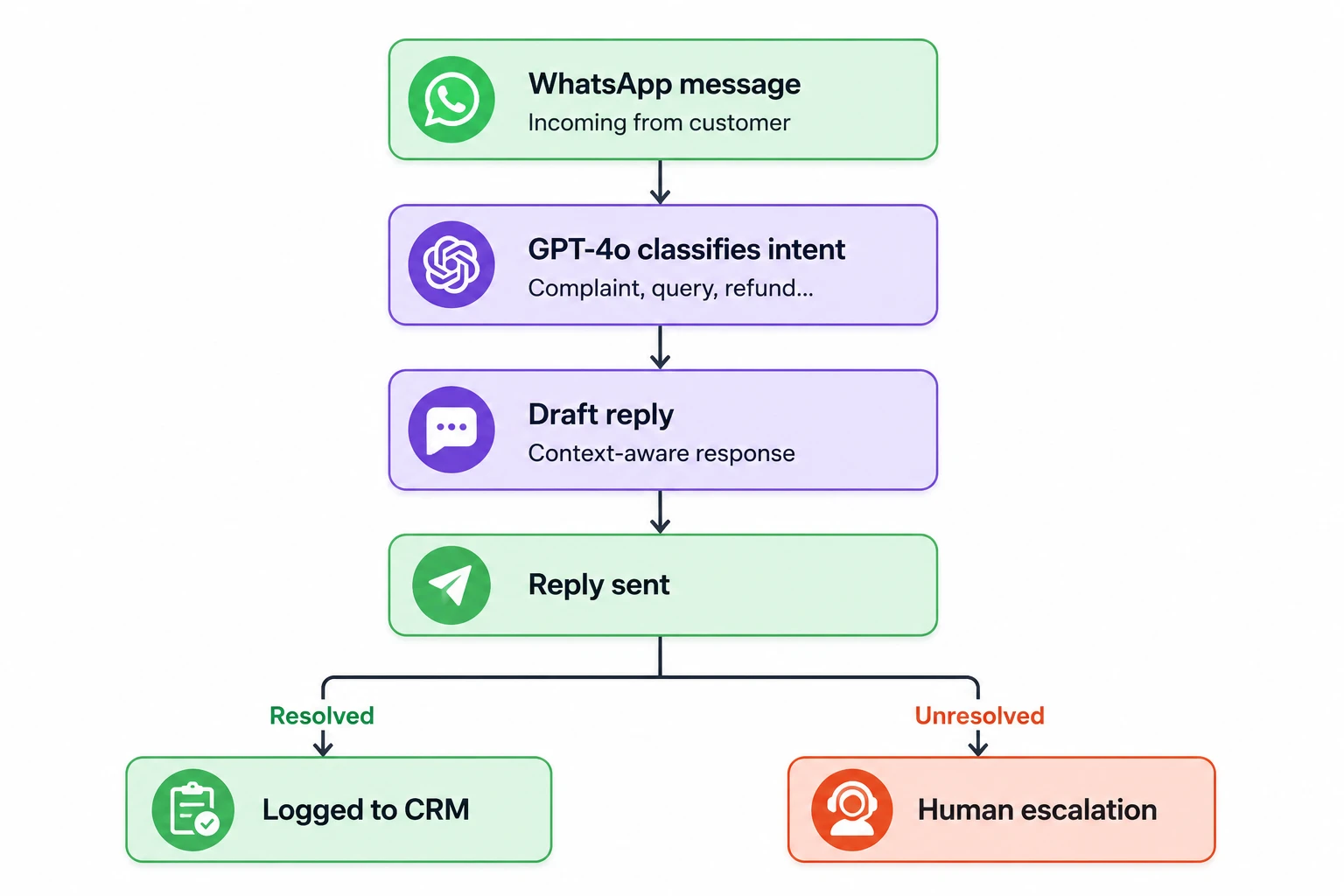
OpenAI’s strength here is its ability to understand messy, informal conversations, including pidgin, mixed Yoruba-English, abbreviations, and everyday expressions, then produce a clear and professional response.
The workflow looks like this:
- Incoming WhatsApp message
- Agent classifies intent
- It drafts reply
- It sends the reply
- Unresolved flag triggers human escalation
- Interaction logged to CRM
It applies best to e-commerce stores, logistics companies, and service businesses handling high message volume.
2) Overnight Research and Competitive Intelligence
One of the most celebrated OpenClaw workflows is overnight research.
Give the agent a directive like, “Compare the top five Nigerian fintech apps,” and it gets to work while you sleep.
Using the browser skill, it scrapes competitor sites, pricing pages, and recent news. It summarizes each source, compares positioning, and structures the findings.
By morning, a formatted report lands in WhatsApp or Telegram.
The agent’s process is simple:
- Directive received
- Browser skill scrapes sources
- OpenAI summarizes each
- Agent compares and structures findings
- Report delivered to messaging app by morning
It works best for consultants, marketers, and founders doing competitor research.
3) Content Creation Pipeline
A practical setup used by many tech publishers runs like this: daily, an agent collects data from chosen sources, drafts structured content, formats it as JSON, and pushes it to WordPress as a draft.
The editor receives a review alert.
CMS publishing requires the output to be structured right every time. A malformed JSON payload breaks the upload. OpenAI’s function-calling reliability is what makes this pipeline stable in production.
The workflow follows these steps:
- Scheduled trigger
- Data collection
- Draft
- JSON formatting
- WordPress draft upload
- Editor alert on Slack/Telegram
It can be used by Nigerian digital agencies, media companies, and solo content operators running multiple sites.
4) Language Translation for Multilingual Operations
GPT-4o’s multilingual capabilities allow a single OpenClaw agent to communicate with customers in their preferred language.
A customer can send a message in Hausa, Yoruba, Igbo, or another language. The agent detects the language, translates it for processing, completes the request, translates the response back, and sends it without requiring a human translator for routine conversations.
Here’s how it works:
- Message received in any language
- Language detected
- Message translated for processing
- Request handled
- Response translated back
- Reply delivered to the customer
It can work well for businesses operating across Nigeria’s multilingual regions, government agencies, NGOs, and pan-African companies.
5) E-Commerce Assistant on WhatsApp
Nigerian e-commerce runs on WhatsApp more than any dedicated platform.
An OpenClaw agent acts as an always-available shop assistant, answering product questions, checking live inventory, making recommendations based on what the customer described, and guiding them to checkout.
It generates product descriptions that match the customer’s tone and budget signals from the conversation.
This is what is happening behind the scene:
- The customer sends a product inquiry on WhatsApp
- Product catalog is retrieved
- GPT-4o generates recommendations and descriptions
- Live stock is checked
- The customer is guided to the payment link
Nigerian online retailers, fashion vendors, electronics sellers, and FMCG distributors using WhatsApp can use this.
6) Data Analysis via Natural Language
A logistics manager can simply send a WhatsApp voice note asking, “How did sales perform this week compared to last?”
OpenClaw uses GPT-4o-transcribe to convert the voice note into text, retrieves the relevant information from a connected database, and lets GPT-4o interpret the results.
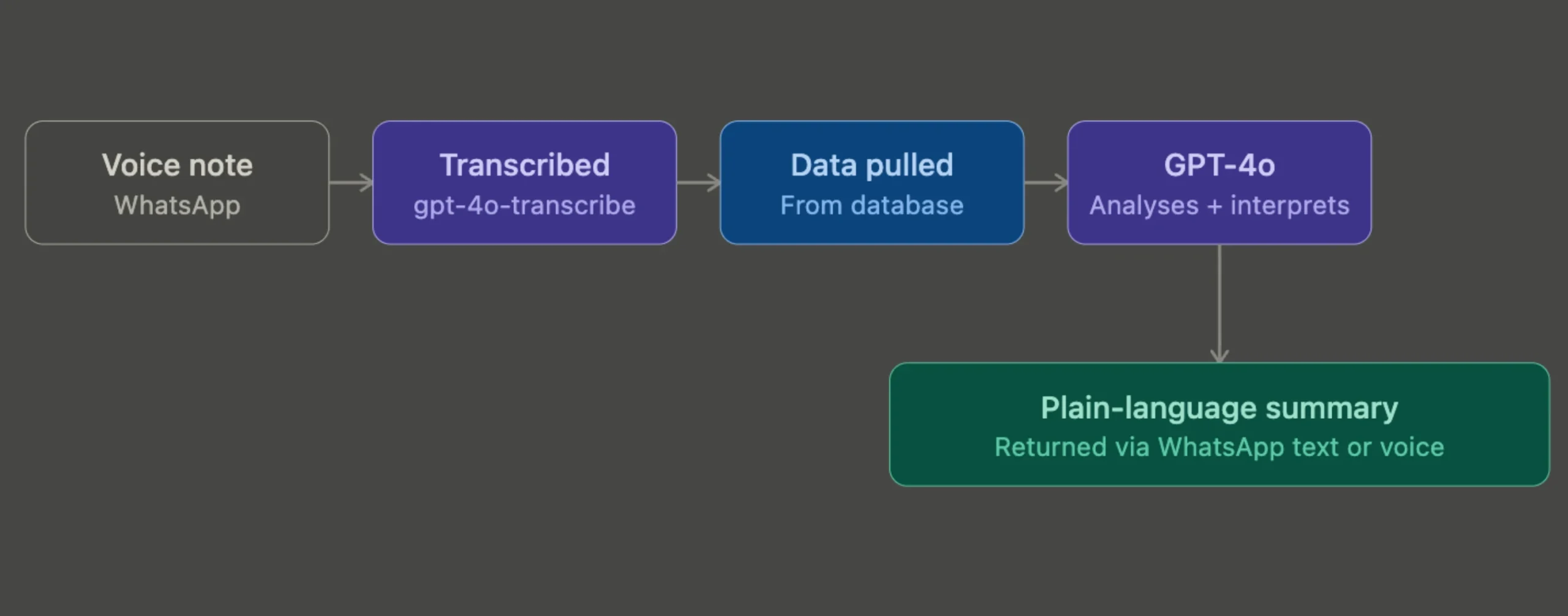
Instead of raw numbers, the manager receives a clear summary highlighting trends, percentage changes, and unusual patterns.
The sequence works like this:
- Voice note received
- gpt-4o-transcribe converts it to text
- The agent retrieves data from the database
- GPT-4o analyzes and interprets the results
- Plain-language summary returned via WhatsApp
This would be a lifesaver for Nigerian SME owners, sales managers, and operations leads who need data insights without system burden.
7) DevOps Monitoring and Incident Response
Infrastructure issues rarely happen during office hours, which is why continuous monitoring is so valuable.
An OpenClaw agent watches the CI/CD pipeline, detects failures, collects logs, and uses GPT-4o to identify the most likely cause.
It then creates a Jira ticket and posts a structured summary to Slack, giving engineers the context they need before they even begin troubleshooting.
From detection to notification, the workflow is:
- CI/CD pipeline monitored
- Failure detected
- Logs collected
- Probable root cause identified
- Jira ticket created
- Structured Slack summary posted
This can be used by Nigerian tech startups, SaaS companies, and development agencies managing client infrastructure.
8) Task Automation and Daily Briefings
A scheduled morning briefing pulls emails, calendar events, pending tasks, and overnight alerts, then synthesizes them into a single prioritized summary delivered to each team member on WhatsApp or Telegram.
Meeting transcripts are processed automatically, with action items extracted, owners assigned, tasks created in the project board, and follow-up messages sent.
For more advanced setups, OpenClaw can use a four-agent model consisting of a research agent, an analysis agent powered by GPT-5.4 for large-context reasoning, a writing agent using GPT-4o, and a delivery agent.
Memory hot-swap helps keep costs under control across each stage.
The workflow follows this sequence:
- Scheduled trigger
- Data pulled from email/calendar/tasks
- Synthesised
- Personalized briefing delivered per team member
- Meeting transcript processed
- Tasks created
- Follow-ups sent
This applies best for remote teams, agency operations leads, and executives managing distributed Nigeria-based staff.
9) Email Triage and Inbox Zero
An OpenClaw agent connects to Gmail or Outlook via IMAP, reads unread messages from the past 24 hours, analyzes urgency, and sends a prioritized morning briefing to your Telegram or WhatsApp before you open a single tab.
You wake up to something like, “3 urgent emails: Client X needs proposal approval by noon. Your hosting invoice is overdue. Sarah replied about the Q3 budget.” Below that, medium-priority items and everything else that can wait.
OpenAI handles the classification, distinguishing a client complaint from a newsletter or a payment alert from promotional spam, and drafts suggested replies for messages that need a response.
You then approve before anything is sent.
The workflow follows these steps:
- Scheduled morning trigger
- Agent connects to Gmail/Outlook via IMAP
- Pulls unread messages from last 24 hours
- OpenAI classifies by urgency and intent
- Prioritised summary sent to WhatsApp/Telegram
- Draft replies generated and queued for approval
This works best for founders, account managers, and client-facing professionals handling 50+ emails daily.
10) Client Onboarding Automation
Every time a new client signs on, the same checklist runs: Create accounts, send the welcome email, schedule the kickoff call, provision access, and update the CRM. Done manually, it takes hours and introduces room for error.
An OpenClaw agent handles the entire sequence the moment a deal closes.
It detects the new client from a CRM webhook, creates accounts in connected tools, sends a personalized welcome email, and books the launch meeting on both calendars.
OpenAI personalizes the welcome communication using the client’s name, company, and the specific service they signed up for.
Your new client gets a professional, attentive onboarding experience within minutes of signing, and not days later when you remember to follow up.
The onboarding process looks like this:
- CRM webhook detects new client
- Agent reads client data
- Accounts created in connected tools
- Drafts personalized welcome email
- Email sent
- Kickoff calendar invite scheduled
- CRM status updated and logged
This is especially useful for agencies, SaaS startups, and service businesses onboarding multiple clients per month.
11) KPI Snapshots and Team Reporting
An OpenClaw agent can collect metrics from multiple dashboards every day or week and turn them into a single report for your team.
GPT-4o compares current performance with previous periods, highlights important trends, and flags unusual changes before delivering a custom report to each department. Sales, engineering, and support teams each receive the metrics most relevant to them.
The reporting workflow is simple:
- Scheduled daily or weekly trigger
- Metrics collected from connected APIs
- Current performance compared with previous periods
- Trends and anomalies highlighted
- Report delivered to Slack or Telegram for each team
This applies best to startup teams, SaaS businesses, and operations managers tracking performance across multiple systems.
12) Dependency Monitoring and Security Alerts
An OpenClaw agent runs this check weekly.
It scans your project’s dependency files, checks each package against the relevant registry for newer versions, cross-references with known vulnerability databases, and sends a prioritized report.
GPT-4o explains what each vulnerability means in plain language and recommends which updates are urgent versus optional. Your engineering team gets actionable information, not a raw list of version numbers to research manually.
The weekly check follows this sequence:
- Weekly scheduled trigger
- Agent scans dependency files
- Checks packages against registries for updates
- Cross-references vulnerability databases
- GPT-4o interprets severity and drafts a plain-language summary
- Prioritised report delivered to Slack or Telegram
It is particularly valuable for development teams, SaaS companies, and agencies managing multiple client codebases.
13) Overnight Coding and Bug Resolution
The agent can observe a developer’s work throughout the day, learning the codebase, the recent commits, and the open issues.
When delegated overnight tasks, it makes informed decisions rather than following blind prompts.
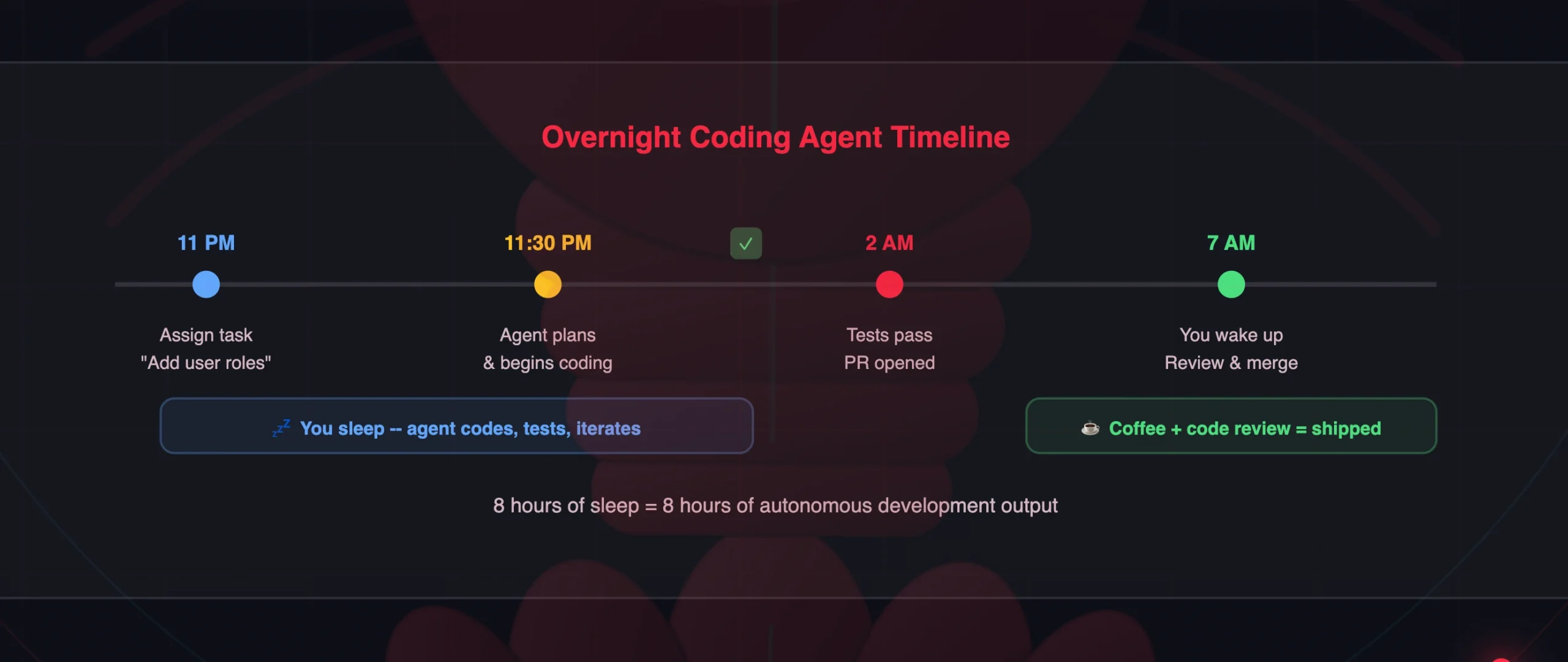
With GPT-5.3-Codex handling the reasoning and OpenClaw executing the terminal commands and Git operations, the agent can identify failing tests, trace the root cause, write a fix, run the test suite again, and commit the passing result, all without waking anyone up.
The overnight workflow looks like this:
- The developer delegates open issues or failing tests before signing off
- Agent reviews codebase context and recent commits
- Identifies the root cause and writes a fix
- Executes terminal commands and runs test suite
- Fix committed and deployed on passing tests
- Summary report delivered to developer by morning
This works best for software developers, technical co-founders, and development agencies with ongoing maintenance workloads.
14) Brand Mention Monitoring on Social Media
An OpenClaw agent monitors X’s API on an hourly schedule, searching for mentions of your brand name, product names, and relevant keywords.
It analyses each mention to determine if it requires action: a complaint, a support request, a positive review worth engaging, or noise to ignore.
Mentions that need a response land in your Slack or WhatsApp with the post content, the user’s profile, and a suggested response category. You decide what to say immediately before the customer moves on.
The monitoring process works like this:
- Hourly scheduled trigger
- Agent searches X API for brand and keyword mentions
- Classifies each mention by type and urgency
- Actionable mentions delivered to Slack/WhatsApp with context
- Suggested response category included
- The team responds directly to the notification
This is useful for brands, founders, and marketing teams building public presence on X.
Try These Examples on Truehost OpenClaw VPS Hosting
Now that you have a good number of examples to try, choose the one that will be most helpful to you to start with.
You don’t have to automate everything at once. You can start with a workflow that does not need to run overnight to see how it works for you. Once you’re comfortable, you can expand into more advanced automations that run continuously in the background.
To do that reliably, you’ll need infrastructure that stays online 24/7, restarts automatically after a failure, and can handle multiple workflows without slowing down.
That is what our OpenClaw VPS Hosting is built for.
Starting from just NGN 10,500 per month, you get an always-on environment where your AI agents can work around the clock without depending on your personal computer.
From there, you can finally run workflows overnight and make huge milestones with your work.