 Domain NamesFind and register your ideal domain name instantly.
 Web HostingEasy-to-use hosting powered by cPanel — ideal for managing websites in Nigeria.
 Windows HostingRun .NET apps with Windows-optimized hosting
 Affiliate ProgramMake money promoting our services
 Reseller HostingMake money by reselling our hosting products under your own brand
 .COM Domains
 All DomainsExplore all supported tld domains in Nigeria
 WhoisFind out who owns any domain, as well as verify your registration details
 VPS Hosting in Nigeria
 Dedicated ServersReimagine your site speed with your own complete server
 AI Website BuilderDesign your site with drag-and-drop tools
 Online Store BuilderStart your online shop without code
 Support PortalFind answers or get expert help
 Contact UsReach our team via chat or email
 BlogRead our extensive guides on web hosting and more
Website uptime is one of those things you don’t think about until it lets you down.
Everything seems fine. Your site is live. Traffic is coming in.
Then one visitor clicks your link.
The page takes too long to load. They refresh, and nothing happens.
So they leave.
There’s a warning or no second chance.
In that quiet moment, you lose more than a visitor. You lose trust, potential sales, and sometimes even your hard-earned search rankings. And the worst part? You often don’t find out until the damage is already done.
In 2026, website uptime is the baseline. Whether you run a personal blog, an online store, or a growing business website, people expect your site to be available every single time they visit, day or night.
Search engines expect the same. If your site goes down too often, they stop showing it to people.
That’s why uptime isn’t just a technical issue. It’s a business issue.
In this guide, you’ll learn 5 essential, practical tips to protect your website’s uptime in 2026, to keep your website online, reliable, and ready when your audience needs it most.
What Exactly is Website Uptime?

Before we fix it, let’s define it. Website uptime is the amount of time your website stays online and accessible to users.
It is usually measured in percentages. For example, if a host promises 99.9% uptime, it sounds great, right?
However, that 0.1% of “downtime” still allows for about 43 minutes of your site being offline every month. In a fast-paced market like Nigeria, 43 minutes of silence can cost you millions in lost sales.
Why Uptime Matters More in 2026
Here’s why website uptime matters more than ever in 2026:
- Visitors lose trust almost instantly
When your site fails to load, people assume the brand is unreliable. One bad experience is often enough to stop them from coming back.
- Sales and leads stop the moment your site goes offline
No checkout page, contact form, or conversions. Downtime doesn’t delay revenue; it cuts it off.
- Search engines quietly penalize unstable websites
If Google can’t access your site consistently, it may reduce how often or how high it ranks your pages in search results.
- Paid ads keep spending even when your site is down
Your campaigns don’t pause for downtime. People click, land on a broken page, and leave, while your budget keeps shrinking.
- Competitors are always one click away
If your website isn’t available, users won’t wait. They move on to another option and rarely look back.
In 2026, uptime isn’t about perfection. It’s about being there when your audience needs you.
What Causes Website Downtime?
Before you can protect your website’s uptime, you need to understand why websites go down in the first place.
Downtime rarely happens by accident. Most of the time, it’s the result of small issues piling up until something finally breaks.
Here are the most common causes:
- Poor quality hosting
Cheap or overloaded servers struggle to handle traffic, updates, and basic performance demands.
- Server overload
Sudden traffic spikes, heavy scripts, or limited resources can push a server beyond its limits.
- Software conflicts
Outdated plugins, themes, or system updates that don’t work well together can crash your site.
- Security attacks
DDoS attacks, malware, and brute-force attempts can slow your site down or take it offline completely.
- Lack of monitoring
If no one is watching your website, downtime can go unnoticed for hours.
- No backup plan
When something breaks, and there’s no backup, recovery takes longer than it should.
The good news?
Most website downtime is completely preventable.
With the right hosting, monitoring, updates, and backups in place, you can stop these issues before they affect your visitors.
Let’s fix them, one step at a time.
5 Essential Tips to Protect Your Website Uptime
To keep your business running smoothly, follow these five proven strategies for 2026.
1) Choose Hosting With a Real Uptime SLA
Not all hosting providers play by the same rules.
Some talk about “fast servers” and “reliable performance,” but never put numbers behind those promises. Others back their claims with a Service Level Agreement (SLA).
An SLA is a written commitment that defines how reliable your hosting should be.
What to Look for in a Uptime SLA
A solid uptime SLA should clearly explain:
- Guaranteed uptime, ideally 99.9% or higher
- How downtime is tracked and calculated
- What happens if the promise isn’t met, including compensation
If a host won’t put uptime in writing, they’re not accountable.
Why This Matters in 2026
Websites today are heavier than ever.
Traffic spikes happen without warning.
AI bots and crawlers visit sites more frequently.
Your hosting provider must be built for this reality.
Strong website uptime always starts with the right foundation.
2) Use Server Monitoring (So You’re Not the Last to Know)
One of the most common uptime mistakes is finding out your site is down from a visitor.
By then, damage is already done.
What Is Website Monitoring?
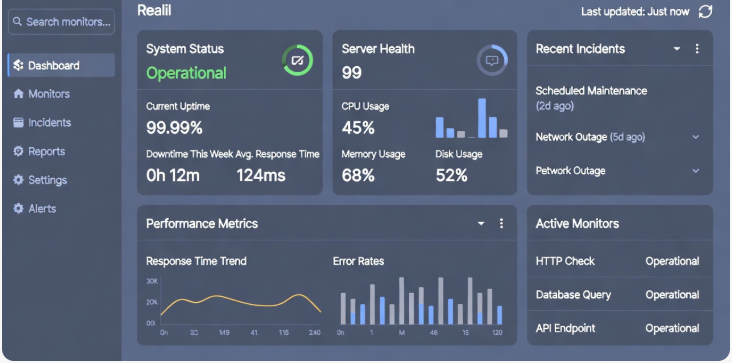
Monitoring tools automatically check your website and alert you when:
- Your site becomes unavailable
- Pages take too long to load
- The server stops responding
This means you can act before users start leaving.
What You Should Monitor
At the very least, keep an eye on:
- Server uptime
- Page response time
- Error rates, such as 500 errors or timeouts
You can’t protect what you’re not watching.
Many hosting platforms include basic monitoring. If yours doesn’t, adding it is essential.
Monitoring turns downtime from a surprise into a quick, manageable fix.
3) Keep Your Website Software Updated (Always)
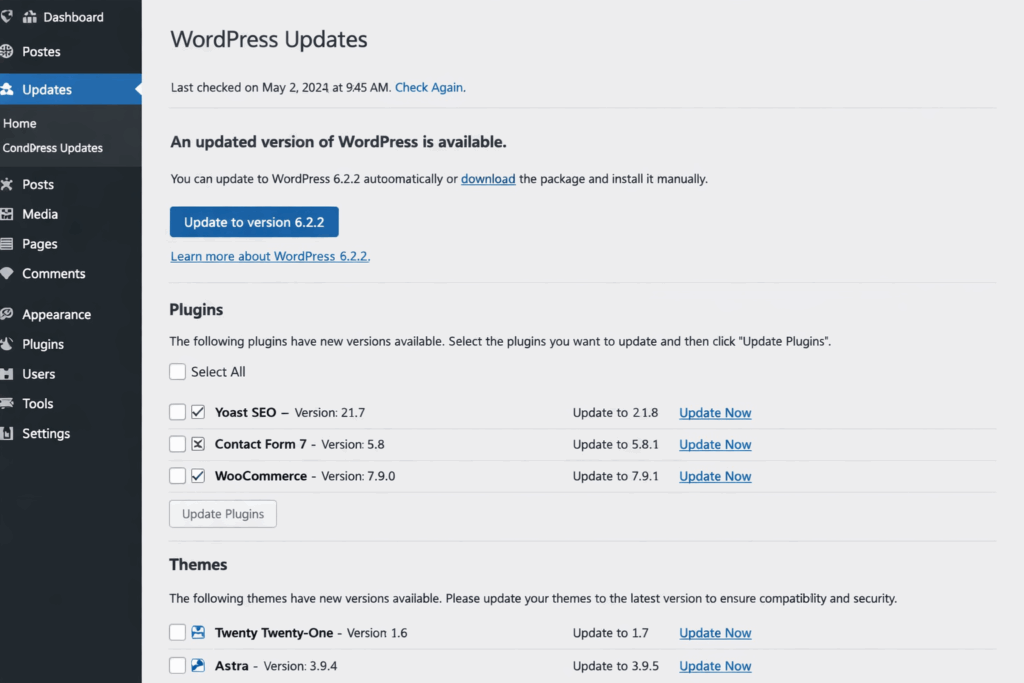
Outdated software quietly destroys website uptime.
It doesn’t just open security gaps.
It creates bugs, crashes, and unexpected errors.
What Needs Regular Updates?
Make sure these are always up to date:
- Your content management system (like WordPress)
- Themes
- Plugins or extensions
- Server software, including PHP and databases
Old code struggles to keep up with modern demands.
Why Updates Improve Website Uptime
Updates usually include:
- Fixes for known bugs
- Performance improvements
- Critical security patches
Skipping updates might feel safe, but it slowly weakens your website.
An unupdated site may look fine until it suddenly isn’t.
With managed hosting, many updates are handled for you, reducing risk and effort.
4) Protect Your Site From Attacks and Traffic Spikes
Not all downtime is caused by mistakes or hardware failures.
In 2026, many outages are triggered by automated attacks and sudden traffic floods.
Common Threats That Kill Uptime
Some of the biggest threats include:
- DDoS attacks that overwhelm servers
- Brute-force login attempts
- Malware infections
- Spam traffic overload
Any of these can slow your site down or take it offline completely.
How to Strengthen Your Website
The key is prevention:
- Use a web application firewall (WAF)
- Enable rate limiting
- Secure login pages
- Install and maintain an SSL certificate
Security and uptime go hand in hand.
At Truehost, layered security is designed to block threats before they impact availability.
A protected website stays online longer.
5) Always Have Backups
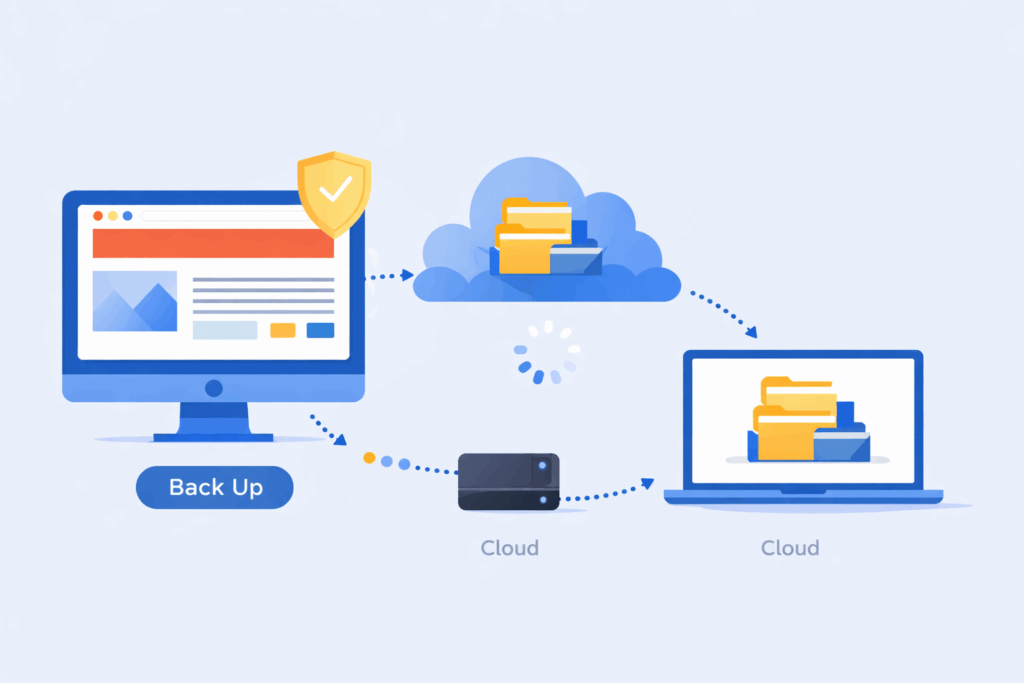
Even when everything is set up correctly, problems can still happen.
- Servers fail.
- Updates break sites.
- Human errors occur.
That’s why backups matter.
What a Good Backup Strategy Looks Like
Reliable backups should be:
- Automatic, not manual
- Frequent, at least daily
- Stored off the main server
- Quick and easy to restore
If recovery takes hours, downtime becomes expensive.
Backups don’t stop downtime, but they dramatically reduce it.
Why Backups Matter for Website Uptime
Fast recovery leads to:
- Less revenue loss
- Less stress
- Less long-term SEO damage
With proper backups, downtime becomes a brief interruption, not a business disaster.
How Website Uptime Affects SEO and Sales
Let’s bring this down to real life.
When your website goes offline, the impact is immediate, even if the outage is short.
- Google bots can’t crawl your site
If search engines can’t access your pages, they can’t index updates or assess performance.
- Search rankings may slowly drop
Repeated downtime sends a signal that your site is unstable, which can affect visibility over time.
- Paid ads keep spending with nothing to show for it
Campaigns don’t pause automatically. People click, land on a broken page, and leave, while your budget keeps running.
- Visitors lose confidence instantly
A site that doesn’t load feels unreliable. Many users won’t give it a second chance.
Even brief outages add up. A few minutes today, another tomorrow, and suddenly the damage is noticeable.
Website uptime is invisible when it works, and unforgettable when it fails.
Search engines reward stable websites. Customers stick with brands they can rely on. Both your SEO and your sales depend on one simple thing: your site being available when it matters most.
Conclusion
Website uptime isn’t just a technical metric you check once in a while. It’s a reflection of how reliable your brand really is.
Every time your website loads quickly and works as expected, you reinforce trust. Visitors feel confident. Customers stay longer. Search engines take you seriously.
But when your site goes down, even briefly, that trust is tested.
The good news is that uptime problems are rarely unavoidable. With the right hosting, proper monitoring, regular updates, solid security, and reliable backups, you can stay ahead of most issues before they affect your users.
In 2026, being online isn’t enough. Being consistently available is what sets strong websites apart from the rest.
Protect your uptime, and you’re not just keeping a site running, you’re protecting your traffic, your sales, and your reputation.