 Domain NamesFind and register your ideal domain name instantly.
 Web HostingEasy-to-use hosting powered by cPanel — ideal for managing websites in Nigeria.
 Windows HostingRun .NET apps with Windows-optimized hosting
 Affiliate ProgramMake money promoting our services
 Reseller HostingMake money by reselling our hosting products under your own brand
 .COM Domains
 All DomainsExplore all supported tld domains in Nigeria
 WhoisFind out who owns any domain, as well as verify your registration details
 VPS Hosting in Nigeria
 Dedicated ServersReimagine your site speed with your own complete server
 AI Website BuilderDesign your site with drag-and-drop tools
 Online Store BuilderStart your online shop without code
 Support PortalFind answers or get expert help
 Contact UsReach our team via chat or email
 BlogRead our extensive guides on web hosting and more
Workflow automation platforms all promise the same thing: connect your apps, cut out manual work, and let data move on its own. But the tools built to deliver on that promise differ enormously in how they bill you, how steep the learning curve is, how many integrations they offer, and, often overlooked until it counts, who actually holds your data.
This guide compares n8n (both n8n Cloud and self-hosted, including managed self-hosting with Truehost) against the platforms most commonly cross-shopped against it: Zapier, Make, Microsoft Power Automate, Pipedream, and Activepieces.
We’ll look at pricing models, ease of use, integration depth, data control, and how each handles advanced or AI-driven workflows, so you can match the right tool to your actual usage pattern rather than a marketing page.
Side-by-side Comparison
| Platform | Starting Price | Free / Trial | Billing Model | Integrations (approx.) | Self-Hosted / Data Control |
| Truehost n8n | ₦12,250.00 | No free tier; fully managed from day one | Flat monthly Naira (unlimited executions within VPS capacity) | Same as n8n (400+ native + community + unlimited via HTTP/Code) | Yes, dedicated KVM VPS, full control, data stays with you |
| n8n Cloud | Starter ~$20–24/mo (2,500 executions), Pro ~$50–60/mo (10,000) | Trial only (commonly 14 days) | Per workflow execution | Same as above | No (cloud only) |
| Zapier | Professional from ~$20–30/mo | Free: 100 tasks/mo | Per task (action step) | 9,000+ | No |
| Make | Core ~$9–12/mo (10,000 credits) | Free: 1,000 credits/mo | Per credit/operation | 3,000+ | No |
| Microsoft Power Automate | Premium $15/user/mo, Process $150/bot/mo | Limited free via Microsoft 365 | Per user or per bot | 1,000+ (deepest Microsoft + RPA) | Primarily cloud |
| Pipedream | Basic $29/mo | Free with credit limits | Credit-based (compute time/memory) | 3,000+ | No |
| Activepieces | Cloud: $5 per active flow after 10 free | Cloud free for 10 flows; self-hosted Community free (MIT) | Per active flow (unlimited runs) or free self-hosted | Hundreds (growing via community) | Yes |
1) Pricing
Cloud vs. self-hosting with n8n
The single most important thing to understand about n8n’s pricing is that n8n bills Cloud users per workflow execution, not per step. Run a 10-step workflow 1,000 times in a month, and that’s 1,000 executions, not 10,000. This is fundamentally different from Zapier’s model (more on that below), and it’s why n8n tends to stay cheap even as workflows get more complex.
n8n Cloud’s tiers break down as:
- Starter: ~$20/mo billed annually, 2,500 executions/mo
- Pro: ~$50/mo billed annually, 10,000 executions/mo
There’s no permanent free Cloud tier, only a 14-day trial, regardless of which plan you pick.
The Community Edition, n8n’s open-source core, is free to run yourself with no execution cap. You only pay for the server it runs on, which is exactly the gap Truehost’s managed n8n hosting is built to fill.
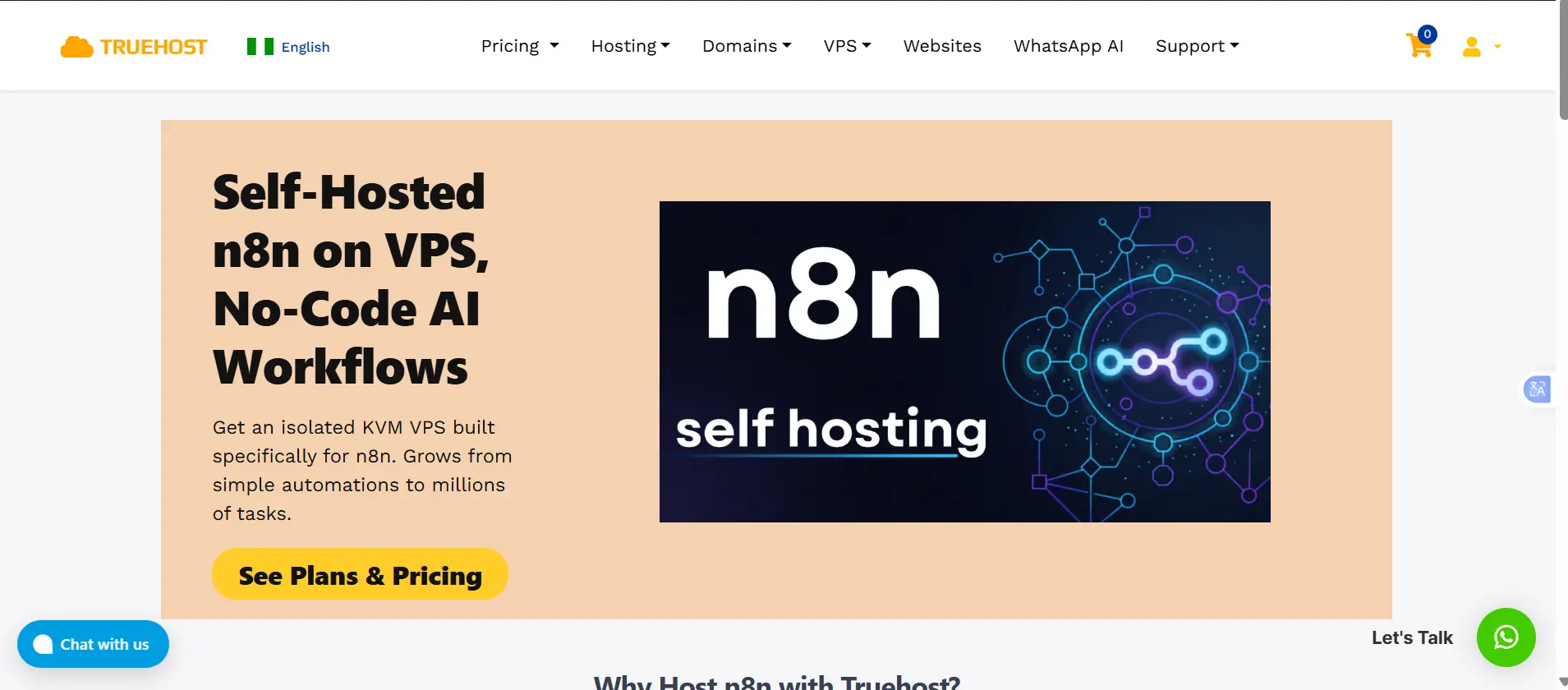
Truehost n8n provides a dedicated KVM VPS pre-configured with n8n, PostgreSQL, and queue mode (a Redis-backed setup that spins up worker processes to absorb webhook spikes), plus free SSL and 100+ prebuilt workflow templates, all for a fixed monthly Naira price with unlimited workflows and concurrent executions. Plans include:
- N8N Starter: ₦12,250.00, 1 vCPU, 2GB RAM, 50GB NVMe, 4TB bandwidth
- N8N Pro: ₦24,500.00, 2 vCPU, 4GB RAM, 100GB NVMe, 6TB bandwidth
- N8N Business: ₦59,500.00, 4 vCPU, 8GB RAM, 200GB NVMe, 8TB bandwidth
Rates shown are billed triennially.
Before choosing a server, check the n8n VPS requirements to make sure your automation workload has enough CPU and RAM.
Every tier includes full SSH root access, so you can install community nodes, run Python scripts, or add npm modules directly on the server- the same flexibility n8n Cloud offers, but without an execution ceiling.
Zapier
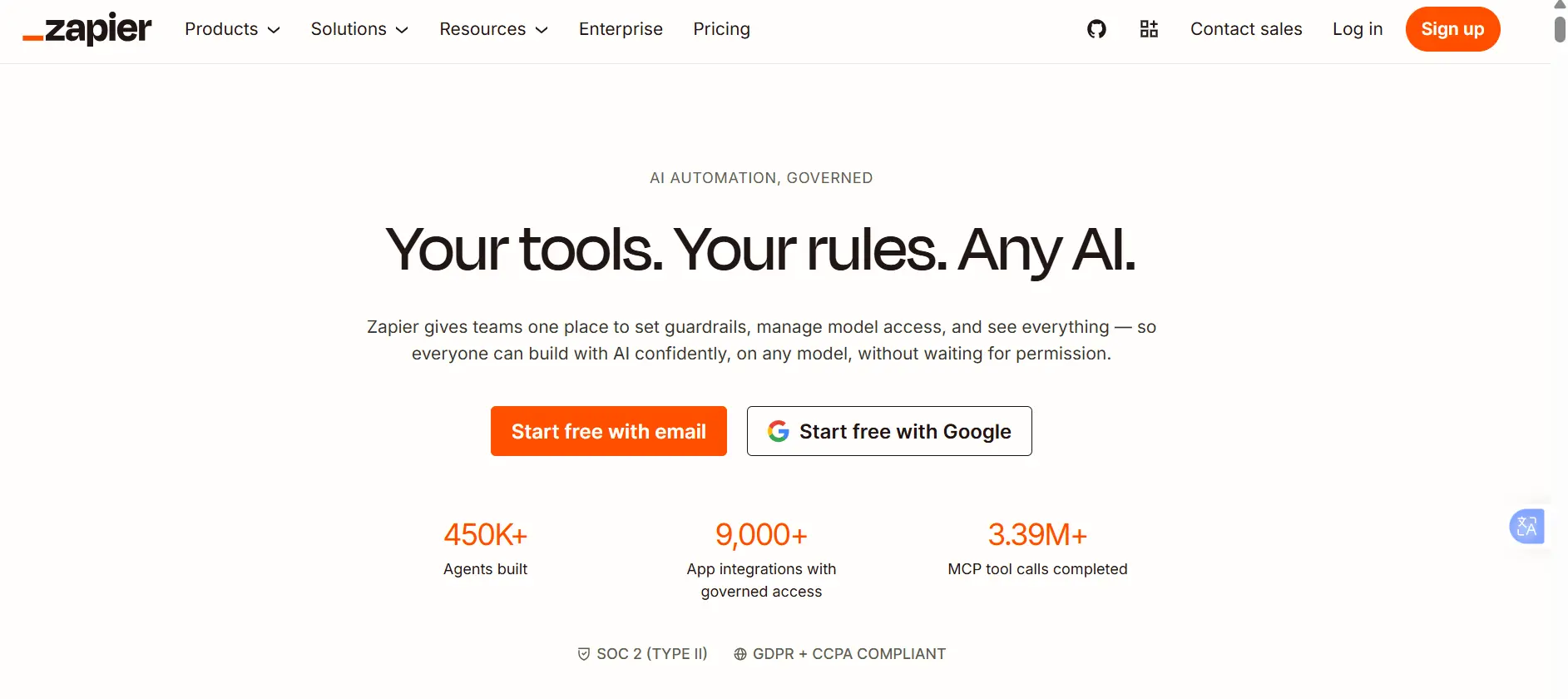
Zapier bills per action/task, not per run. That same 10-step workflow run 1,000 times a month becomes 10,000 tasks, the inverse of n8n’s model, and the reason Zapier costs can escalate quickly for multi-step automations.
- Free: 100 tasks/mo, limited to 2-step Zaps
- Professional: $19.99/mo billed annually (750 tasks), or $29.99/mo billed monthly
- Team: $69/mo billed annually, 2,000 tasks
Make
Make bills per operation/module run; it moved to a “credits” naming convention in late 2025, but the underlying mechanics are unchanged.
- Free: 1,000 operations/mo
- Core: $9/mo billed annually, 10,000 operations
Microsoft Power Automate
- Premium: $15/user/mo billed annually, unlimited cloud flows, premium connectors, attended RPA
- Unattended RPA bot: $150/bot/mo
- Hosted (Microsoft-run) unattended bot: $215/bot/mo
- Basic cloud flows with standard connectors ship free with most Microsoft 365 seats
Pipedream
- Free: 100 credits/day
- Basic: $29/mo, no hard usage cap (2,000 credits included)
Activepieces
- Free: $0/mo, unlimited flows, daily-refreshing credits with a hard cap once used (no card required)
- Plus: $16/mo billed yearly, 3x the credits, pay-as-you-go beyond that, up to 5 users
2) Ease of Use
Each platform targets a different comfort level with technical work:
- n8n (Truehost): The standard n8n node editor has a real learning curve: expressions, variables, JSON manipulation, but it pays off in flexibility once mastered. Truehost’s automated install and pre-configured queue mode remove the infrastructure headache entirely; the node-editor curve itself is unchanged, because that’s n8n’s interface, not the hosting layer.
- Zapier: Easiest tool here for beginners. Linear trigger → action logic, plus AI Copilot/Agents features that write simple Zaps from a prompt.
- Make: A friendlier visual canvas than n8n’s, popular with ops and marketing teams who want branching logic without writing expressions constantly.
- Activepieces: Deliberately modeled on Zapier’s simplicity while staying self-hostable, arguably the easiest on-ramp among open-source tools.
- Pipedream: Code-first. Built for developers who want to drop into JavaScript or Python mid-workflow, not for no-code beginners.
- Power Automate: Feels natural if you’re already living in Microsoft 365, and it’s the only platform on this list with desktop RPA for automating apps that have no API at all.
3) Integrations & Flexibility
- n8n / Truehost: Truehost’s plans add full access to community node integrations, 100+ pre-made n8n workflow templates to start from, and full SSH root access so you can customize Docker files, run your own Python scripts, or add npm modules directly on the server.
- Zapier: The largest catalog by far, at 9,000+ apps, all no-code by default.
- Make: Roughly 3,000 apps, with deeper field-level configuration per app than Zapier typically allows.
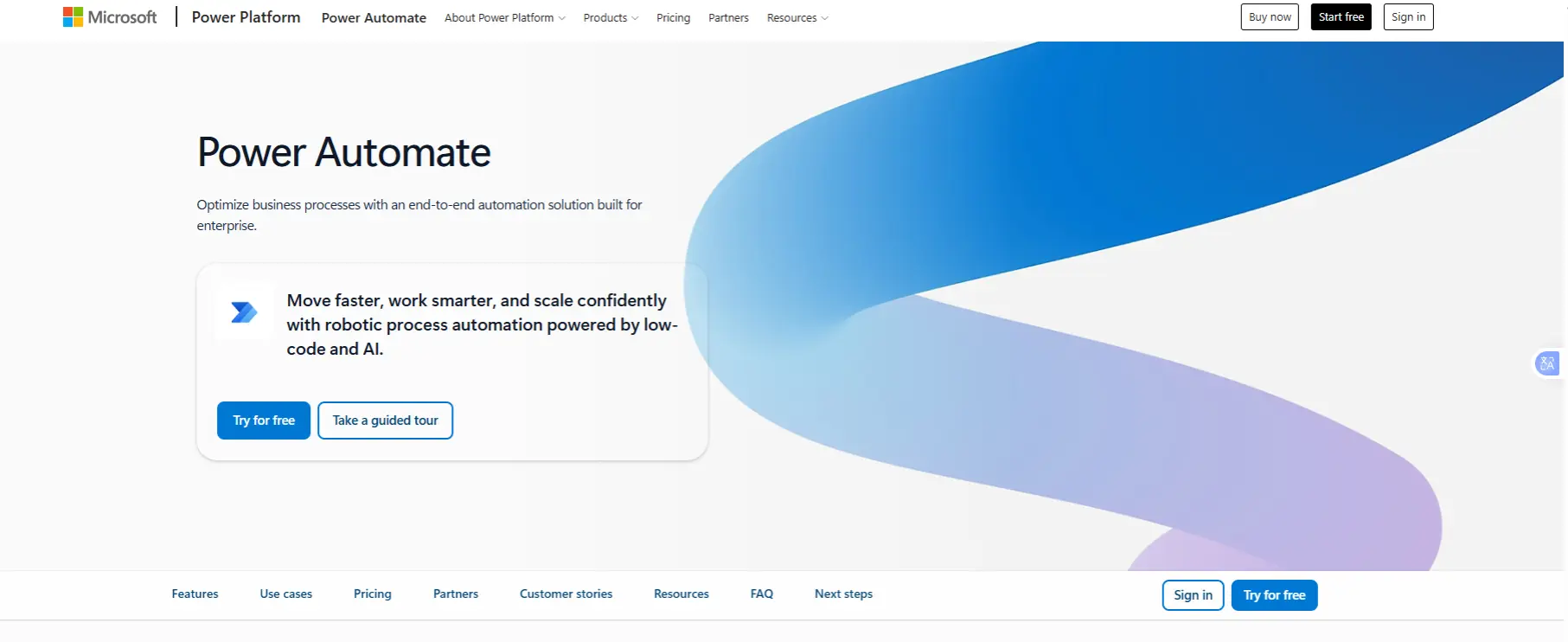
- Power Automate: Deepest integration inside Microsoft 365, Dynamics, Teams, and SharePoint, plus the unique attended/unattended RPA option for legacy apps with no API.
4) Data Control & Hosting
This is where the field narrows sharply. Only self-hosted n8n (via Truehost) and Activepieces offer true infrastructure control. Everything else on this list- Zapier, Make, Pipedream, and Power Automate’s cloud flows- runs exclusively on the vendor’s cloud, meaning your workflow data passes through and is retained under their policies, not yours.
With Truehost’s n8n hosting specifically, data stays on the dedicated KVM VPS you’re paying for. There’s no shared tenancy and no dependence on a foreign SaaS vendor’s data-retention terms, which counts if you’re weighing compliance requirements, want lower latency to local users, or simply prefer to keep workflow data off infrastructure outside your own control.
Power Automate is a partial exception: its RPA bots can interact with local desktop apps, but the orchestration layer that runs the automation is still Microsoft’s cloud.
Nigeria is also developing its domestic cloud and data infrastructure ecosystem. The Federal Government’s National Digital Cloud Policy focuses on cloud infrastructure, digital sovereignty, security, and the protection and residency of certain categories of data.
5) Advanced Workflow & AI Capabilities
- n8n (Truehost): Runs in queue mode by default, a Redis-backed setup with worker threads that absorb sudden webhook traffic spikes without slowing the visual editor. Every tier supports unlimited workflows and unlimited concurrent executions, so there’s no ceiling to hit as complexity grows. Community node support plus SSH root access let you extend a workflow with custom logic (Docker changes, Python scripts, npm modules) well beyond what the visual builder alone offers, and the 100+ pre-made templates give you a running start on common automation patterns.
- Make: The closest competitor on visual complexity, branching, loops, and parallel processing are all native, plus its own “Maia” AI assistant. Code options are narrower than n8n’s, though.
- Zapier: Polished AI Copilot/Agents features, but advanced patterns like nested loops often require paid add-ons (e.g., “Loops by Zapier”) to reach what n8n does natively.
- Pipedream: The most raw code flexibility of any tool here, at the cost of the least visual accessibility.
- Power Automate: RPA is the standout capability, not workflow logic depth.
- Activepieces: Solid branching and conditionals, still maturing toward n8n’s depth on data manipulation and AI tooling.
Which Workflow Tool Should You Choose?
There’s no single “best” platform; the right choice depends on how your team works and what you’re optimizing for:
- Want the cheapest path into n8n without managing servers yourself? Truehost’s managed n8n hosting gives you unlimited executions, full SSH access, and data that stays under your control, for a flat monthly fee, no per-execution billing to watch.
- Need the absolute largest integration catalog and zero setup? Zapier’s 9,000+ apps and beginner-friendly interface are hard to beat, provided your workflows are simple enough that per-task billing doesn’t add up.
- Want a visual builder with strong branching logic, at a lower entry price than Zapier? Make is the middle ground, more configurable than Zapier, less code-heavy than n8n or Pipedream.
- Already deep in Microsoft 365 or need to automate apps with no API? Power Automate’s RPA capability is unique on this list.
- Comfortable writing code and want maximum flexibility per workflow step? Pipedream is built for that.
- Want an open-source, Zapier-like tool you can self-host for free? Activepieces is the most approachable open-source alternative to n8n.
- Need n8n’s power and per-execution pricing model, but don’t want to run cloud infrastructure yourself? This is exactly the gap Truehost’s n8n hosting is designed to close: n8n’s full node ecosystem and unlimited executions, on a server you control, without becoming your own sysadmin.
Which Workflow Tool Should You Choose?
There’s no single “best” platform; the right choice depends on your team and your priorities. Zapier suits teams that want the largest integration catalog with zero setup. Make works well if you want strong visual branching at a lower price than Zapier. Power Automate is the pick for Microsoft-native teams or apps with no API. Pipedream fits developers who want maximum code flexibility, and Activepieces suits teams that want a free, self-hostable, Zapier-like tool.
If what you want is n8n’s power, execution-based pricing, an unlimited node ecosystem, and the ability to run custom code without managing cloud infrastructure yourself, that’s the gap Truehost’s managed n8n hosting fills: a dedicated VPS, unlimited executions, full SSH access, and data that stays under your control, all for a flat monthly fee.
Ready to get started? Get your n8n hosting with Truehost and have a fully configured, production-ready n8n instance running in minutes.
n8n vs Alternatives: FAQs
Is there a better alternative to n8n?
“Better” depends on the job. Zapier wins on integration count and ease of use; Make wins on visual branching at a lower price; Power Automate wins if you’re Microsoft-native or need RPA. For teams that want n8n’s flexibility and per-execution pricing without n8n Cloud’s execution ceiling, self-hosting, including managed self-hosting through Truehost, is generally considered the strongest alternative to n8n Cloud itself, rather than a switch to a different platform.
Is Make easier than n8n?
Generally, yes. Make’s visual canvas requires fewer expressions and less JSON handling than n8n’s node editor, which makes it more approachable for non-technical ops or marketing teams. n8n’s learning curve is steeper, but it rewards that investment with deeper customization, including custom code nodes and full server-level access when self-hosted.
Which workflow tool is best for AI agents?
n8n and Make both have dedicated AI-agent tooling (n8n’s AI nodes and workflow builder, Make’s “Maia” assistant), and Zapier has invested heavily in AI Copilot/Agents. n8n tends to be favored by teams that want to combine AI steps with custom code and unrestricted execution volume, since self-hosted or Truehost-hosted instances aren’t metered per run.
Can n8n replace Zapier?
For most use cases, yes, n8n covers the same trigger-action automation patterns Zapier does, plus deeper branching, looping, and code-execution options. The main trade-off is ease of use: Zapier’s interface is simpler for non-technical users, while n8n requires more comfort with expressions and workflow logic. Migrating typically makes the most financial sense for teams running high-volume, multi-step workflows, where Zapier’s per-task billing becomes expensive relative to n8n’s per-execution model.
What is the best open-source workflow automation platform?
n8n and Activepieces are the two leading open-source options. n8n has the larger integration ecosystem, more mature AI tooling, and a bigger community; Activepieces is newer but deliberately easier to learn, with a Zapier-like interface. Both can be self-hosted for free, with infrastructure being the only real cost.
Which tool has the most integrations?
Zapier, with 9,000+ supported apps, is significantly ahead of any competitor on this list. n8n’s native integration count is lower on paper (400+), but its HTTP and Code nodes mean it can effectively connect to any service with an API, which closes much of that gap for technically capable teams.
Is self-hosting worth it?
For teams running high volumes of executions, yes, self-hosting removes the per-execution or per-task ceiling entirely, and the infrastructure cost is usually far lower than the equivalent cloud plan once usage climbs. The trade-off is that you (or a managed host like Truehost) are responsible for uptime, updates, and scaling, rather than the vendor. For low-volume or occasional automation, a cloud plan’s simplicity often outweighs the savings.
Which workflow tool is best for small businesses?
It depends on technical capacity. Non-technical small teams often do best with Zapier or Make, given their gentler learning curves. Small businesses with some technical capability, or a willingness to use a managed host, often find n8n (self-hosted or via Truehost) more cost-effective at scale, since it isn’t billed per task or per operation.
Which platform is best for enterprise automation?
Power Automate has the edge for organizations already standardized on Microsoft 365, thanks to deep native integration and RPA. For enterprises prioritizing data residency, compliance, or custom infrastructure requirements, self-hosted n8n (including Enterprise-tier n8n or managed hosting) is often preferred, since it’s the only option among these that keeps full infrastructure control in-house.