 Domain NamesFind and register your ideal domain name instantly.
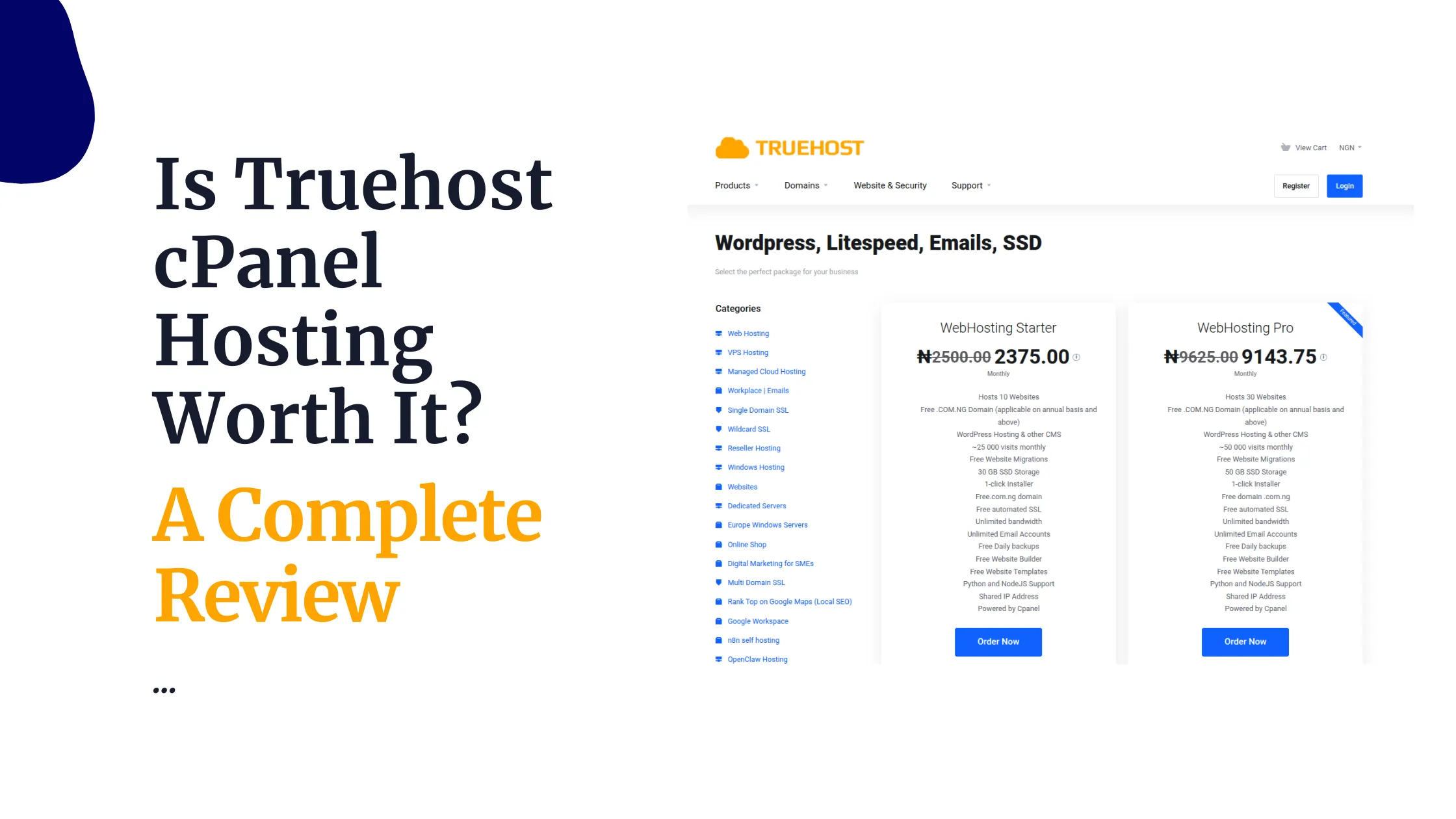
 Web HostingEasy-to-use hosting powered by cPanel — ideal for managing websites in Nigeria.
 Windows HostingRun .NET apps with Windows-optimized hosting
 Affiliate ProgramMake money promoting our services
 Reseller HostingMake money by reselling our hosting products under your own brand
 .COM Domains
 All DomainsExplore all supported tld domains in Nigeria
 WhoisFind out who owns any domain, as well as verify your registration details
 VPS Hosting
 Dedicated ServersReimagine your site speed with your own complete server
 AI Website BuilderDesign your site with drag-and-drop tools
 Online Store BuilderStart your online shop without code
 Support PortalFind answers or get expert help
 Contact UsReach our team via chat or email
 BlogRead our extensive guides on web hosting and more
Databases in web hosting are, without a doubt, the unsung heroes keeping your website alive and kicking.
They are used to store everything from your customer orders, product info, blog comments, and user profiles, and deliver it instantly whenever someone loads a page.
Now, if you’ve ever felt confused by the tech side of running a website, this is the sneak peek.
One of the consequences of having a poorly configured database is that it could slow everything down.
Luckily, it doesn’t have to be that way.
So, in this guide, I’ll walk you through how databases work and why understanding them can be the key to running a fast, secure, and scalable site in today’s booming Nigerian digital economy.
So let’s replace the confusion with clarity and give you the confidence to build something solid.
1) What Are Databases in Web Hosting?
A database is like your website’s organized backoffice.
Instead of random files lying around, it neatly stores your information and pulls it out at lightning speed whenever a page needs it.
In web hosting, databases handle all the dynamic parts of your site, that is everything from login details to product listings, so your website feels alive instead of static.
With Nigeria’s e-commerce expected to hit over $9 billion in 2025 and growing fast, slow data retrieval is basically telling your customers to go buy from someone else.
A database lets your site grow smoothly without buckling under the pressure.
Just look at Jumia.
Their entire operation relies on strong databases to manage millions of listings, reviews, customer accounts, and orders across the country.
That quick search for sneakers during a sale? That’s a database working overtime.
Databases give you fast page loads (critical with Nigeria’s unpredictable ISPs), strong security for customer data, and the ability to scale without huge costs.
So now, let’s look at how they actually work.
2) How Databases Work in Web Hosting Environments
Now that you know what a database is, let’s walk through how it works behind the scenes in web hosting.
If your website could be like a busy stall in Lagos Island Market, a customer walks up and asks for jollof rice, and then the stall owner checks the back store to fetch it.
That’s exactly what happens every time someone loads a page on your site.
Here’s the simple flow:
A customer clicks something, say “Buy Now.” That request goes straight to the web server, the engine that keeps your site running.
The server then talks to the database, asking for the exact info it needs.
Something like, “Give me all available sizes of this Ankara dress.”
The database finds the information using organized tables and indexing shortcuts, then sends it back to the server.
The server turns that data into a complete page and delivers it to the visitor’s screen, usually in under two seconds.
This is happening millions of times a day on platforms like Konga.
Their system even duplicates database data across multiple servers so nothing crashes during holiday sales.
We use the same structure at Truehost, so your own setup takes just a click.
One common issue? Shared hosting.
When multiple sites share the same resources, your database can slow down during Nigeria’s peak evening traffic.
The fix is simple: upgrade to our VPS hosting, where your database gets dedicated resources.
It’s like giving your market stall an exclusive storage space instead of sharing with everyone else.
Once you understand this flow, you’re already ahead.
3) Types of Databases Commonly Used in Web Hosting
Choosing the right database can be the difference between a smooth-running site and a frustrating one.
Luckily, most businesses in Nigeria end up choosing from a few reliable types.
Relational databases like MySQL or MariaDB are the most popular.
They use tables and rows to organize information, making them perfect for structured data like product listings, prices, and categories.
If you run an online fabric shop, this setup handles your entire inventory cleanly.
It’s free, powerful, and used by around 70% of the web.
If your site deals with more unpredictable, unstructured data like user-generated content, photos, or social activity, NoSQL databases like MongoDB are ideal.
These are more flexible and don’t rely on strict tables.
For simple or smaller sites, there’s SQLite.
It’s lightweight, file-based, and doesn’t require a server, making it great for portfolios or personal blogs.
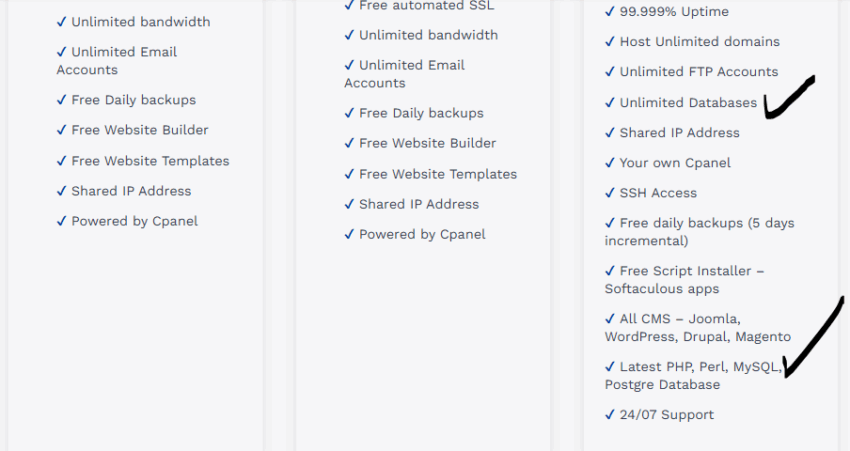
At Truehost, we support all these options.
MySQL is our default because it’s the best all-rounder for Nigeria’s growing online businesses, but you can easily switch if your project grows.
4) Setting Up and Managing Databases in Web Hosting
Setting up a database may sound intimidating, but once you see the steps, it’s very doable.
It’s just like assembling furniture: follow the instructions, and you’re good to go.
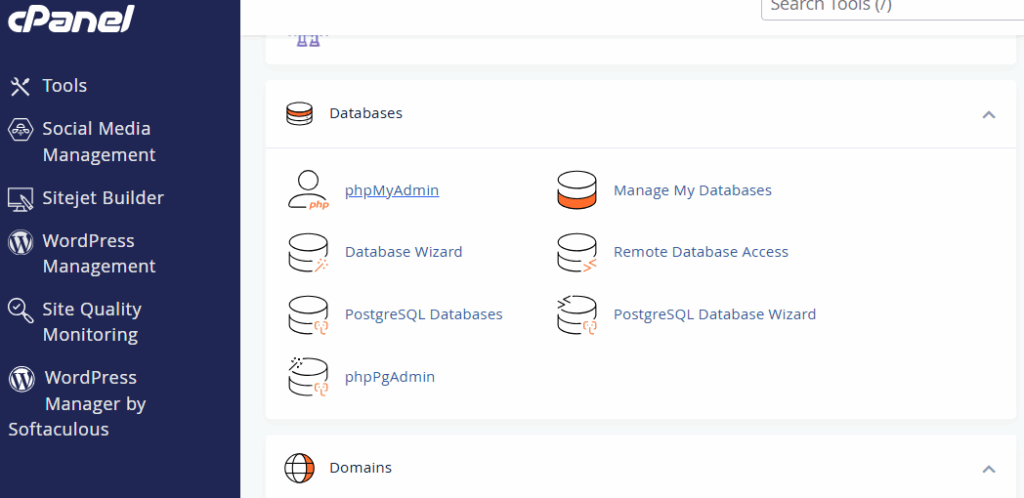
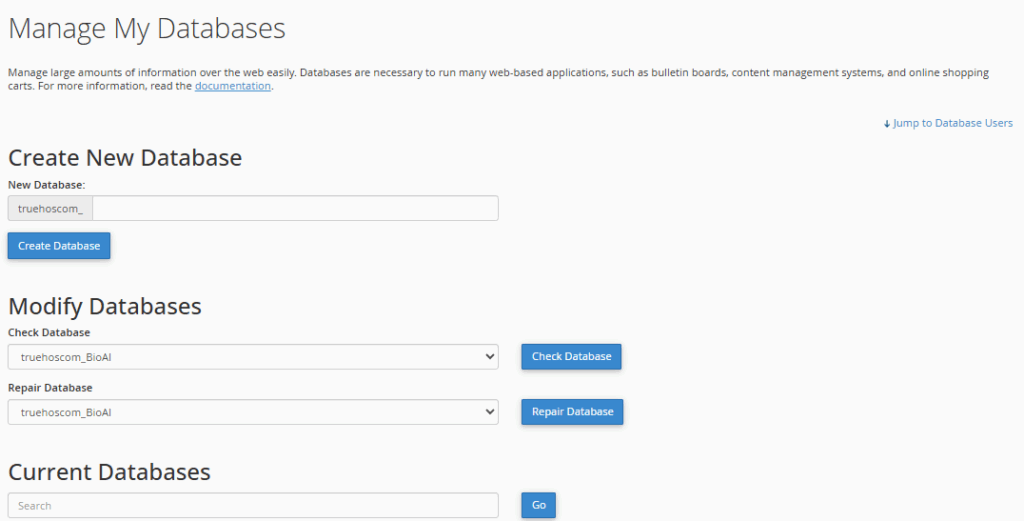
1. Log in cPanel and create a new database
First, log into your Truehost cPanel; we send the details right after signup.
Head to “MySQL Databases.” Create a new one (maybe something like “myboutique_db”), and then assign a user with a strong password like “Lagos2025!” that combines letters, numbers, and special characters.
2. Link the Database to your Website
Next, link the database to your website.
If you’re using WordPress, paste the details into the wp-config.php file.
If you’re running a custom PHP site, plug the info into your mysqli_connect() function.
If you’re moving from another provider, you can import your old data through phpMyAdmin, a built-in tool at Truehost, using a simple .sql file.
3. Security
Security is next: enable SSL so your data travels safely, and adjust user permissions so only the right people have access.
Then automate your backups inside cPanel.
We store them offsite, protecting them even if a PHCN outage hits your area.
Everything sits comfortably within current Nigerian data rules too.
Our Lagos-based servers keep your customer data local and secure.
And if you don’t want to touch any of this, our support team is always there to handle migrations and setup for you.
5) Optimizing Databases for Performance in Web Hosting
Once your database is up and running, the next step is making it fast.
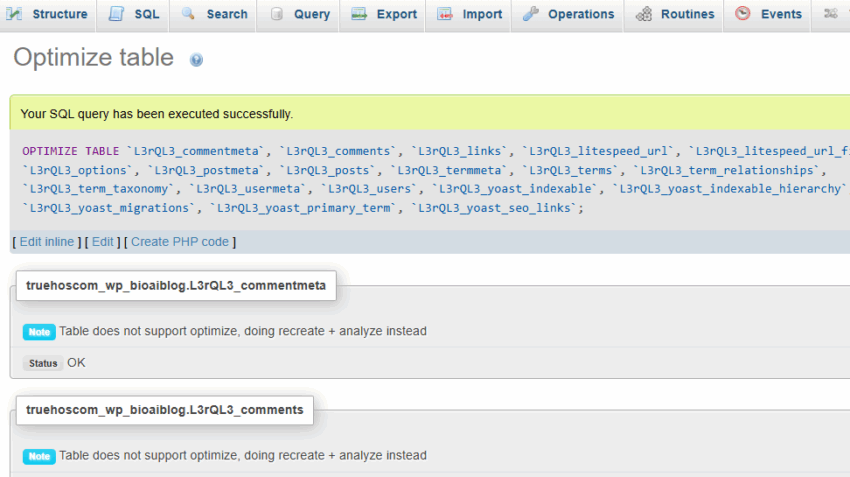
Optimization is a set of small improvements that save precious seconds, especially on mobile networks where most Nigerians browse.
1. Indexing
The first thing is indexing.
It’s like you’re labeling shelves in your market stall so you can grab items faster.
Add indexes to commonly searched fields like product names or categories.
2. Caching
Caching is another big win.
By storing frequently used results in places like Redis, which we include free on our premium plans, you reduce how often your database has to work.
A recipe site, for example, can cache popular egusi soup pages so they load instantly.
3. Query Tuning
Then there’s query tuning.
Using a tool like EXPLAIN SELECT in MySQL, you can spot slow queries and optimize them by asking for only the data you need.
4. Scaling
Scaling is the last piece of the puzzle.
You can scale vertically by adding more RAM on a VPS or horizontally by replicating your database across servers, just like Jumia does during huge sales.
Pair this with our CDN for even faster delivery across Nigeria.
One of our hospitality clients saw page loads improve by 40% after optimizing their database and adding CDN caching; bookings shot up right after.
We monitor performance automatically on our end and alert you if anything looks off, so you’re never left guessing.
6) Challenges and Solutions for Databases in Web Hosting in Nigeria
Nigeria’s digital space is exciting, but databases here face some unique challenges: inconsistent power, high bandwidth costs, and local data regulations.
All of these can impact how your site performs.
Power issues are the biggest culprit.
While generators help, outages can still cause data corruption if not properly managed.
That’s why we run geo-redundant backups synced to offsite locations—you can restore your data in minutes if anything goes wrong.
Bandwidth costs and slow speeds also affect performance.
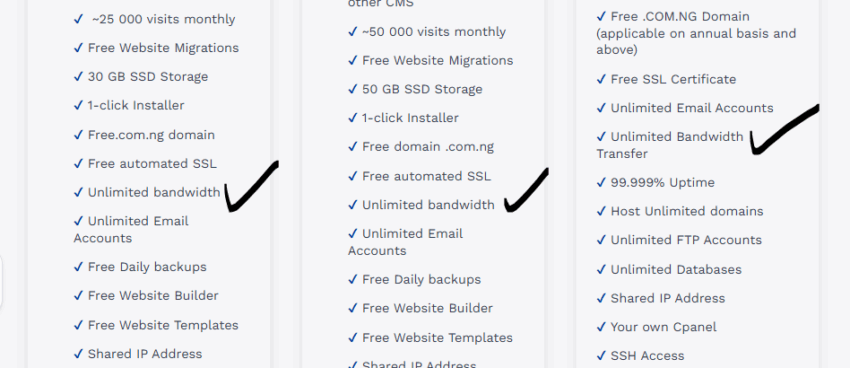
Optimizing your database cuts down on unnecessary queries, reducing your bandwidth usage by as much as 25%.
And because we bill in Naira, you’re protected from unpredictable dollar fluctuations.
Nigeria also has strict data protection rules.
We ensure compliance by keeping your data stored locally and encrypted.
That’s how companies like Konga maintain strong security across their entire platform.
The solution? Choose a hosting provider that understands the Nigerian landscape.
At Truehost, we offer tailored plans with 99.9% uptime, local servers, and a support team based here in Lagos that gets the challenges you’re facing.
Over 500 Nigerian businesses have used these systems to avoid downtime and stay competitive.
Wrapping It Up
You now have a clear picture of how databases work and why they’re essential to your site’s performance.
They’re the smart, behind-the-scenes engine keeping your pages fast, your data organized, and your customers happy.
At Truehost, we’re here to make databases simple, reliable, and powerful.
It doesn’t matter if you’re launching your first site or scaling a growing brand, our plans are built for Nigerian businesses and priced in Naira to keep things predictable.
If you’re ready to take control of your site’s performance, you can sign up today and get 20% off your first month, along with a free database migration.