 Domain NamesFind and register your ideal domain name instantly.
 Web HostingEasy-to-use hosting powered by cPanel — ideal for managing websites in Nigeria.
 Windows HostingRun .NET apps with Windows-optimized hosting
 Affiliate ProgramMake money promoting our services
 Reseller HostingMake money by reselling our hosting products under your own brand
 .COM Domains
 All DomainsExplore all supported tld domains in Nigeria
 WhoisFind out who owns any domain, as well as verify your registration details
 VPS Hosting
 Dedicated ServersReimagine your site speed with your own complete server
 AI Website BuilderDesign your site with drag-and-drop tools
 Online Store BuilderStart your online shop without code
 Support PortalFind answers or get expert help
 Contact UsReach our team via chat or email
 BlogRead our extensive guides on web hosting and more
High traffic is supposed to be a good problem. It means people want what you are offering.
Your marketing worked. Your products connect. Your content matters.
But high traffic only feels good when your hosting can handle it.
When it can’t, you get something else entirely. Slow pages. Failed checkouts. Customers who leave and don’t come back.
A business success story that turns into a technical nightmare because the servers couldn’t keep up.
This guide translates visitor numbers into hosting specs. Not vague recommendations.
Real numbers you can use to figure out exactly what you need, be it that you are just starting out or already dealing with crowds.
We will walk through:
- traffic tiers
- what each tier requires
- which providers in Nigeria deliver at each level
- and how to know when you have outgrown your current setup
Signs Your Hosting Can’t Handle Your Traffic Anymore
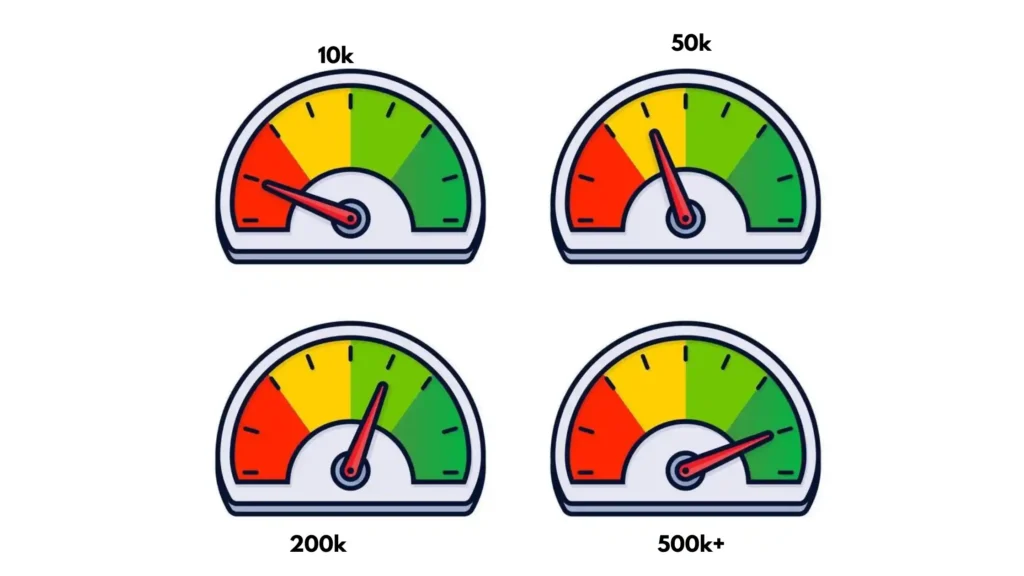
Below are the warning signs that your current hosting is underspecced for your traffic:
- Page speed drops during business hours. Check your site at 10am, 3pm, and 8pm. If it loads noticeably slower than midnight, your hosting is struggling with daytime traffic.
- Your hosting dashboard shows resource limits. Consistently hitting 80% or more of CPU or RAM means you are outgrowing your plan. At 90% or above, you’re due for an upgrade.
- Database connection errors appear. Even once a week is concerning. Once a month means you’re close to the edge. These errors mean your database hits limits during spikes.
- Your admin dashboard feels sluggish. If logging into your own site feels slow, your server is overtaxed. The backend needs resources too.
- Support suggests upgrading without explaining why. If they say upgrade but won’t show you resource usage graphs, they’re guessing or hiding something.
- You have added multiple caching plugins but still struggle. Caching helps, but it’s not magic. If you have layered on three caching plugins and still slow down, you need more server resources.
- International visitors load faster than Nigerians. Test your site from different locations using free tools. If Europe loads fast but Lagos loads slow, your hosting lacks local infrastructure.
- Your site crashes during promotions. Black Friday, product launches, or viral content should be opportunities. If they become downtime events, your hosting isn’t built for your actual traffic.
- You see 503 or 504 errors during peak times. These are server errors. They mean your hosting is rejecting connections because it can’t keep up.
- Your mobile traffic suffers most. Mobile users have less patience and often worse connections. If your site fails on mobile during busy periods, you are losing the largest segment of Nigerian internet users.
- You don’t know your resource usage because your host won’t share it. If they can’t or won’t provide usage graphs, they are hiding something. Good hosts are transparent.
- Your site works fine until noon, then struggles until evening. This pattern means your hosting can handle baseline traffic but not peak. The problem will only get worse as you grow.
How to Match Your Traffic to the Right Hosting
Before matching traffic numbers to hosting specs, we need to be clear about what hosting for high traffic websites actually means.
It is not simply paying for a more expensive plan. It is not moving from shared to VPS and hoping for the best.
It is understanding exactly what your server needs to do when hundreds or thousands of people visit at the same time.
Hosting for high traffic means your server handles simultaneous visitors without slowing down.
For Nigerian websites, high traffic hosting also means infrastructure that works well locally.
Servers too far away add latency regardless of how powerful they are.
The goal is simple. Your site should work for everyone who visits, whether it is ten people or ten thousand.
Now, follow these steps:
Step One: Find Your Traffic Tier
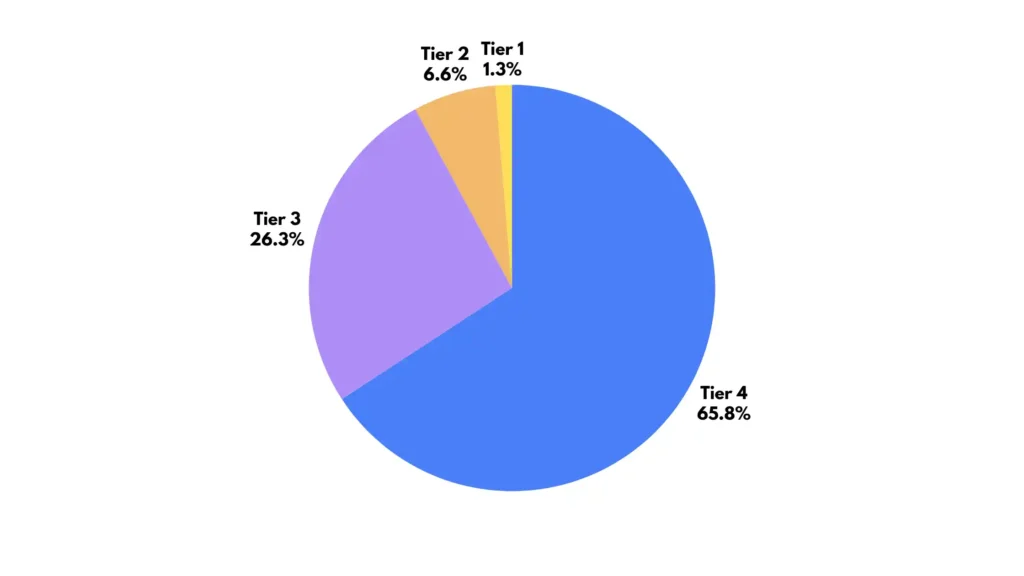
Start with your Google Analytics or any tool that tracks visitors.
Look at two numbers: average monthly visitors and peak visitors at the same time.
Peak is way more important because hosting fails during spikes, not during quiet periods.
1) Tier 1: Starting Out
- Monthly visitors: 0-10,000
- Peak visitors (same time): Under 500
- What’s happening: Small business site, new blog, portfolio
2) Tier 2: Growing Steady
- Monthly visitors: 10,000-50,000
- Peak visitors (same time): 500-2,000
- What’s happening: Popular local blog, growing e-commerce, service business
3) Tier 3: Regularly Busy
- Monthly visitors: 50,000-200,000
- Peak visitors (same time): 2,000-10,000
- What’s happening: Regional news, established online store, popular agency
4) Tier 4: High Traffic
- Monthly visitors: 200,000-500,000
- Peak visitors (same time): 10,000-25,000
- What’s happening: National platform, major e-commerce, media site
5) Tier 5: Serious Scale
- Monthly visitors: 500,000+
- Peak visitors (same time): 25,000+
- What’s happening: Large publishers, fintech, platforms with national reach
Step Two: Match Your Tier to Hosting Specs
Here is the translation most guides won’t give you.
a) Tier 1 Needs:
- Hosting type: Good shared or entry VPS
- CPU: 1–2 cores
- RAM: 2–4 GB
- Storage: 50–100 GB SSD
- Extra: Basic caching, CDN optional
b) Tier 2 Needs:
- Hosting type: VPS or optimized shared
- CPU: 2–4 cores
- RAM: 4–8 GB
- Storage: 100–200 GB SSD or NVMe
- Extra: Proper caching, CDN recommended, PHP workers tuned
c) Tier 3 Needs:
- Hosting type: Managed VPS or entry cloud
- CPU: 4–6 cores
- RAM: 8–16 GB
- Storage: 200–400 GB NVMe
- Extra: CDN required, object caching, database optimization
d) Tier 4 Needs:
- Hosting type: High-tier VPS or dedicated
- CPU: 6–8+ cores
- RAM: 16–32 GB
- Storage: 400 GB+ NVMe
- Extra: Load balancing ready, multiple application servers, enterprise CDN
e) Tier 5 Needs:
- Hosting type: Dedicated cluster or cloud infrastructure
- CPU: 8+ cores per server, multiple servers
- RAM: 32 GB+ per server
- Storage: 1 TB+ NVMe with redundancy
- Extra: Full load balancing, auto-scaling, multiple data centers

What These Specs Actually Do
CPU cores handle simultaneous tasks. More cores means more visitors can load pages at the same time without waiting.
Think of it as more cashiers in a shop. One cashier serves one customer at a time. Four cashiers serve four.
RAM stores frequently accessed data so the server doesn’t fetch it from slow storage every time.
More RAM means faster page loads for returning visitors. Think of it as counter space. More space means more orders prepared at once.
Storage speed determines how fast files load. NVMe is fastest. SSD is still good. HDD is too slow for any site with traffic.
Fast storage means pages appear quickly. Slow storage means visitors leave before pages finish loading.
CDN spreads your site across multiple locations. Visitors load from the closest server instead of your single one.
For Nigerian sites, this means visitors in Lagos load from Lagos servers instead of waiting for data from Europe or America.
Caching stores finished pages so the server doesn’t rebuild them for every visitor. Instead of generating pages fresh each time, the server serves saved copies.
This reduces work and speeds up delivery.
Step Three: Choosing Providers in Nigeria by Traffic Tier
1) Tier 1 Providers
- Whogohost shared plans:
Starter plans range from ₦4,500 to ₦6,000 monthly depending on current promotions.
Their control panel is familiar to anyone who’s used Nigerian hosting before. Payment in naira, support available during business hours.
For small business sites just starting out, their shared tier provides enough room to grow without overcomplicating things.
- DomainKing.ng
Known for aggressive promotions, their basic shared hosting starts around ₦3,000 for the first term.
Storage and bandwidth allowances suit small blogs, portfolios, or brochure sites.
Worth considering if you are comfortable switching providers when the term ends or if budget is the only factor.
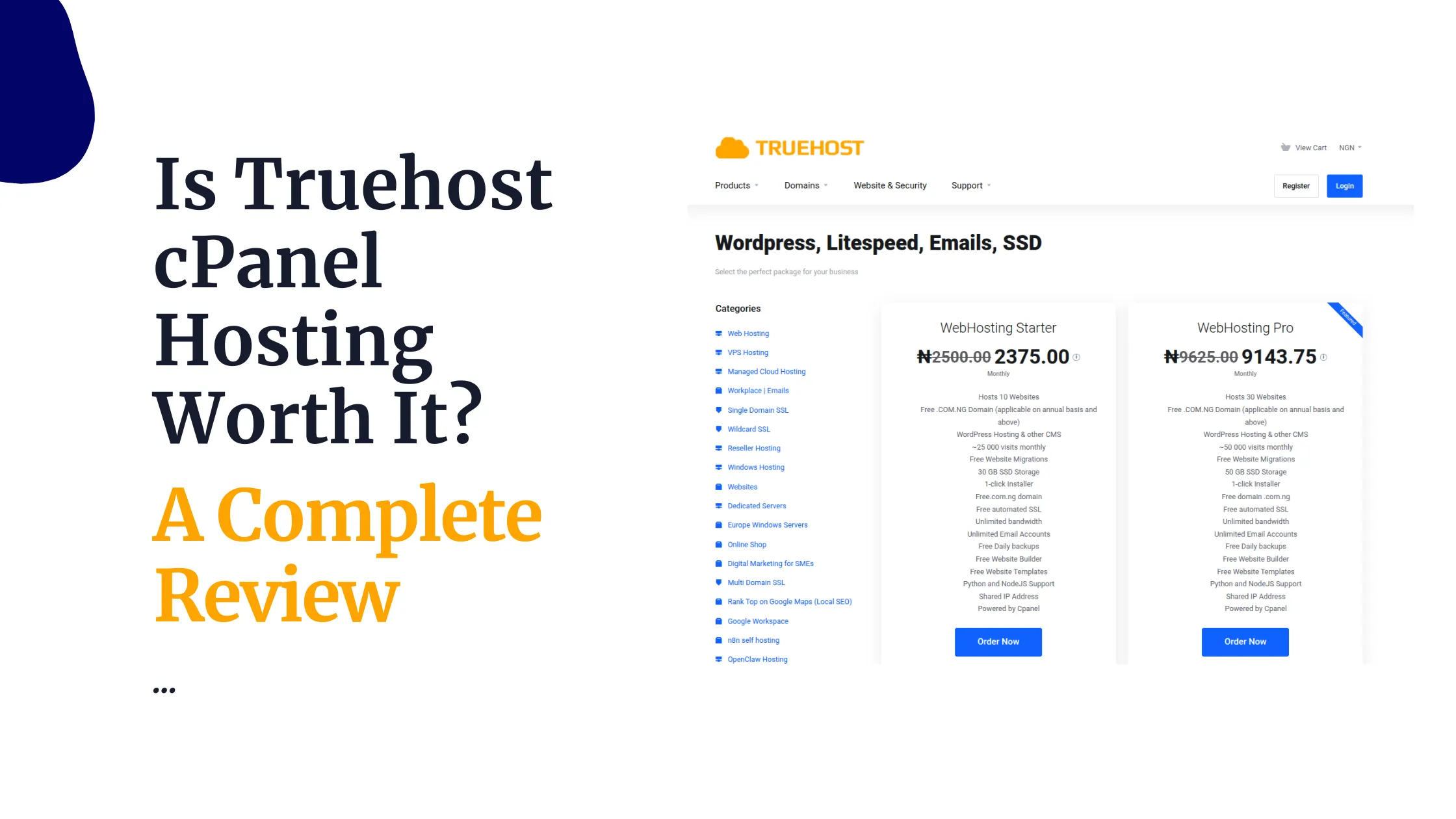
- Truehost shared plans
Essential plan gives one website, 10GB SSD storage, and free SSL for ₦3,500 monthly.
Professional plan offers unlimited websites and 20GB SSD for ₦5,500.
Business plan includes unlimited websites, 50GB SSD, and priority support for ₦15,000. All shared plans include local support and naira pricing.
- Hostinger shared plans
International provider with Nigerian reach.
Entry plans around ₦3,000–₦4,000 monthly but billed in USD, so actual cost fluctuates with exchange rates.
Support is chat-only with no phone or WhatsApp option. Good for users comfortable with ticket-based support who want cheap entry pricing.
- Web4Africa shared hosting
West African provider with regional support. Plans start around ₦5,000 monthly for basic shared accounts.
Control panel is standard cPanel, familiar to many users. Support team based in the region, so they understand local context.
2) Tier 2 Providers
- telaHosting
Growing quickly with 45% year-over-year growth.
Their entry VPS plans feature NVMe SSD storage and LiteSpeed servers standard, which means faster page loads than competitors still using regular SSD or Apache.
Worth considering for businesses that prioritize speed and are willing to pay a bit more for performance upgrades.
Prices competitive but verify current naira rates before committing.
- Truehost Cloud Starter
Managed VPS with one core, 2GB RAM, and 50GB NVMe storage at ₦10,500 monthly.
The NVMe storage sets it apart from competitors still using regular SSD at this price point.
Managed layer means their team handles server monitoring and security patching, so you don’t need technical skills.
For users comfortable managing their own servers, unmanaged VPS 1 offers 1 core, 1GB RAM, 30GB SSD at ₦8,500 monthly.
- SurferCloud entry plans
Lagos data center with NVMe storage and locked naira pricing around $6.75 monthly (approximately ₦10,000–₦11,000 depending on rate).
Self-managed only, so this is for users who understand cloud servers and don’t need hand-holding.
Good option for tech-savvy business owners who want Lagos-based infrastructure at competitive prices.
3) Tier 3 Providers
- Truehost Cloud Pro
Managed VPS with two cores, 4GB RAM, and 100GB NVMe storage at ₦22,750 monthly.
Handles busy e-commerce stores and popular content sites comfortably. The NVMe storage ensures pages load quickly even during traffic spikes.
Managed layer means their team handles server administration, security updates, and monitoring.
For technical users, unmanaged VPS 3 offers 2 cores, 4GB RAM, and 80GB SSD at ₦30,000 monthly.
- QServers mid-tier VPS
Local data centers in Abuja and Lagos with enterprise-grade infrastructure.
Plans in this range offer 4–6 cores and 8–16GB RAM depending on configuration. Support team responsive during business hours.
Good for businesses that need local data centers for compliance or latency reasons and have budget for premium local infrastructure.
- SurferCloud standard plans
Lagos data center with NVMe storage across all tiers. Pricing remains competitive with locked naira rates.
Self-managed only, so technical knowledge required. Good option for businesses with in-house technical teams who want Lagos-based infrastructure at reasonable prices.
- Liquid Web managed VPS
Premium international option with managed support. Plans start around $45 monthly (₦70,000+ at current rates).
Support is excellent but not local, and USD pricing adds forex uncertainty.
Good for mission-critical sites with budget who prioritize uptime over local support.
4) Tier 4 Providers
- Truehost Cloud Business
Managed VPS with four cores, 8GB RAM, and 200GB NVMe storage at ₦56,000 monthly.
Built for serious traffic loads like national e-commerce platforms or major media sites.
The NVMe storage across all plans means even at peak traffic, pages load quickly. Managed layer handles server administration so you focus on your business.
For self-managed users, unmanaged VPS 4 offers 3 cores, 8GB RAM, and 160GB SSD at ₦60,000 monthly.
- Rack Centre / EdgeNext partnership
Enterprise CDN and cloud infrastructure through Rack Centre’s Lagos data center and EdgeNext’s content delivery network.
This is infrastructure-level hosting, not something you sign up for with a credit card.
For Nigerian sites needing serious scale, this partnership brings enterprise CDN capabilities locally.
Pricing is enterprise-level, meaning you will need to contact sales for quotes.
- AWS / Google Cloud via local partners
International cloud infrastructure with local support partners in Nigeria. You get global-scale infrastructure with local assistance.
Requires technical teams to manage properly. Pricing in USD with usage-based models.
5) Tier 5 Providers
- Rack Centre
Tier III data center in Lagos offering colocation, dedicated infrastructure, and cloud services.
This is where serious scale happens in Nigeria.
If you are at this level, you are not shopping for hosting plans.
You are having infrastructure conversations about data center space, redundant connectivity, and enterprise support agreements.
Rack Centre is the primary option for businesses that have outgrown everything else.
- AWS, Google Cloud, Microsoft Azure
Global cloud providers with enterprise capabilities.
You will need technical teams to manage these properly, and support partners in Nigeria can help with implementation.
Pricing is usage-based and in USD, so forex exposure is significant. Best for organizations with technical resources and global ambitions.
Don’t Let Your Next Traffic Surge Break You
High traffic should feel good.
Don’t let underspecced hosting turn your success into stress.
Use the traffic tiers to understand where you stand.
Match your visitor numbers to the specs you actually need.
When you are ready to upgrade, talk to providers about what they actually deliver. Test their support before you need it. Ask the right questions.
If you are with Truehost and growing, we have built our hosting to handle Nigerian traffic at every level.
From shared plans for startups to enterprise solutions for serious scale, everything is priced in naira and supported locally by people who answer when you call.
Check our hosting plans and see which tier fits where you are headed next.