 Domain NamesFind and register your ideal domain name instantly.
 Web HostingEasy-to-use hosting powered by cPanel — ideal for managing websites in Nigeria.
 Windows HostingRun .NET apps with Windows-optimized hosting
 Affiliate ProgramMake money promoting our services
 Reseller HostingMake money by reselling our hosting products under your own brand
 .COM Domains
 All DomainsExplore all supported tld domains in Nigeria
 WhoisFind out who owns any domain, as well as verify your registration details
 VPS Hosting in Nigeria
 Dedicated ServersReimagine your site speed with your own complete server
 AI Website BuilderDesign your site with drag-and-drop tools
 Online Store BuilderStart your online shop without code
 Support PortalFind answers or get expert help
 Contact UsReach our team via chat or email
 BlogRead our extensive guides on web hosting and more
Web hosting for dummies doesn’t have to be complicated. If you’re reading this, you’re probably thinking about launching your first website.
Maybe you’ve got a business idea brewing. Or perhaps you want to start that blog you’ve been putting off for months. Either way, you need web hosting.
And honestly? The whole thing can feel overwhelming at first.
I get it. When I first heard terms like cPanel, bandwidth, and SSL certificates, my head spun. But here’s what I learned: web hosting is simpler than it looks once someone breaks it down properly.
This guide will walk you through everything you need to know. We’ll cover what hosting actually is, which features matter, and how to pick the right provider for your Nigerian website. By the end, you’ll be ready to launch your site with confidence.
Let’s get started.
What Exactly Is Web Hosting?
Think of web hosting like renting shop space in a market. You wouldn’t sell goods without a physical location, right?
Your website works the same way. It needs a place to live on the internet.
Breaking Down Web Hosting for Dummies
Here’s the simple truth. Web hosting is space on a computer (called a server) that stores your website files. When someone types your website address into their browser, that server delivers your content to them.
Pretty straightforward, yeah?
You’ve got three main pieces working together: your domain name (like www.yoursite.com), your hosting (the storage space), and your actual website content. The domain is your address. The hosting is the building. Your website is what’s inside.
How This Works for Nigerian Websites
Servers are physical machines sitting in data centers. These centers can be anywhere in the world.
Location matters more than you’d think. If your server is in Lagos and someone in Abuja visits your site, the page loads faster than if that server were in Los Angeles.
You’ll also hear people talk about uptime. This is the percentage of time your website stays online and accessible. Good hosting providers guarantee 99.9% uptime.
That means your site might be down for less than nine hours per year. For a business, that’s crucial.
Types of Web Hosting for Dummies
Not all hosting is created equal. Let me break down your options.
1) Shared Hosting
Shared hosting is exactly what it sounds like. Your website shares server space with other websites.
Think of it like renting a room in a shared apartment. You get your own space, but you’re sharing resources like electricity and water with other tenants.
Why beginners love it:
- Costs between ₦1000 and ₦3,000 monthly in Nigeria
- The hosting company handles all technical maintenance
- You get a user-friendly control panel
- Perfect for blogs and small business sites
The downsides:
- Your site might slow down if neighboring sites get lots of traffic
- You share an IP address with other websites
- Resources are limited compared to other options
For your first Nigerian website? Shared hosting is the way to go. You can always upgrade later when your traffic grows.
2) WordPress Hosting
WordPress powers over 40% of all websites globally. It’s that popular.
WordPress hosting is shared hosting optimized specifically for WordPress sites. Everything comes pre-configured. You can install WordPress with literally one click.
If you’re planning a blog or content-heavy site, this makes your life easier.
3) VPS and Dedicated Hosting
You’ll hear about VPS (Virtual Private Server) and dedicated hosting. These give you more power and resources.
But here’s the thing: you don’t need them yet. They’re more expensive and require technical knowledge.
Start with shared hosting. You can always move up when your site outgrows it.
Key Features in Web Hosting for Dummies
Shopping for hosting feels like reading a foreign language menu. Let me translate the important bits.
I) Easy Control Panel
Your control panel is where you manage everything. Most providers use cPanel or Plesk.
These tools let you install software, create email accounts, and manage files. Good hosting companies make this interface simple enough for anyone to use.
You shouldn’t need a computer science degree to add an email address. If the demo looks confusing, keep looking.
II) One-Click Everything
Remember when I mentioned installing WordPress with one click? That’s not an exaggeration.
Tools like Softaculous let you install WordPress, Joomla, and dozens of other platforms instantly. No coding required.
This feature saves hours of frustration. Trust me on this one.
III) Responsive Customer Support
Things break. Websites go down. Questions come up at midnight.
You need 24/7 support. Not just email support that takes two days to respond, either.
Look for providers offering live chat and phone support. Some Nigerian hosting companies even have WhatsApp support, which is incredibly helpful.
Test them before buying. Send a pre-sale question and see how fast they respond.
IV) Storage and Bandwidth
Most beginner websites need surprisingly little. A basic blog with text and images might use 1-2GB of storage.
Bandwidth is how much data transfers when people visit your site. Unless you’re planning to host videos or expect thousands of daily visitors, 10-20GB monthly bandwidth is plenty.
Many providers advertise unlimited bandwidth and storage. That’s marketing speak. Read the fine print. There are always limits.
For most Nigerian small business sites or blogs, standard shared hosting provides more than enough.
V) SSL Certificates
SSL certificates encrypt data between your website and visitors. You’ll know a site has SSL when the URL starts with https instead of http.
Google ranks sites with SSL higher in search results. Visitors also trust secure sites more.
Free SSL should come standard with your hosting. If a provider charges extra for basic SSL in 2024, find another provider.
VI) Professional Email Addresses
Nothing screams amateur like using a Gmail address for your business. Web hosting for dummies includes learning about email hosting.
Your hosting should include email accounts using your domain name. So instead of [email protected], you get [email protected].
Most plans include at least five email accounts. Check how many you get before committing.
VII) Security Features You Can’t Skip
Nigerian websites face the same security threats as sites anywhere else. Your hosting needs basic protection.
Look for automatic daily backups. If something goes wrong, you can restore yesterday’s version of your site.
Malware scanning catches threats before they cause problems. Some providers include this free. Others charge extra.
Best Web Hosting Providers for Beginners in Nigeria
You’ve got two main choices: international providers or Nigerian companies. Both have pros and cons.
International Giants Operating in Nigeria
Companies like Bluehost, HostGator, and SiteGround serve Nigerian customers. They’re established and reliable.
The good stuff:
- Proven track record with millions of customers
- Extensive knowledge bases and tutorials
- Often include free domain names for the first year
The challenges:
- Support teams might not understand Nigerian business hours
- Payment can be tricky (you’ll need a card that works internationally)
- Servers are usually located outside Africa
Bluehost remains popular among Nigerian bloggers. They accept most Nigerian payment cards.
Nigerian Web Hosting Companies
Local providers like Truehost Nigeria, Whogohost, and Qservers understand the Nigerian market intimately.
Why locals win:
- Support staff in your timezone who understand local challenges
- Payment through Paystack, Flutterwave, or bank transfer
- Some offer servers located in Africa
- Better understanding of Nigerian internet infrastructure
Things to consider:
- Smaller companies might have less robust infrastructure
- Fewer online reviews compared to international providers
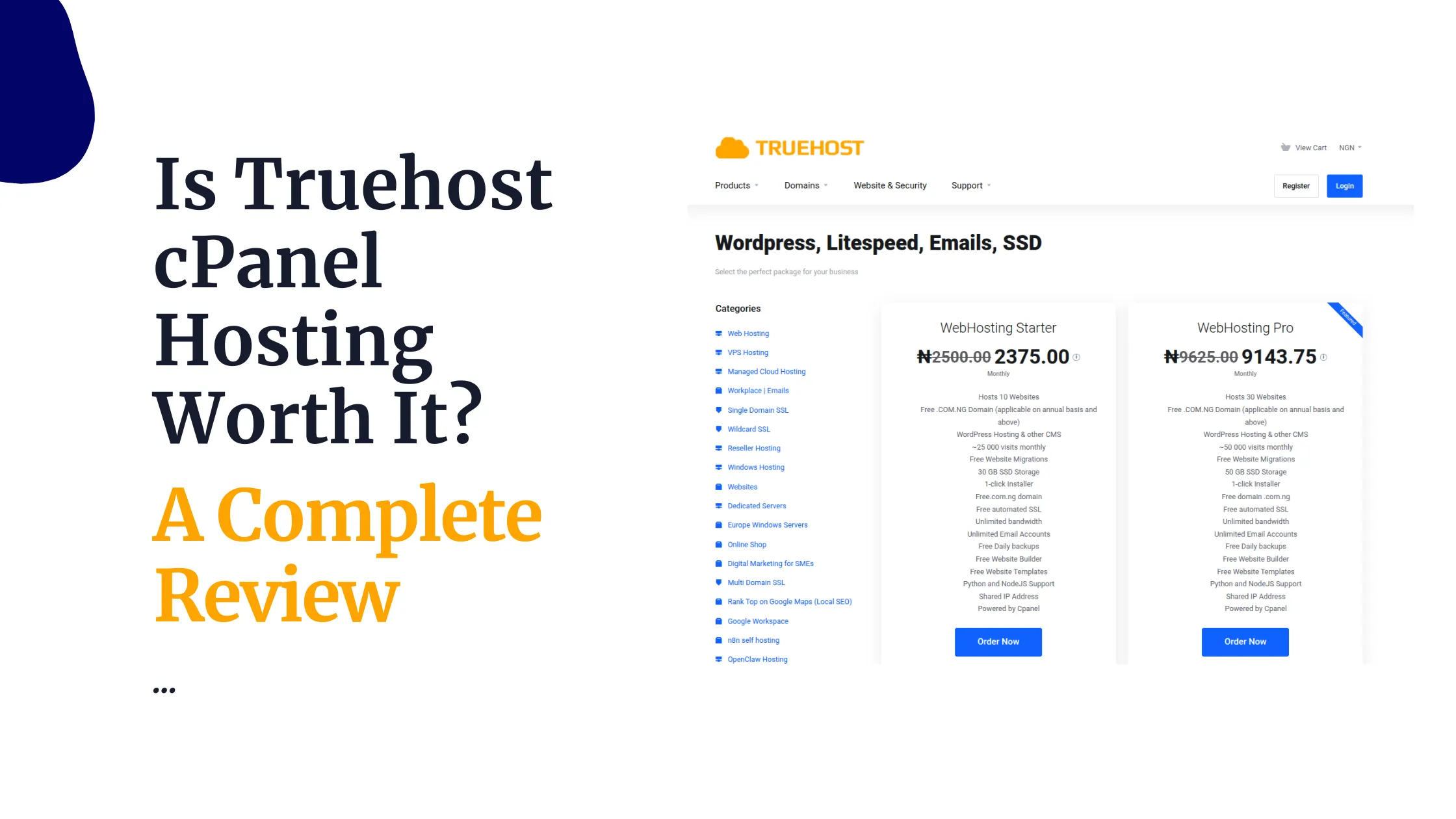
Looking for reliable hosting with local support? Truehost Nigeria offers beginner-friendly packages starting at affordable rates. They accept local payment methods and provide support through multiple channels.
What to Check Before You Pay
Every decent hosting company offers a money-back guarantee. Usually 30 days.
This gives you time to test everything. If you’re unhappy, you can get a refund.
Confirm which payment methods they accept. Can you pay via Paystack? Bank transfer? International card?
Also check where their servers are located. If most of your visitors will be Nigerian, African or European servers load faster than American ones.
How to Choose the Right Hosting Plan
Let’s make this practical. Here’s how to decide.
Figure Out What You’re Building
A personal blog needs less power than an online store. Be honest about your needs.
Blog or portfolio site: Basic shared hosting works perfectly Small business website: Shared hosting with good uptime guarantees Online store: Look for e-commerce optimized hosting High-traffic site: You’ll need more resources (but probably not as a beginner)
Most Nigerian websites starting out do fine with the cheapest shared hosting plan.
Set a Realistic Budget
You can find hosting for as low as ₦500 monthly. Premium plans might cost ₦5,000 or more.
Here’s the catch: introductory prices are marketing tactics. That ₦500 monthly rate might jump to ₦2,000 when you renew next year.
Always check the renewal price before committing. Factor that into your budget.
Hidden costs to watch for:
- Domain registration (usually ₦3,000-₦5,000 yearly)
- Email accounts beyond the basic package
- SSL certificates (should be free)
- Site backups (should be included)
Read Reviews From Real Users
Don’t trust testimonials on the hosting company’s website. They only show the good stuff.
Search for independent reviews. Check Nigerian tech forums and Facebook groups. Ask other website owners about their experiences.
Red flags include consistent complaints about downtime, terrible support, or hidden fees.
Take the First Step Today
Ready to get your website online? Truehost Nigeria offers beginner-friendly hosting plans with local support and Nigerian payment options. Their shared hosting packages start at affordable rates and include everything you need to launch your first site.
Stop overthinking it. Choose your hosting. Register your domain. Start building.
Your website is waiting.
Got questions about web hosting for beginners in Nigeria? The comments section is open. Drop your questions below and let’s figure this out together.