 Domain NamesFind and register your ideal domain name instantly.
 Web HostingEasy-to-use hosting powered by cPanel — ideal for managing websites in Nigeria.
 Windows HostingRun .NET apps with Windows-optimized hosting
 Affiliate ProgramMake money promoting our services
 Reseller HostingMake money by reselling our hosting products under your own brand
 .COM Domains
 All DomainsExplore all supported tld domains in Nigeria
 WhoisFind out who owns any domain, as well as verify your registration details
 VPS Hosting
 Dedicated ServersReimagine your site speed with your own complete server
 AI Website BuilderDesign your site with drag-and-drop tools
 Online Store BuilderStart your online shop without code
 Support PortalFind answers or get expert help
 Contact UsReach our team via chat or email
 BlogRead our extensive guides on web hosting and more
Think you can just “buy a website,” and it magically appears online? Not quite.
This is one of the biggest myths about building a website. Many people assume that simply registering a domain name is enough, or that buying hosting alone will make their site live. In reality, web hosting and domain registration are two separate but inseparable parts of your website. Skip one, and your website won’t work, no matter how much time or money you throw at it.
Let’s break it down:
- A domain name is your website’s address, like www.yourbusiness.com. It’s how people find you online. Without it, your site is invisible.
- Web hosting is the home for your website files. It’s the server that stores your images, text, and everything else that makes your website function. Without hosting, your domain is just a name with nowhere to go.
Many beginners get confused because these two are often sold together, and sometimes providers mix the terms. That’s why understanding how they work together is critical.
When done right, connecting your domain to your hosting creates a simple online experience, and your visitors can type your website address and instantly see your content.
In this guide, we’ll do more than just explain the technical side. We’ll bust the common myths, simplify the jargon, and show you step by step how to get your website live quickly and confidently with Truehost.
By the end, you won’t just know the difference, you’ll know how to make these two work together to launch your website without headaches.
What is Web Hosting?
Think of your website like a physical house. Web hosting is the land where your house is built.

It’s the space on a powerful computer, called a server, where all your website files, images, and content live.
A web hosting provider, like Truehost, rents you this space on their server. These servers are connected to the internet 24/7, which means your website is visible to anyone, anywhere, at any time.
Without web hosting, your website files would just sit on your personal computer, completely inaccessible to the world.
Different Types of Web Hosting
Just like land comes in different sizes and prices, web hosting has several options depending on your needs:
- Shared Hosting – The Apartment
Your website shares a server with many other sites, like living in an apartment building. Share resources like CPU, RAM, and storage.
- Best for: Beginners and small websites with low traffic
- Pros: Affordable and easy to use
- Cons: Performance can be affected by other websites
- VPS Hosting (Virtual Private Server) – The Condo
You still share a physical server, but you get a dedicated slice of resources just for your site.
- Best for: Growing websites that need better performance and control
- Pros: More stable, scalable, and customizable than shared hosting
- Cons: Slightly more expensive and requires basic technical knowledge
- Dedicated Hosting – The Mansion

You get an entire server all to yourself, like owning a mansion.
- Best for: Large websites with high traffic or complex needs
- Pros: Maximum performance, complete control, and security
- Cons: Expensive and requires technical expertise
Most new websites start with shared hosting. You can upgrade as your traffic grows.
Explore Truehost NG’s affordable and reliable hosting options to find the perfect plan for your website.
What is Domain Registration?
If web hosting is the land, then a domain name is the address people use to find that land. It’s what you type into a browser, for example: truehost.com.ng.
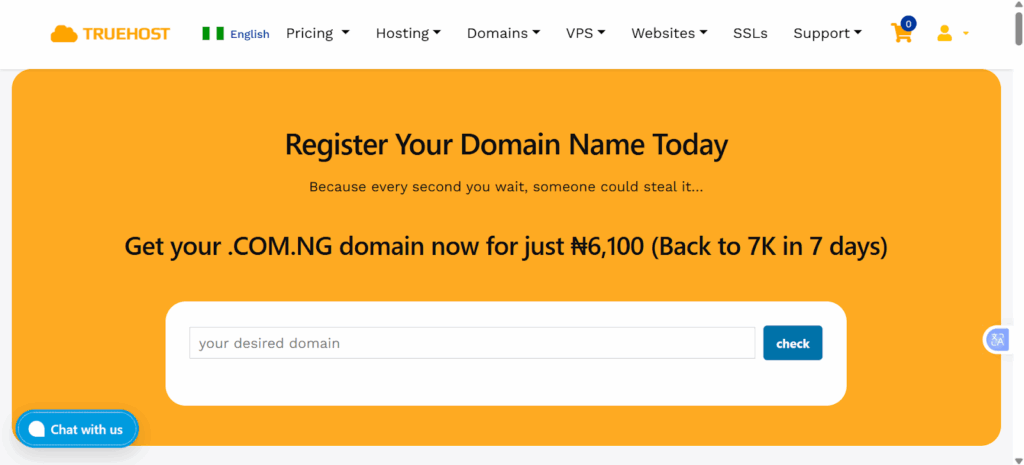
Domain registration is the process of reserving this unique address for yourself, usually for one year. Think of it as leasing your website address; you don’t buy it permanently, but you must renew it to keep it.
- Every domain name is unique. Once mybusiness.com.ng is registered, no one else can use that exact name.
- This ensures your visitors always reach your website, and only your website.
Anatomy of a Domain Name
A domain name has two main parts:
| Part | Example | Description |
| Second-Level Domain (SLD) | truehost | The unique, memorable name you choose. |
| Top-Level Domain (TLD) | .com.ng | The extension, often indicating location or purpose. |
Example: In truehost.com.ng, “truehost” is the SLD, and “.com.ng” is the TLD. Together, they form a unique, easy-to-remember website address.
Understanding the Difference Between Web Hosting and Domain Registration
It’s very common for beginners to confuse web hosting with domain registration, and even experienced users sometimes mix them up. But here’s the truth: they are two completely different services, and both are essential for your website to work.
Without a domain, no one can find your site. Without hosting, your site doesn’t even exist online.
Understanding the differences is like understanding the difference between an address and a home. One point people refer to is where you are, the other is where you actually live.
a) Purpose: Your Website’s Identity vs Its Engine
- Domain Name (Your Website’s Identity): Think of a domain as your website’s ID card. It gives your site a unique name that people can type into a browser to visit you.
It’s what makes your website recognizable and easy to find. Without a domain, your site is like a house with no street address; you have a place, but no one can locate it.
- Web Hosting (The Engine That Powers Your Site): Hosting is the foundation and engine behind your website. It’s the physical or virtual space on a server where all your files, images, videos, text, and code are stored.
Hosting ensures that when someone visits your domain, your website loads quickly and reliably.
b) Cost: Affordable Identity vs Flexible Investment
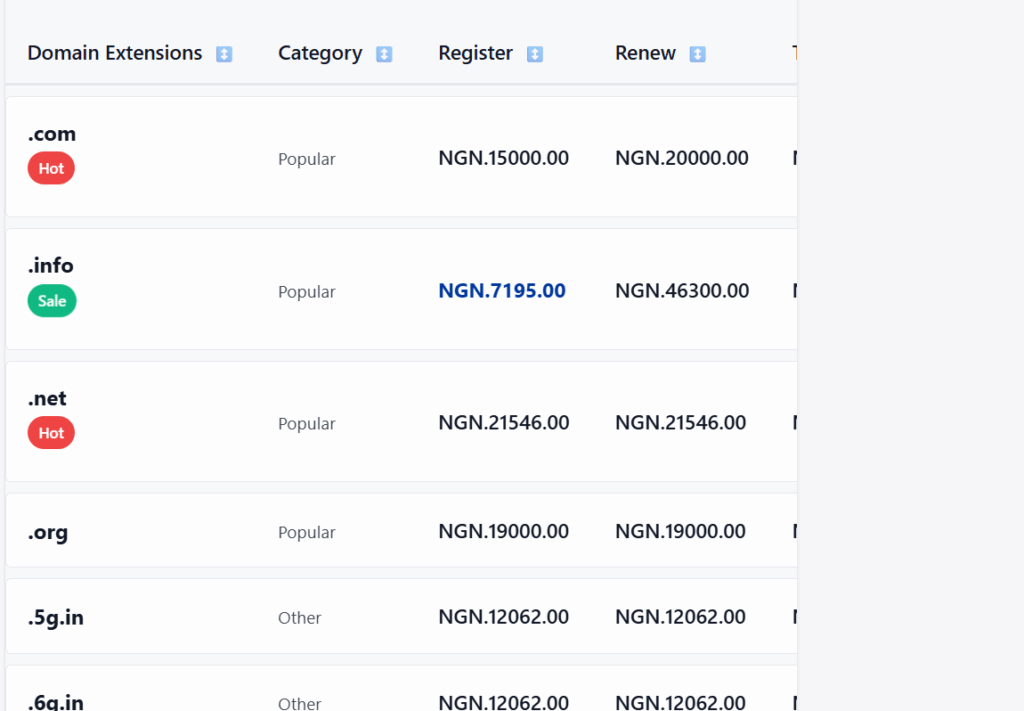
- Domain Registration: Usually comes at a small yearly fee. Think of it as renting your website’s address. It’s inexpensive, but crucial for staking your claim online.
- Web Hosting: Costs vary widely depending on the type of hosting you choose, shared, VPS, dedicated, or cloud.
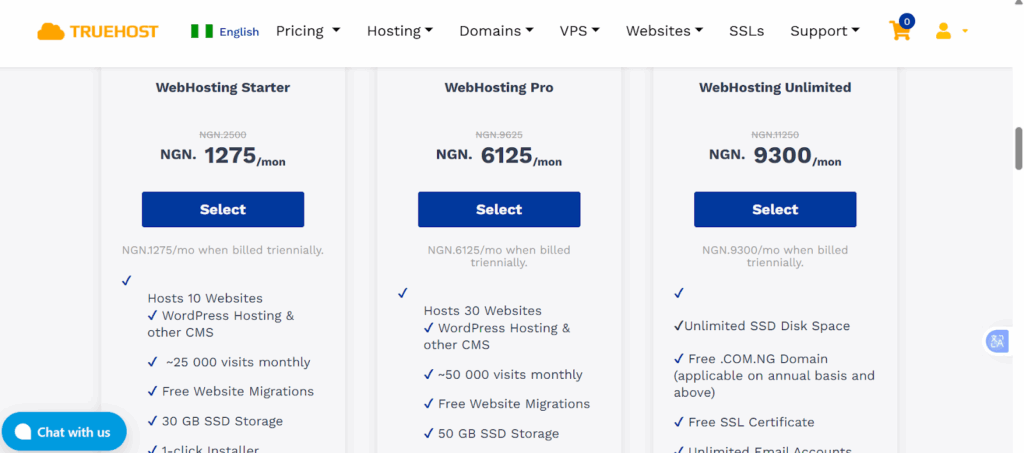
Hosting is typically billed monthly or annually. More resources, faster performance, and better features cost more, but they ensure your site can handle visitors and traffic without crashing.
c) What You Get: Address vs Full Suite of Tools
- Domain Registration: When you register a domain, you get a unique, memorable web address. That’s it. No files, no emails, no storage.
- Web Hosting: With hosting, you get a complete suite of tools to run your website:
- Server space for your files
- Bandwidth for visitors to access your site
- Email accounts associated with your domain
- Security features, databases, and sometimes built-in website builders
- Server space for your files
d) Renewal: Keep Your Website Alive
- Domain Renewal: Domains are leased, not owned permanently.

You must renew them regularly, usually annually, to keep your web address active. Let it lapse, and someone else can claim it.
- Hosting Renewal: Hosting plans also require renewal. If you don’t renew, your website goes offline, even if your domain is active. Visitors typing your address will see nothing.
e) Provider Role: Registrar vs Hosting Company
- Domain Registrar: These are companies authorized to register domain names. They coordinate with global authorities to ensure your domain is unique and properly registered.
- Web Hosting Provider: Companies like Truehost NG maintain servers, storage, and the network connections that keep your website live and accessible 24/7. They handle technical aspects like uptime, backups, and security.
How Web Hosting and Domain Registration Work Together
When it comes to web hosting vs domain registration, it’s not a matter of choosing one over the other; you need both to get your website online. They are two separate services, but they must connect perfectly for your site to work.
Think about it this way:
- A domain name alone is like an address with no house. If someone visits it, there’s nothing there to see.
- Web hosting alone is like a fully built house with no address. The house exists, but nobody can find it.
For your website to work, you need both the house and the address, and the connection between them happens through the Domain Name System (DNS).
The Connection Process
Here’s a step-by-step look at how it all comes together:
- Register Your Domain
First, you secure your website address, like yourbrand.com.ng, through a domain registrar like Truehost NG. - Buy Hosting
Next, you purchase a hosting plan where your website files, images, text, videos, and scripts will live safely on a server. - Point the Domain to Your Hosting
You tell your domain registrar the nameservers of your hosting provider. This step links your website’s address to its home on the internet. - DNS Does Its Magic
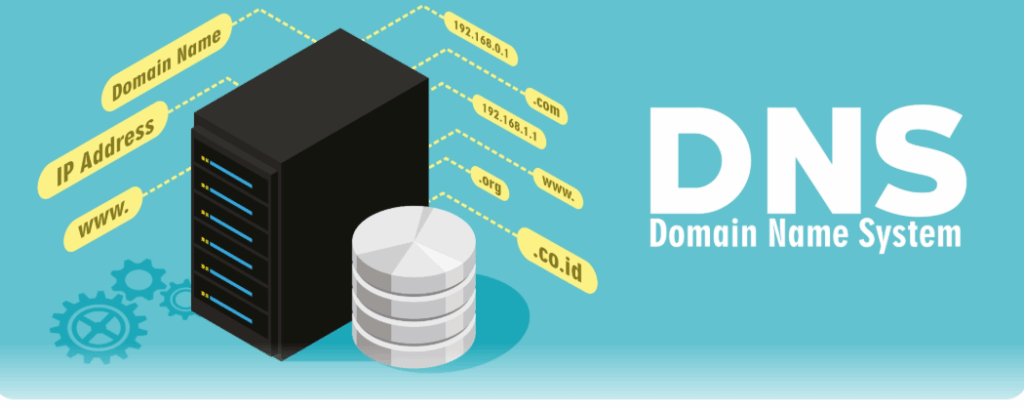
When a visitor types your domain into their browser, the DNS acts like a global phonebook.
It translates your human-friendly domain into the numerical IP address of your hosting server.
- The Server Responds
Your hosting server receives the request and sends your website files back to the visitor’s browser. In a fraction of a second, your website appears online.
The Convenience of a Single Provider
You can register your domain with one company and buy hosting from another, but there are big advantages to keeping everything under one roof with a provider like Truehost NG:
- Simplified Management: One account, one dashboard, no jumping between platforms.
- Automatic Connection: Buying both from us often means the DNS is configured automatically, so you don’t have to worry about technical details.
- Unified Support: If something goes wrong, our team can troubleshoot both your domain and hosting at the same time, no back-and-forth between providers.
- Cost Savings: Many hosting packages include free domain registration, helping you save money when you start.
Conclusion
Web hosting vs domain registration is a partnership. Both are essential, and together, they make your website possible.
Now that you understand how they work hand in hand, it’s time to take the next step. With Truehost, you can secure your domain and hosting all in one place, making setup fast, simple, and stress-free.
Start your online journey today. Explore our hosting plans and get your website live with ease. Your brand deserves to be online. Let’s make it happen.