 Domain NamesFind and register your ideal domain name instantly.
 Web HostingEasy-to-use hosting powered by cPanel — ideal for managing websites in Nigeria.
 Windows HostingRun .NET apps with Windows-optimized hosting
 Affiliate ProgramMake money promoting our services
 Reseller HostingMake money by reselling our hosting products under your own brand
 .COM Domains
 All DomainsExplore all supported tld domains in Nigeria
 WhoisFind out who owns any domain, as well as verify your registration details
 VPS Hosting
 Dedicated ServersReimagine your site speed with your own complete server
 AI Website BuilderDesign your site with drag-and-drop tools
 Online Store BuilderStart your online shop without code
 Support PortalFind answers or get expert help
 Contact UsReach our team via chat or email
 BlogRead our extensive guides on web hosting and more
One sure thing about your website, when it’s being hosted, is either done on a physical server or a cloud server. So that brings us to this debate, weighing in-house servers vs cloud hosting.
Now, when we’re considering the fact that one power outage can wipe out a full day’s sales, we might need to get to know their difference ASAP.
Once you know how each functions and everything else there is to know about them, you’ll be safe to make informed choice for your website.
So, in this guide, I’ll be walking you through the in-house server vs cloud hosting features, pros and cons, cost breaking down, and performance.
Let’s start already and compare head-on, to see what each option really means for you.
What Are In-House Servers, and Do They Still Make Sense in 2025?
Remember when having a “serious” business meant owning a server room?
You know the kind: metal racks tucked away in a corner, fans humming nonstop, maybe a faint smell of dust and diesel in the air.

Those machines handled everything from emails, accounting, inventory, and the works.
That’s essentially what in-house servers are: physical machines you buy, install, and manage yourself (or with a small IT team).
For a long time, they were the gold standard because they gave businesses full ownership and control.
But in Nigeria’s fast-moving digital landscape, they’re starting to feel a bit like that dependable yet fuel-hungry okada stuck in Lagos traffic, reliable, yes, but not always the smartest choice anymore.
The Upside of In-House Servers
1. You’re in Full Control
With in-house servers, nothing happens without your say-so.
You choose the hardware, tweak the software, and set the rules.
For heavily regulated sectors like banking or fintech, this level of control is a big deal.
Keeping sensitive data physically on-site helps with compliance and gives peace of mind.
2. No Monthly Bills (Eventually)
Once you’ve bought the equipment, it’s yours.
No recurring subscription fees nibbling away at your budget every month.
For a bootstrapped business in Abuja or Ibadan, that “own it outright” appeal can be very tempting.
3. Consistent Performance
Your server resources are dedicated to you alone.
There are no “noisy neighbors” sharing power or bandwidth, so performance stays predictable, even during busy periods.
The Downside
1. Heavy Upfront Costs
Setting up even a modest server environment isn’t cheap.
Between hardware, cooling systems, backup power, and generators, you’re easily looking at ₦5–10 million, and that’s before import duties and forex swings drive prices even higher.
That’s money that could have gone into marketing, hiring, or product development.
2. Maintenance Headaches
Running servers in Nigeria isn’t for the faint-hearted.
Power outages mean diesel expenses.
One failed hard drive can turn into hours, or even days, of recovery work.
Some Nigerian SMEs lose an estimated 5–10% of their annual revenue just from downtime and IT disruptions.
3. Scaling Is Slow and Painful
Need extra capacity for Christmas or a big promo? With in-house servers, scaling is like an order.
You’re waiting weeks for parts to arrive, hoping nothing breaks in the meantime, and possibly losing sales while you wait.
So… Are In-House Servers Still Worth It?
They still make sense for legacy systems and highly regulated environments.
But in a country with an unpredictable power grid and rapidly changing digital needs, they struggle to keep up.
Now, let’s look at cloud hosting and see how they compare.
What is Cloud Hosting and Why It’s Winning Hearts and Wallets in Nigeria
Cloud hosting is now like using Uber instead of owning a car. You don’t worry about maintenance, repairs, or fuel. You just hop in and go.
With cloud hosting, your website or app runs on remote data centers.
You rent only the computing power you need, when you need it.
The provider handles the heavy lifting, and you scale up or down with a few clicks.
When you’re comparing in-house servers vs cloud hosting, this is the flexible option, which is perfect for Nigeria’s unpredictable, boom-and-bust business environment.
At Truehost, our cloud servers run right from Lagos data centers.
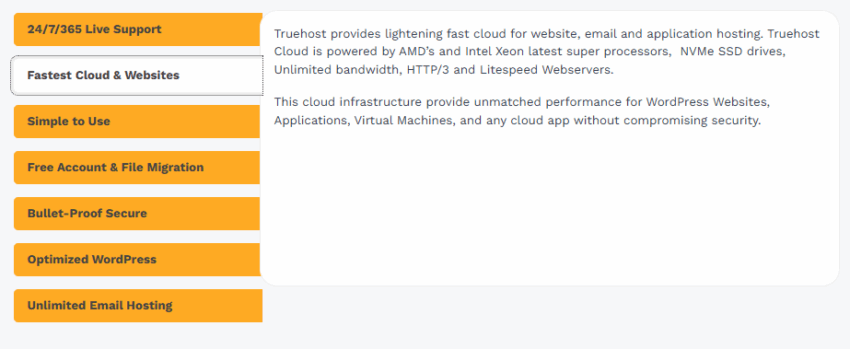
That means faster loading times for local users and billing in naira, no dollar wahala.
No stressing over faulty hardware or power issues. You focus on growing your hustle; we handle the tech.
Pros of Cloud Hosting
1. Pay-as-you-grow affordability
You can start small and expand as your business grows.
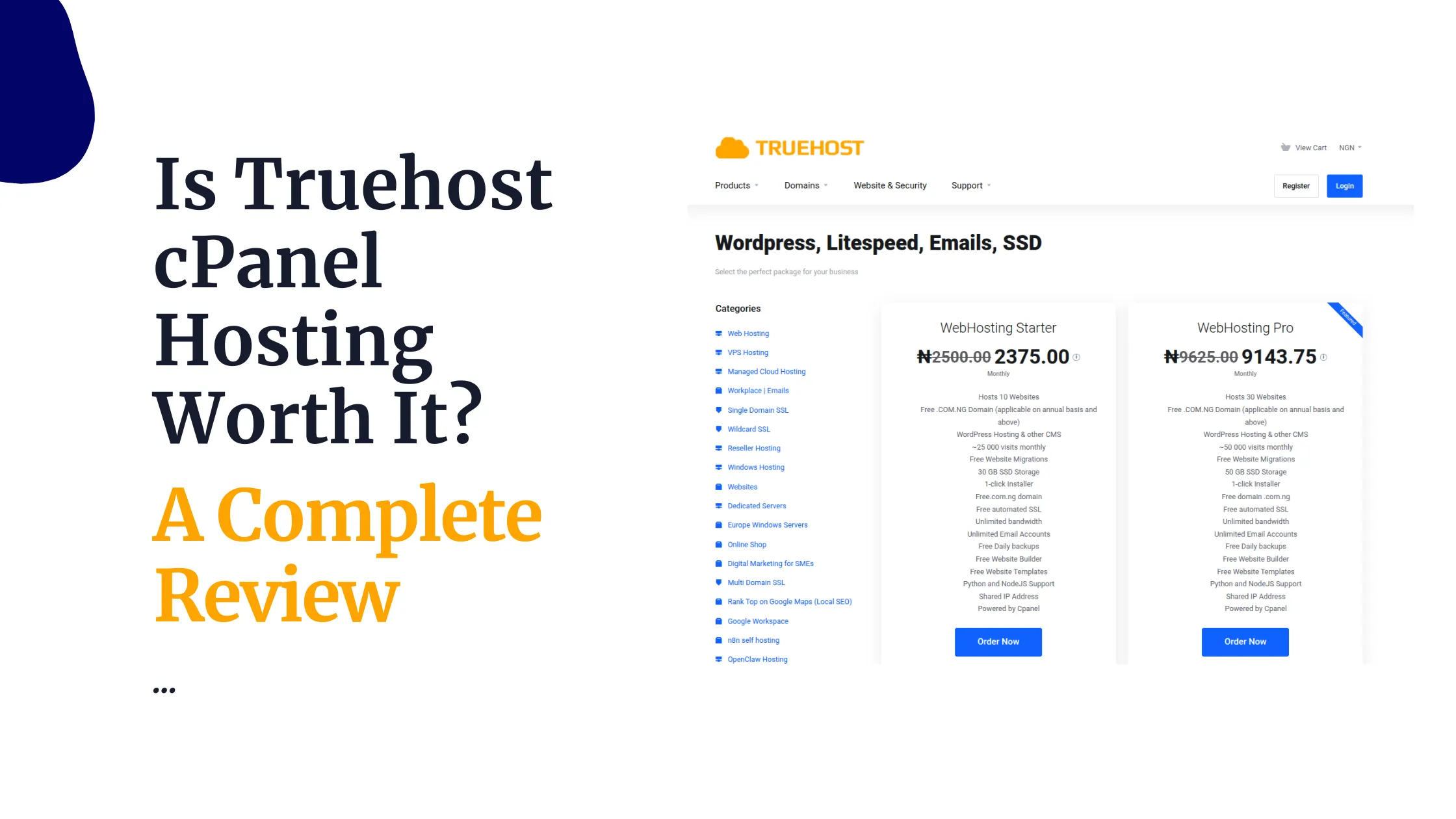
Our WebHosting Starter plan begins at just ₦1,275 per month on triennial billing.
You get unlimited bandwidth, 30GB SSD storage, and support for up to 25,000 monthly visits.
It’s a low-risk way to test the waters without overcommitting.
2. Reliable, steady performance
With 99.9% uptime SLAs, cloud hosting is often more reliable than even the best generator setup.
We include free daily backups and automated SSL certificates, so your site stays secure and online, even during rainy-season surprises.
3. Easy scaling and built-in security
Got a sudden traffic spike? You can scale up in minutes.
Cloud hosting also comes with built-in DDoS protection and NDPC-compliant encryption, far more robust than most DIY security setups.
Cons of Cloud Hosting
1. Internet dependency
If you’re in areas with unstable broadband, say parts of Enugu or other rural locations, access can be slower at times.
That said, our hybrid options help bridge this gap.
2. Dependence on a provider
Moving from one provider to another takes planning.
The good news? We offer free migrations to make switching as smooth as possible.
3. Costs can add up at massive scale
For very large operations running nonstop at peak capacity, long-term cloud costs can sometimes edge past in-house servers.
But for about 90% of Nigerian SMEs, cloud hosting still comes out cheaper and far less stressful.
When it comes to in-house servers vs cloud hosting, cloud clearly wins for most Nigerian entrepreneurs, especially when you factor in 24/7 local support from a team that can even chat with you in pidgin if need be.
Head-to-Head In-House Servers vs Cloud Hosting
Alright, enough with the setup. Let’s get straight to comparing.
If you’re choosing between an in-house server and cloud hosting, four things probably matter most to you: money, speed, security, and room to grow.
So let’s compare exactly that.
1. Cost
Where does your Naira really go?
Running servers in-house sounds like an investment, but the numbers add up fast.
A decent mid-tier setup will set you back around ₦20 million over three years, once you include hardware, maintenance, power, and repairs.
And that’s before factoring in generators, fuel, or surprise breakdowns.
Cloud hosting is a very different story.
Take our Pro plan for example. At ₦6,125 per month on a three-year plan, you’re spending under ₦220,000 a year.
No generators. No replacement parts. No “emergency technician” bills.
Now here’s where it really hits home.
Nigeria loses an estimated $2 billion every year to IT downtime.
If your website makes ₦1 million a month and downtime eats just 5%, that’s ₦50,000 gone every time your system crashes.
With our 99.9% uptime SLA, that loss practically disappears, saving you roughly ₦600,000 a year.
That’s cloud paying for itself.
Want to run your own numbers? You can do that anytime on Truehost Pricing.
2. Performance and Uptime
We’ve all been there, clicking a site and waiting… and waiting.
With in-house servers, performance often drops when things heat up, literally.
Power issues, overloads, even weather can push load times to 2–3 seconds, especially during peak traffic.
Cloud hosting doesn’t play that game.
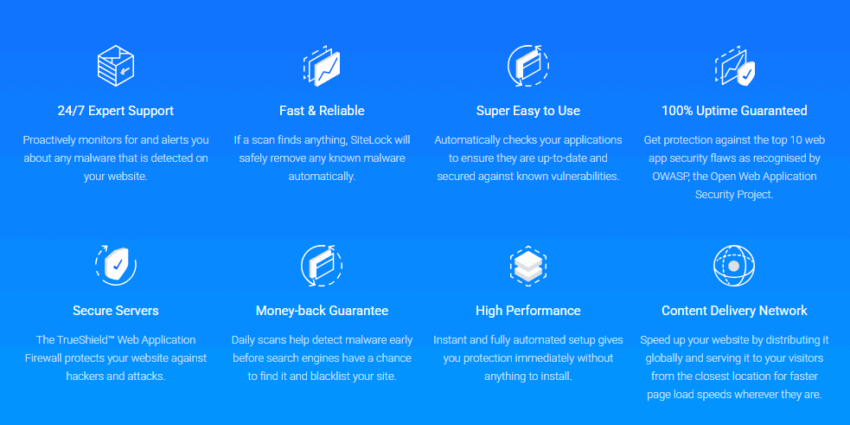
Since we use global CDNs and local infrastructure, our Lagos-based cloud hubs deliver response times under 100ms for Nigerian users.
That’s fast, and Google notices.
What does that mean for you?
If you’re a consultant in Abuja with unpredictable logins, or a business owner whose traffic jumps after campaigns, cloud hosting keeps your site fast, stable, and ranking well.
3. Security and Compliance
With an in-house server, security is on you.
You’re the firewall. You’re the update manager. You’re the one hoping nothing goes wrong, while cybercrime costs Nigeria over ₦1 trillion annually.
Cloud hosting flips that responsibility.
We handle encryption, firewalls, automated updates, and NDPC-aligned compliance checks.
If you want something closer to an in-house feel, our dedicated servers start at ₦91,000/month, complete with root access and KVM virtualization.
But here’s the real win: cloud systems update themselves. No late nights. No “we’ll patch it next weekend.”
4. Scalability
Upgrading an in-house server usually means downtime, delays, and more spending.
But with Cloud, you click, you scale, and that’s it.
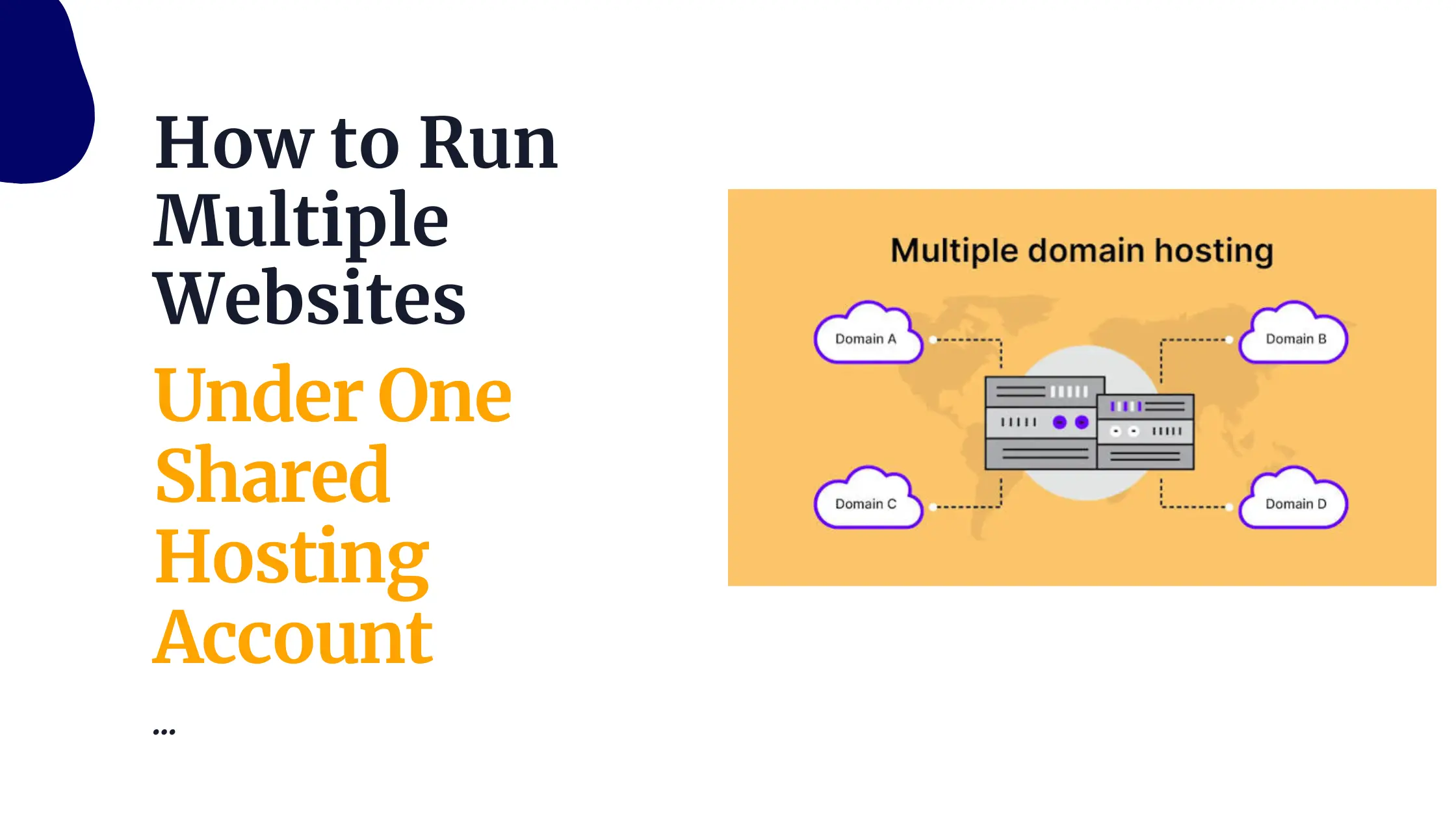
Our Unlimited plan lets you host multiple domains with SSH access, perfect for e-commerce stores that suddenly blow up after an ad or social media campaign.
It’s no surprise that cloud adoption in Nigeria jumped 30% in 2024, according to NITDA.
SMEs are choosing flexibility over friction, and it’s paying off.
Switching From In-House server to Cloud Hosting
Now that we’ve seen in-house servers vs cloud hosting side by side, if you’re interested in moving to cloud, let me show you how.
1) Start with a Quick Reality Check
First, take stock of what you’re dealing with right now.
What are you spending on hardware, power, maintenance, and downtime? What’s slowing you down?
2) Choose a Plan That Fits Your Stage
No one likes paying for more than they need, so we keep it simple:
- Starter – perfect for solo founders and small sites (₦1,275/month promo)
- Pro – ideal for teams and growing businesses (₦6,125/month)
- Unlimited – built for serious scale and big ambitions (₦9,300/month)
Every plan comes with a 30-day money-back guarantee, so there’s no pressure.
3) Let Us Handle the Migration
This is the part most people worry about, and the part you don’t need to touch.
Our team moves everything for you:
- No downtime
- Full backups preserved
- Zero disruption to your users
You keep running your business while we do the heavy lifting.
4. Go Live and Keep an Eye on Things
Once you’re live, you can monitor performance through our dashboard, test everything, and watch your analytics improve.
And if anything feels off? Our 24/7 live chat is always there.
Conclusion
So, when it comes to in-house servers vs cloud hosting, what’s the verdict?
Well, in-house servers might work if you need absolute control and have deep pockets.
But for most businesses, cloud hosting wins, hands down.
And in a country where power outages cost billions, reliability is more like survival.
Now you have the pros, the trade-offs, and the functionalities.
And, at Truehost, we’re backing your hustle with:
- Naira-friendly plans
- Local data centers
- And a 49% triennial discount on Starter plans
So why wait for the next blackout to force a decision?